Why Allergies Are a Different Problem Than a Cold
A cold is a short, defined illness that resolves in a week or two. Seasonal allergies are a recurring, weeks-long condition that can flare for an entire pollen season, and that duration changes the calculation entirely. Recording with a cold is mostly about managing a short-term dip in output and waiting it out. Allergy season is closer to a chronic condition you have to keep working through, which means the standard advice to just rest until it passes simply doesn't apply the same way; most voice actors can't take six weeks off every spring and fall.
Why Common Allergy Medication Can Work Against You
Many over-the-counter allergy medications, particularly older, first-generation antihistamines, work in part by drying mucous membranes throughout the body, including the vocal tract, to reduce runny-nose and watery-eye symptoms. That drying effect is exactly what a voice actor doesn't want: a drier vocal tract produces more friction, more effort, and a rougher, less flexible sound, often while a voice actor is specifically taking the medication to feel and sound better for a session. Newer, second-generation antihistamines generally have a milder drying effect than older formulations, which is worth knowing when choosing between options, though the effect varies by individual and by specific product rather than being uniform across every brand.

What Actually Helps Without the Trade-Off
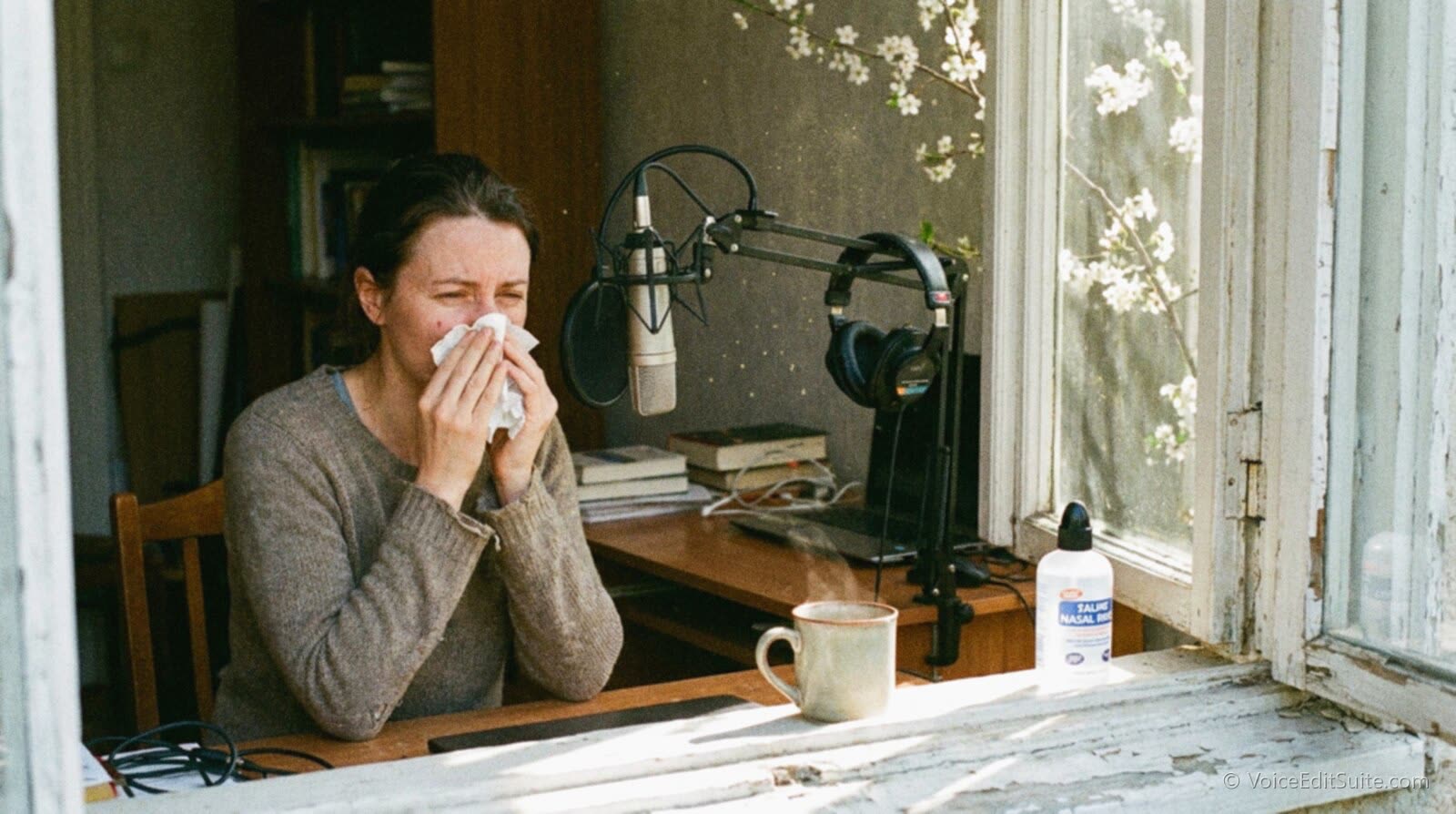
A saline nasal rinse clears congestion and allergens directly without the systemic drying effect of an oral antihistamine, and it's worth doing before a recording session specifically, not just as a general daily habit. Steam inhalation, even something as simple as a hot shower or a bowl of hot water held close to the face for a few minutes, loosens congestion and adds moisture back to irritated passages rather than removing it. Reducing allergen exposure directly, keeping windows closed during high-pollen hours, changing clothes and showering after time outside during a bad allergy day, and running an air purifier in your recording space, addresses the actual cause rather than just managing symptoms after the fact. Diet, hydration, and sleep for vocal health covers the broader daily habits that make any of this easier to manage consistently through a long allergy season.
↗ Try the tool
Performance Coach
A congested voice can sound subtly different across a whole allergy season without you fully registering the change day to day. Performance Coach's breakdown of every take can help you notice that shift before it affects client-facing work.
Open Performance Coach →When It's Worth Looking Past Allergies Specifically
Allergies and chronic sinus issues can also mask or worsen a separate vocal problem, since constant throat-clearing and post-nasal drip are themselves a source of vocal strain over a long season, independent of the congestion itself. Vocal nodules and polyps warning signs is worth a read if hoarseness persists well beyond what a bad allergy day would explain, or if it doesn't improve even once pollen counts drop, since at that point the allergy may no longer be the whole story.
Frequently Asked Questions
Are steroid nasal sprays a better option than oral antihistamines?
They work differently, targeting inflammation locally in the nasal passages rather than drying the whole body systemically, and many people find them effective with less of the drying trade-off. This is a question worth asking a doctor or pharmacist directly, since the right option depends on your specific symptoms and medical history.
Should I just cancel a session on a bad allergy day?
If your voice sounds and feels noticeably different, rescheduling is the more professional choice over recording and hoping it's not noticeable, the same logic that applies to protecting your voice between sessions generally. A client would rather wait a day than receive a take that needs to be redone later anyway.
Is it worth getting formally tested for specific allergies?
If allergy season significantly affects your working voice every year, yes. Knowing your specific triggers lets you prepare ahead of the season, adjust your environment proactively, and discuss targeted treatment with a doctor rather than guessing at generic over-the-counter remedies each time symptoms appear.