A voice actor's instrument is a physical structure that can be injured like any other, and the particular injuries worth knowing about by name, vocal nodules and vocal polyps, are common enough in people who use their voice heavily and professionally that recognizing the early warning signs matters as much as any technique or gear choice covered elsewhere on this site. Neither is a reason to panic. Both are very treatable, especially caught early, and both are also easy to make worse by pushing through the warning signs rather than addressing them.
What Nodules and Polyps Actually Are
Vocal nodules are small, callus-like growths that typically form on both vocal cords at matching points, usually from repeated vocal strain or misuse over time, the vocal equivalent of a callus from friction in the same spot over and over. A vocal polyp is a different kind of growth, usually appearing on just one vocal cord, often following a single, specific episode of vocal strain or trauma rather than a slow accumulation, and it can sometimes feel like a sudden onset rather than a gradual decline. Neither is cancerous, and both are, in the great majority of cases, treatable through some combination of voice rest, voice therapy, and in some cases a minor surgical procedure, but both also genuinely change how your voice performs if left unaddressed.
The Warning Signs Worth Taking Seriously
Ordinary, short-lived hoarseness after an unusually long or demanding session is not, by itself, a warning sign; it's a normal part of using your voice heavily, the same way sore muscles are a normal part of an unusually hard workout. What's worth paying attention to is hoarseness or a rough, breathy quality that persists for more than a couple of weeks without a cold or other obvious cause, a voice that consistently cracks or breaks at a specific pitch it didn't used to, a noticeable and persistent drop in your usable vocal range, or a sensation of needing real physical effort just to produce a normal speaking voice at a normal volume. Vocal strain research backs up what a lot of working voice actors learn the hard way: the earlier a persistent symptom gets addressed, the simpler and less invasive the fix usually is.
Ordinary Fatigue Versus a Genuine Warning Sign
Duration is the single most useful rule of thumb here: a symptom that fully resolves within a day or two of rest is very likely ordinary fatigue. A symptom that persists past two weeks, or that keeps recurring in a predictable pattern tied to your work schedule, is worth an actual evaluation rather than more waiting. Protecting your voice between sessions is the right habit for ordinary fatigue; it's not a substitute for medical evaluation once a symptom crosses into the second category.
Who to Actually See, and Why It Matters
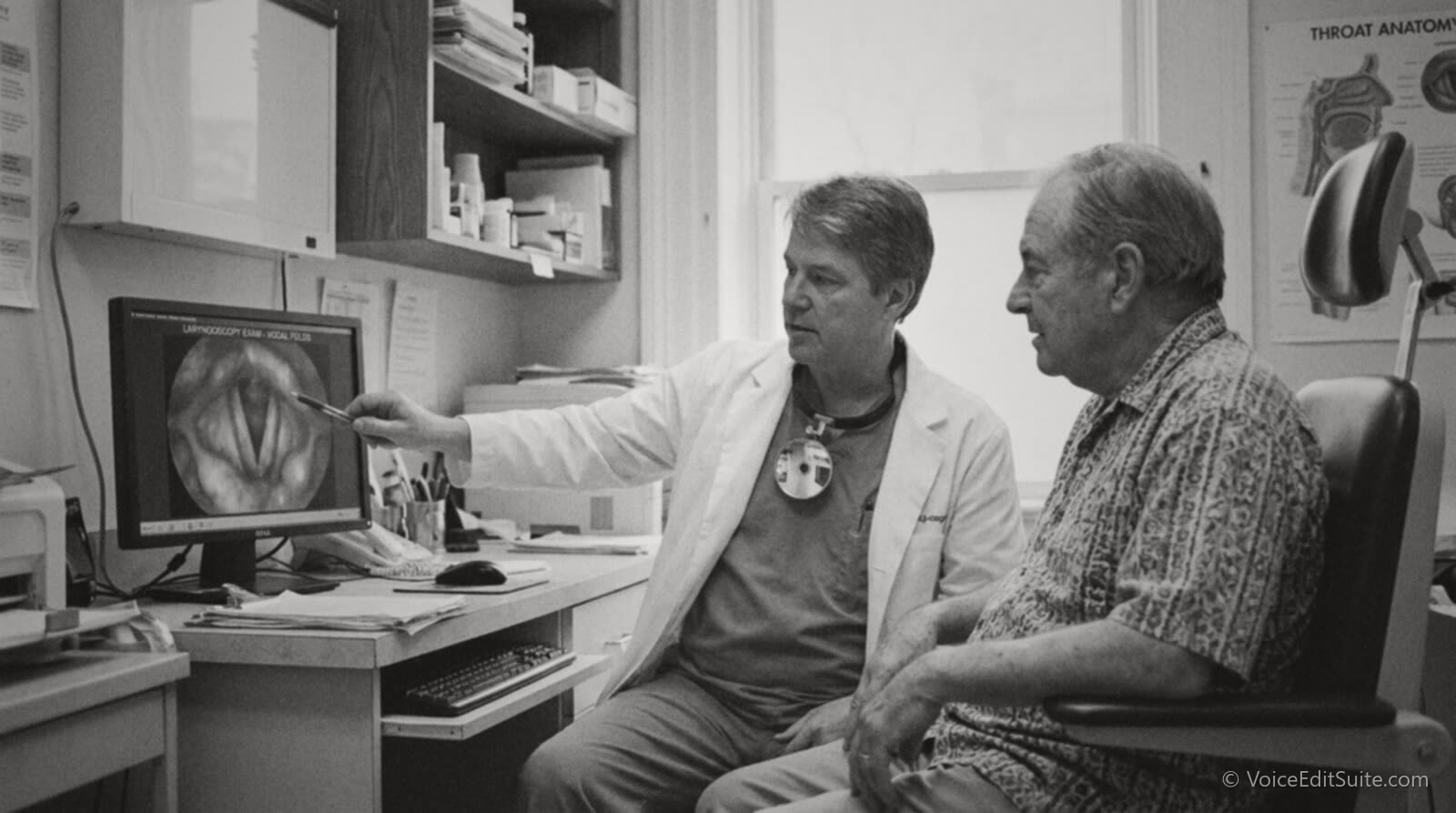
A laryngologist, an ear, nose, and throat specialist with specific additional training in the voice, is the right first call, rather than a general practitioner alone, because diagnosing a vocal fold issue accurately generally requires direct visualization of the vocal cords with a scope, which is outside a general physician's usual toolkit. Many laryngologists work closely with a speech-language pathologist who specializes in voice therapy, and for both nodules and many polyps, voice therapy alone, retraining how you produce sound to reduce the strain that caused the growth in the first place, resolves the issue without surgery in a meaningful share of cases. Surgery, when it is needed, is generally considered a last resort after therapy has been given a real chance to work, not a first-line response.
↗ Try the tool
Performance Coach
A pattern of vocal strain often shows up gradually across sessions before it becomes a real problem. Performance Coach's breakdown of every take can help you notice a creeping change in your own voice before it becomes something that needs medical attention.
Open Performance Coach →What Actually Reduces the Risk in the First Place
Proper breath support, rather than pushing volume and projection from the throat alone, is the single biggest factor in long-term vocal health for anyone using their voice professionally, and breath support and diaphragmatic breathing is worth genuine, ongoing practice rather than something you only think about during a warm-up. Adequate hydration, adequate rest, and simply not pushing through a session when your voice is already signaling fatigue are the other unglamorous basics that do more real preventive work than any single technique or product.
Frequently Asked Questions
Do vocal nodules or polyps end a voice acting career?
In the great majority of cases, no. Both are common, well-understood conditions with established, effective treatment paths, and many professional voice users return to full working capacity after proper treatment. The career risk comes mainly from ignoring persistent symptoms for a long time, not from the condition itself when it's caught and addressed reasonably early.
Can I tell the difference between a nodule and a polyp myself, from symptoms alone?
Not reliably. The symptoms overlap significantly, and an accurate diagnosis requires a laryngologist actually viewing your vocal cords with a scope. What you can reliably judge yourself is simply whether a symptom has persisted long enough, or recurred often enough, to warrant that evaluation in the first place.
Is it safe to keep recording professionally while a symptom is still present?
This is a question for a specialist, not a general rule, since it depends entirely on what's actually causing the symptom. As a general instinct, pushing a strained or injured voice through continued heavy professional use is how a minor, early issue often turns into a more serious one, so getting an evaluation before committing to a demanding work schedule is the safer order of operations.