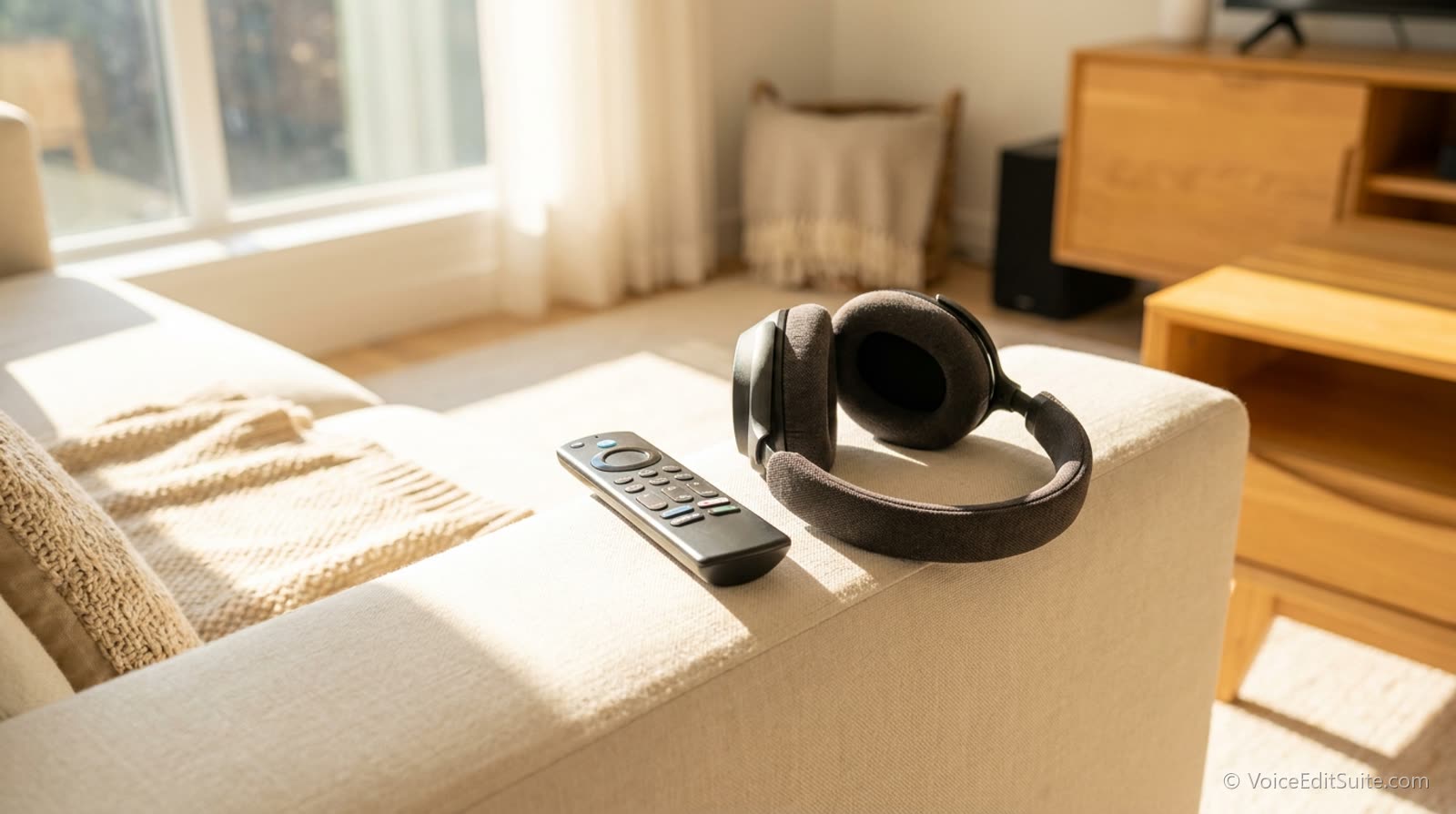
Audio description is narration inserted into the natural pauses of a television program's dialogue, describing key visual elements, action, scene changes, on-screen text, for viewers who are blind or have low vision. The FCC has required it on a growing list of television markets for years, but the current expansion is unusually predictable for a regulatory mandate: as of January 1, 2026, the requirement covers Nielsen Designated Market Areas (DMAs) 111 through 120, and the FCC's rule adds ten additional DMAs every year after that, DMAs 121 through 130 on January 1, 2027, continuing on the same schedule until every DMA in the country, up through 201 through 210, is covered by January 1, 2035.
What the Rule Actually Requires
Covered television stations, commercial affiliates of ABC, CBS, Fox, and NBC in each newly covered market, must provide 87.5 hours of audio-described programming per calendar quarter. That's a fixed, ongoing quota, not a one-time compliance box to check, which means every station entering the mandate each January becomes a recurring, quarter-over-quarter source of description work rather than a single project. Streaming platforms and cable networks are not covered by this specific broadcast rule, though several major platforms already provide audio description on much of their catalog voluntarily or under separate accessibility settlements, which is a parallel, less formally tracked source of demand on top of the broadcast schedule above.
What Audio Description Narration Actually Involves
"As a narrator, I read a special Audio Description script. You hear my voice in between lines of dialogue mostly, so blind and low vision audiences can have access to the visuals."
Samuelson, whose audio description narration credits include NCIS, Star Trek: Picard, and the Oscar-nominated 1917, has described the work elsewhere as similar to a specific, familiar broadcasting skill: reading description in the natural gaps of a program the way a sports broadcaster calls the action of a live game, timed precisely, concise, and matched to what's actually happening on screen rather than added freely wherever the narrator likes. That comparison is a useful way to think about the core skill audio description asks of a narrator: not a dramatic performance in the way a character read is, but tightly timed, neutral, information-dense narration that has to fit into gaps the original program didn't leave with description in mind.
This distinguishes audio description from most other narration categories in a specific, learnable way. Documentary narration and corporate e-learning narration both reward a similarly neutral, clear read, but neither requires the same second-by-second timing discipline against someone else's finished dialogue track that audio description does.
What the Market Research Estimates
Independent market research firms publish meaningfully different size estimates for the audio description services market, which is worth stating plainly rather than picking whichever number sounds best. One industry estimate puts the market at roughly $1.4 billion in 2026, growing to over $3.1 billion by 2033. A separate estimate puts 2024's market at roughly $1.2 billion, projecting growth to $3.5 billion by 2033 at a 12.5 percent compound annual growth rate. The two estimates use different base years and methodologies and shouldn't be treated as confirming each other, but both point in the same direction: real, sustained, double-digit growth, driven by the same regulatory expansion described above plus voluntary streaming-platform adoption.
How a Voice Actor Actually Gets Into This Niche
Audio description work is typically contracted through specialized description production companies and post houses that hold the relationships with broadcasters and streaming platforms directly, rather than booked ad hoc by individual voice actors reaching out to a network. Building a short, dedicated audio description demo, distinct from a general narration reel, and reaching out directly to established description production houses is the most common path in. Starting without a full demo reel applies here too: two or three well-timed sample description reads on a short, publicly available video clip demonstrate the specific timing skill this work requires better than a generic narration demo would.
↗ Try the tool
Script Accuracy Checker
Audio description scripts live or die on precise timing against someone else's existing audio. Script Check helps catch pacing and length issues before you're in a session discovering a description doesn't fit the gap it was written for.
Open Script Accuracy Checker →Frequently Asked Questions
Is audio description narration mostly done by blind or visually impaired narrators?
No, the field includes both sighted and blind narrators, though there has been a genuine, ongoing push within the accessibility community for more blind and visually impaired people to work as audio description narrators and describers themselves, on the reasoning that lived experience of blindness informs which visual details actually matter to describe.
Does the expanding mandate mean opportunity is shifting toward smaller media markets?
The mandate schedule itself is literally moving down the DMA rankings toward smaller markets each year, but the actual production work is still generally centralized with specialized description companies rather than distributed to local stations in each newly covered market, so the geographic effect on where the work is produced is more limited than the geographic effect on where it airs.
Are streaming platforms legally required to provide audio description?
Not under this specific FCC broadcast television rule, which applies to over-the-air commercial stations. Several major streaming platforms provide description voluntarily or as a result of separate accessibility litigation and settlements, which is a real but less formally standardized source of demand than the broadcast mandate above.
Sources and Further Reading
- Federal Communications Commission, Consumer Guide: Audio Description: the DMA expansion schedule, the 87.5 hours per quarter quota, and which stations are covered.
- Wiley, FCC Expands Audio Description Requirements to All Television Markets: legal summary of the phased expansion to all DMAs by 2035.
- DirectorsNotes.com, Meet Roy Samuelson, the Voice-Over Artist Helping the Blind & Visually Impaired Experience Films: the Roy Samuelson quote and background on his audio description narration work.
Corrections
Market size figures above are drawn from published industry research reports with differing methodologies and base years, and should be read as directional estimates rather than a single audited figure. The Roy Samuelson quote is reproduced verbatim from the cited published interview. Spot an error? Tell us through the contact page and we will correct it with a note.