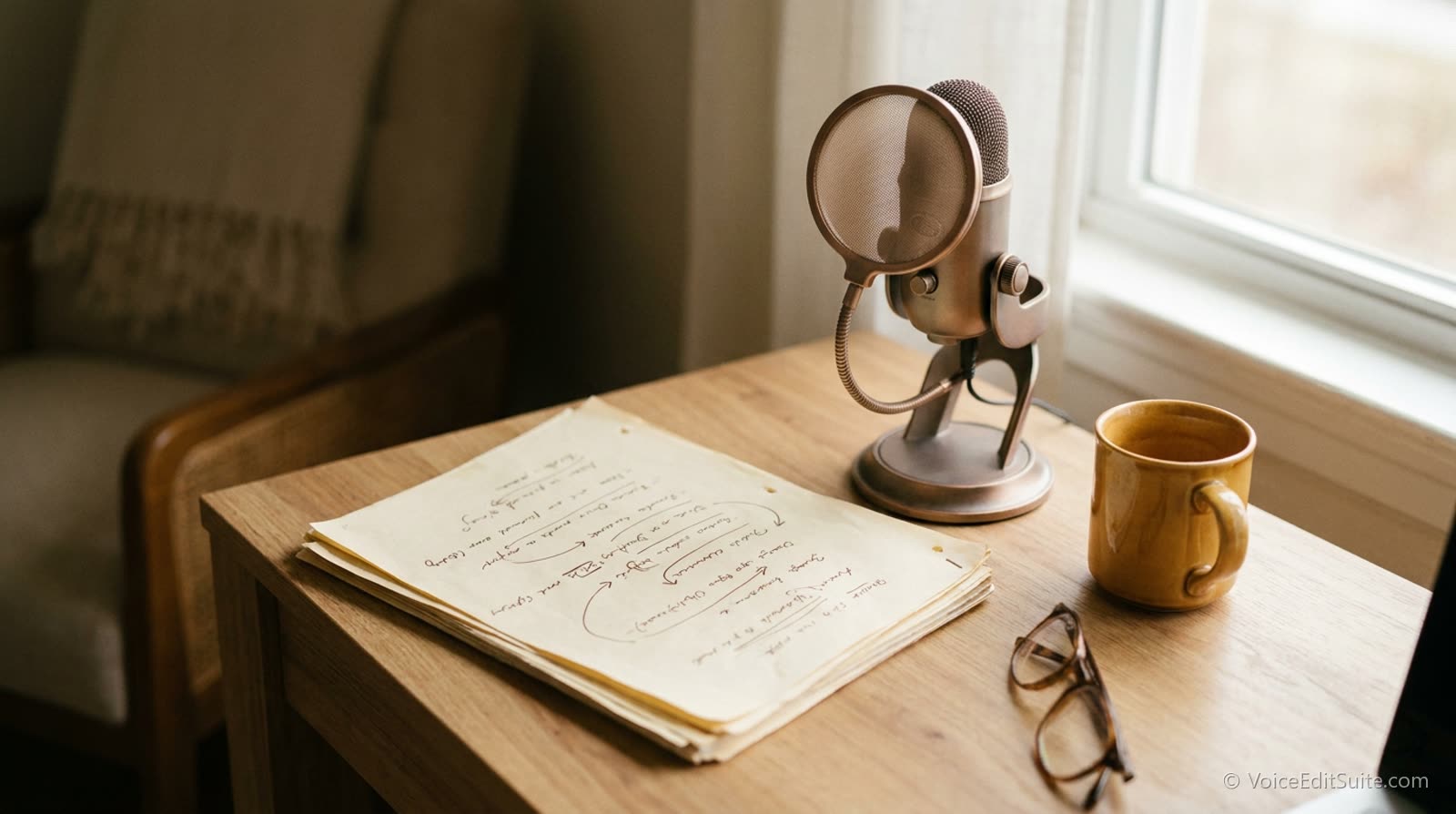
Documentary narration sits in an unusual place among voice over niches: the visuals are already carrying most of the story, and the narrator's job is to guide attention without competing with what is on screen. That is a different skill from audiobook narration, where the voice is the entire experience, and different again from a commercial read, where energy and persuasion do most of the work. A documentary narrator who brings audiobook-level performance or commercial-level energy to a nature documentary will sound wrong within the first sentence, even if the read itself is technically clean.
Restraint Is the Actual Skill
The most common note a documentary director gives a narrator who is new to the format is some version of pull back. Enthusiasm that would work perfectly in a corporate explainer reads as pushy over footage of a glacier calving or an archival photograph from a historical account. The narrator's job is closer to a trusted guide pointing at something interesting than a performer trying to hold attention through vocal energy alone; the visuals and the editing are already doing the work of holding attention, and a narration that tries to do the same job on top of them fights the footage instead of supporting it.
- Slow down more than feels natural at first. Documentary pacing tends to run noticeably slower than commercial or corporate reads, with real space around key facts and names.
- Let the footage carry emotional weight the narration does not have to. A dramatic visual moment usually calls for a quieter, more restrained line reading, not a bigger one.
- Match tone to subgenre, since a wildlife documentary, a historical retrospective, and a true crime investigation each call for a genuinely different baseline energy, even though all three are technically "documentary narration."
- Ask for reference clips before recording, not just a script. Hearing the narrator a director already has in mind tells you more about the target than any written direction can.
The Genre Changes the Read More Than the Word 'Documentary' Suggests
A nature or science documentary generally wants a calm, even, observational tone, closer to an expert explaining something they find genuinely interesting than to a performer. A historical or archival documentary tends to want more gravity and measured authority, someone who sounds like they have earned the right to narrate this material. True crime and investigative documentaries often call for a more tense, deliberate pace, with real weight placed on specific facts and timeline details. A character-driven personal essay style documentary wants the most emotional warmth of the four, closer to a first-person storyteller than a narrator standing outside the material. Treating all four the same way is the single most common mistake a narrator new to the niche makes.
Building a Sample That Actually Demonstrates This
A general demo reel rarely proves documentary range convincingly, because the restrained pacing this niche calls for can sound flat or low-energy sitting next to commercial and corporate clips built around a very different kind of energy. A short, dedicated documentary sample, three or four contrasting excerpts covering at least two of the subgenres above, does far more to show a producer what you actually sound like reading this specific kind of copy. Marking up the script for pacing and emphasis before recording a sample like this is worth the extra time; documentary reads live or die on where the pauses land.
This niche overlaps with narration work more broadly
Skills built for corporate and e-learning narration or medical and legal narration, clear, unhurried, trustworthy delivery, transfer directly into documentary work, even though the subject matter and pacing differ.
Documentary production budgets vary enormously, from large streaming-platform originals to small independent films funded on a shoestring, and rates follow that spread closely. A quote built around actual usage terms and project scale, the same discipline that applies to any other narration project, matters as much here as anywhere else, and arguably more, given how wide the budget range across this niche actually runs.
↗ Try the tool
Performance Coach
Free to try: the Performance Coach gives specific feedback on pacing and delivery, useful for dialing in the restrained, unhurried tone documentary narration actually calls for before you send a sample to a producer.
Open Performance Coach →Less Performance, More Trust
Documentary narration rewards a narrator who can sound like a knowledgeable, trustworthy presence rather than a performer working to hold attention. Slower pacing, genre-appropriate restraint, and a dedicated sample that actually demonstrates the range this niche calls for will do more for a documentary career than a general demo reel ever will.