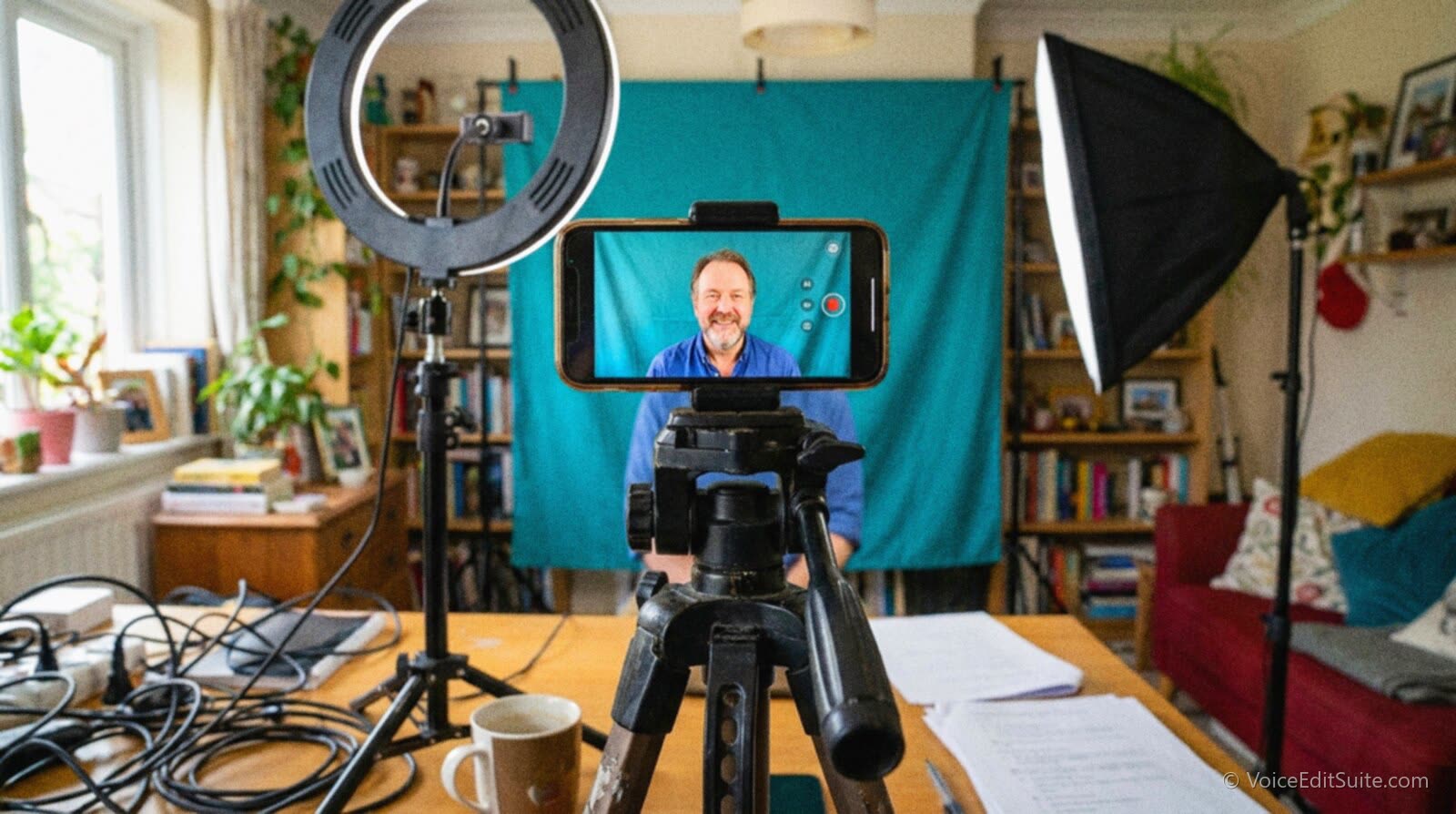
A growing number of voice over auditions, especially for animation, games, and commercial work with a casting director who wants to see the person behind the voice, ask for a short on-camera slate or introduction alongside the audio read itself. That request catches a lot of voice actors off guard, because a setup built entirely around audio quality often has no real plan for how it looks on camera, and a dim, grainy, or poorly framed slate undercuts an otherwise strong submission before casting has even pressed play on the actual read.
Why Most Home Lighting Fails on Camera
Ordinary overhead room lighting, the kind that's perfectly fine for everyday life, almost always looks flat, yellow-tinted, or unflattering on a webcam or phone camera, because a single overhead source creates harsh shadows under the eyes and a lower camera angle looking up your nose doesn't help. A single window as your only light source creates the opposite problem: beautiful light, but harshly directional and completely dependent on the time of day and the weather, which makes it unreliable for an audition you might need to film on short notice at any hour.
A Simple, Repeatable Setup That Actually Works
A single, affordable LED panel or ring light placed just behind and above your camera, pointed directly at your face, solves the great majority of the problem on its own, evenly filling in shadows and giving consistent, repeatable results regardless of the time of day.
Positioning the camera at eye level rather than below it, propped on a stack of books or a small stand rather than balanced on a laptop's built-in webcam angled upward, removes the unflattering low-angle look in a way no amount of lighting can fix on its own. Neither of these fixes costs much, and both matter more to the final impression than an expensive camera does.
What Actually Moves the Needle
A plain, uncluttered background matters more than most voice actors expect, and costs nothing to fix: a blank wall or a simple backdrop keeps a casting director's attention on your face rather than on a messy bookshelf or visible clutter behind you. Camera resolution itself, by contrast, matters far less than people assume; a modern phone's camera is more than sufficient quality for this purpose, and spending money upgrading camera hardware before fixing lighting and framing is solving the wrong problem first.
↗ Try the tool
The Cold Read
A slate is often filmed cold, with little time to prepare. The Cold Read's daily 29-second practice target builds the same quick, confident on-the-spot delivery a good slate needs.
Open The Cold Read →The Slate Itself Deserves Practice Too
A video slate asks for a different, more immediate kind of confidence than an audio-only read, since there's nowhere to hide a nervous moment the way an audio-only take can sometimes mask it. Slating an audition well is a specific, practicable skill, and rehearsing your on-camera slate exactly as many times as you'd rehearse the read itself, rather than treating it as an afterthought you'll just wing in the moment, shows in the final result more than most voice actors expect.
Frequently Asked Questions
Is a smartphone camera good enough for a self-taped audition, or do I need a real camera?
A modern smartphone camera is genuinely good enough for this purpose. Recording voice over on a phone covers the audio side of this same question, and the same logic applies to video: the camera itself is rarely the limiting factor compared to lighting, framing, and a stable, non-handheld shot.
Does a video slate need the same acoustic treatment as an audio-only recording?
Yes, if the slate includes you speaking on camera with usable audio, which it almost always does. The room you film in should meet the same basic noise and reflection standards as any other recording, even though the visual setup is the newer consideration most voice actors haven't thought through yet.
Does what I wear or how I look on camera actually affect casting decisions?
Casting is primarily evaluating your voice and read, not your appearance, but a reasonably neat, simple presentation that doesn't distract from the slate is generally the safer choice, the same instinct behind building your demo reel and portfolio around letting the work speak clearly rather than adding unnecessary distraction.