
The short answer: book guests with a short, specific, personalized email built around one clear ask, not a mass pitch. Before you lock in a date, check their gear and room the way you'd check your own, with a short test call rather than a hopeful guess. Confirm the date through a scheduling tool that handles time zones automatically, send a real prep sheet or topic outline a few days ahead, and get a signed release before the episode goes out. None of that holds up as a one-time scramble before a single episode. It holds up because it's a pipeline you run the same way for guest number forty as you did for guest number four.
Writing an Outreach Email a Guest Actually Answers
Most podcast guest pitches get deleted in the time it takes to read the first line, and the general data on cold outreach backs that up. Instantly's 2026 Cold Email Benchmark Report puts the platform-wide average reply rate at 3.43 percent, and other benchmark studies land anywhere from roughly 1 to 5 percent depending on sample size and how a reply gets counted. A podcast pitch isn't a sales email, but it competes for the same few seconds of attention in a crowded inbox, and the ones that beat those odds share a shape: short, specific to the one person reading it, and built around a single clear ask instead of several vague ones.
A useful test before you hit send: could the recipient say yes to this email from their phone, in under a minute, without opening an attachment or scrolling past a paragraph of your own bio first. If the answer is no, the email is working against itself before it ever reaches the guest's actual decision.
- A subject line that names the show or the exact topic. "Collaboration opportunity" reads as a template. "A [Show Name] episode on [specific topic]" reads as a real invitation.
- One sentence that proves you did the homework. Reference a specific episode, article, or project of theirs, not generic praise that could apply to anyone in their field.
- The exact ask, stated plainly. Format, approximate length, and the one or two things you actually want them to talk about, not a vague "we'd love to have you on."
- A concrete way to say yes. A date range or a scheduling link beats "whenever works for you," which quietly hands the guest the job of figuring out your availability.
- What's in it for them, honestly stated. Audience size, a typical episode's reach, or where it gets distributed. If the show is small, say so plainly rather than oversell it; most guests appreciate the honesty more than the hype.
A pitch earns its reply by being easy to act on, not by sounding impressive. The quickest way to lose that ease is to pack in extra requests the guest didn't ask for.
- A long attached bio or press kit nobody asked for in the first email.
- A generic compliment that could be copy-pasted into a hundred other pitches.
- More than one ask bundled together: be a guest, and review a product, and share it with their list.
- An opening line like "Hope this finds you well," which signals a template before the reader gets to the actual content.
- Vague availability that forces the guest to do the scheduling math instead of you.
Put the two lists together and the whole pitch fits on one phone screen without scrolling, which is part of why it gets a reply at all. SavvyCal's own guide to podcast guest outreach makes a similar point: specificity about the show, the topic, and the ask does more work than any amount of polish on the wording.
A pitch that lands gets you a yes. It doesn't tell you whether the recording itself will actually sound usable, which is a separate question worth settling before a date goes on the calendar, not discovered the day of the session.
Vetting a Guest's Ability to Record Good Audio, Before You Book the Call
A great guest with unusable audio is still a bad episode, and the fix almost always needed more lead time than it got. The guest didn't do anything wrong; nobody asked what they'd be recording on, or where they'd be sitting, until it was too late to change either one. A short check, done once before the date is confirmed, catches most of what would otherwise surface as a surprise during editing.
A Two-Minute Equipment Check
- Ask directly what they plan to record on: a USB microphone, a wired headset, or their laptop or phone's built-in mic. Treat "I'll probably just use my laptop" as useful information to plan around, not a disqualifier.
- Get them on a short video call before the real session, even five minutes, and listen through headphones rather than your laptop's speakers. A call can sound fine through small speakers and still have clipping, hum, or a hollow room tone that headphones expose immediately.
- Confirm they'll wear headphones during the real recording, not use speakers, so your voice doesn't bleed back into their microphone and create an echo in your own track.
- If both audio and video stutter on the test call, that's usually an internet connection message, not a performance limitation, and it's much easier to troubleshoot now than fifteen minutes into the real recording.
A Quiet Space Check
Equipment only gets a guest halfway there. The room they'll sit in matters just as much, since even a good microphone picks up the echo of a bare room or the rattle of a window air conditioner. Ask where they plan to record and whether it's carpeted or furnished, since hard, empty rooms reflect sound in a way that's hard to fix after the fact. The fuller setup for running the remote side of a session, from the guest's connection to how the call itself is routed, is covered in recording a podcast with remote guests. If the gap turns out to be less about the room and more about one voice simply sitting quieter than the other once you're in the recording, matching levels when a guest is quieter than the host covers the fix for that specific problem.
↗ Try the tool
Home Studio Analysis
Most guests have never critically listened to their own recording space, so asking them to self-assess rarely catches the echo or hum they've simply gotten used to. Send them a link to run a short sample through VoiceEditSuite's free Home Studio Analysis before the real session, and you get an objective read on their room and gear instead of a guess, with enough lead time left to suggest a closet full of clothes to soften a bare wall, or moving their desk away from a window, before anything gets recorded for real.
Open Home Studio Analysis →Scheduling Logistics: Tools, Time Zones and Confirmation
A chain of "does Tuesday work" emails is where a surprising number of confirmed guests quietly fall off before a date ever gets set. A scheduling link that shows only your real open slots, synced to your existing calendar, removes most of that back and forth and converts time zones automatically, which matters more than it sounds once a guest is in a different part of the country or world. Calendly, SavvyCal, and similar tools are the ones most commonly recommended for this specifically because they check your calendar for conflicts before a slot is even offered, rather than relying on you to remember what else is already booked that day.
- Build in a buffer before and after each recording slot, so a guest running long doesn't collide directly with the next booking.
- Let the scheduling link show your real calendar, not a manually maintained list of open times that drifts out of date within a week.
- Send a confirmation that includes the join link, a backup phone number, and the name of the recording platform you'll use, so there's a fallback if the primary link fails.
- Automate a reminder at roughly 24 hours and again at one hour before the session; a no-show is far more often a forgotten appointment than a change of heart.
Whatever platform you record on, picking the right one for remote guests matters as much as the scheduling layer around it, since some handle unreliable connections and separate audio tracks far better than others. The main options are compared directly in remote recording software compared, four ways, which is worth reading before you settle on a default rather than after a session reveals the gaps in whatever you happened to pick first.
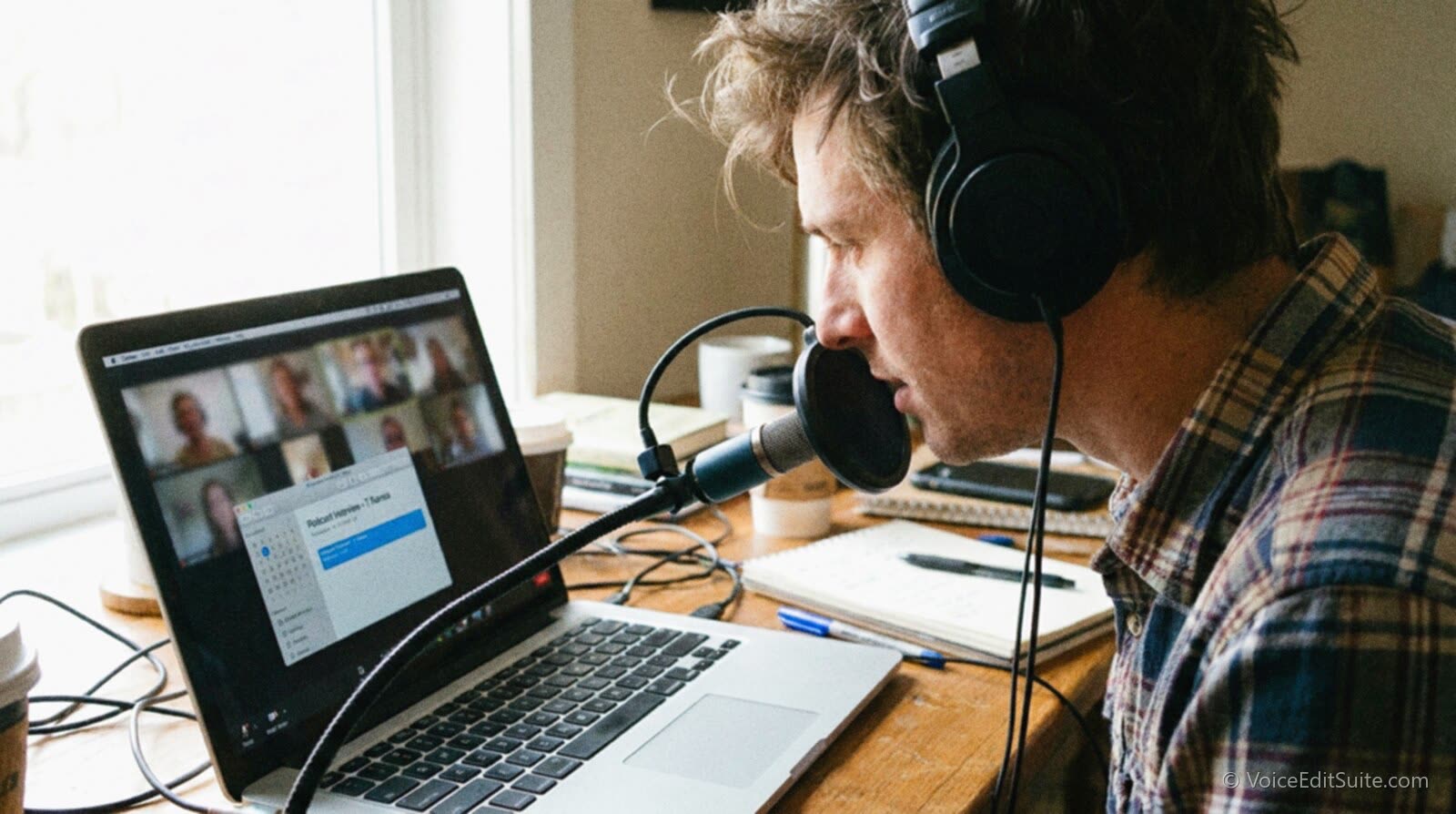
Scheduling tools remove the logistics friction, but they don't tell a guest what you actually want to talk about once the call connects. That's a separate step, and skipping it is one of the more common reasons an otherwise well-booked episode still comes out thin.
Sending a Prep Sheet or Topic Outline in Advance
A guest who knows roughly what's coming gives a more specific, more confident interview than one who's improvising cold. That doesn't mean handing over a word-for-word script, which tends to produce stiffer answers, not better ones. A short prep sheet sent a few days ahead, covering the shape of the conversation without scripting every line, does more for the episode than either a surprise interview or a fully rehearsed one.
- The episode's working topic or title, so the guest knows the angle rather than guessing at it.
- Three to five real questions or topic areas, written as open prompts rather than a rigid script to read from.
- Who the audience actually is and roughly how long the episode runs, so the guest can calibrate how much background to assume and how much detail to give.
- A reminder of the recording logistics already confirmed: platform, time, time zone, and the backup contact number.
- A simple, specific ask for one or two stories or examples they're comfortable sharing, since guests often have a better anecdote in mind than whatever you'd have thought to ask for.
- A short note on when and where the episode will publish, so they know what to expect and can plan to share it.
Timing matters almost as much as content. A prep sheet sent the same day tends to arrive too late for a guest to think it over, and one sent a month ahead is often forgotten by the time the session arrives. Three to five days ahead is enough lead time to think without enough time to forget.
Consent and Release Forms for Using the Recording
Recording a conversation without clear consent is a genuine legal exposure, not just a courtesy. The Reporters Committee for Freedom of the Press notes in its Reporter's Recording Guide that every state except Vermont has at least one law restricting the recording of private conversations, and that consent requirements vary by state, sometimes described loosely as "two-party" consent laws even though they technically require every participant's consent, not just two. Because a remote guest may be recording from a different state than you are, the safer standard is to treat every session as if the stricter rule applies: tell every participant plainly that you're recording, and get clear consent before you start, every time, regardless of where either of you happens to be.
A verbal "is it okay if I record this" at the top of a call covers the legal minimum in most cases, but it doesn't cover what happens to the recording afterward, which is a separate question a release form answers. Templates vary, but the fields that show up consistently, including in a short release form published by Columbia University Libraries, cover the same handful of things: permission to record, permission to edit and publish, rights to use the guest's name and likeness, how the recording may be reused beyond the original episode, and whether any compensation is involved.
- Recording consent, stated plainly, not just implied by the guest showing up to the call.
- Publishing and editing permission, covering the finished episode as well as any trims or edits made to it.
- Name and likeness rights, so a guest's name, voice, and any video can be used in the episode and its promotion.
- Repurposing permission, covering short clips for social media or video, which is a separate use from the full episode and worth naming explicitly rather than assuming it's included.
- Compensation terms, even when the answer is simply that none is being paid, so there's no ambiguity to revisit later.
None of this needs to feel heavy for the guest. A one-page form sent alongside the scheduling confirmation, signed electronically before the recording date, takes a guest under a minute and settles a question that's far harder to resolve after an episode is already edited and scheduled to go out.
Building a Repeatable Guest Pipeline Instead of Scrambling Every Episode
Podcast listening keeps setting new highs, which means more shows are competing for the same pool of interesting guests, not fewer. Edison Research's Infinite Dial 2026 study, now in its 28th consecutive year tracking American media behavior, found that 58 percent of Americans aged 12 and older, roughly 167 million people, had listened to or watched a podcast in the past month, a record for the medium. A guest who gets a thoughtful, well-run invitation today is very likely getting several other invitations the same week. The hosts who book consistently well tend to be the ones running a pipeline rather than restarting the whole process from a blank page before every episode.
- Keep a running list of potential guests as you find them, not just when you're actively short on bookings. A name worth pitching rarely shows up exactly when you need one.
- Track every pitch's stage somewhere you can see it at a glance: pitched, replied, scheduled, recorded, published. A simple system for this, built for freelancers and solo producers without buying actual CRM software, is covered in tracking auditions and bookings, no CRM needed.
- Batch outreach into a set block of time each week rather than sending pitches reactively whenever a recording slot opens up with nobody in it.
- Keep a saved pitch template, prep sheet template, and release form ready to go, so each new booking is a matter of filling in specifics, not writing from scratch.
- When an episode featuring a past guest publishes, let them know directly rather than assuming they'll stumble across it. A guest who feels well taken care of is far more likely to agree to a return appearance or refer someone else in their network.
What an episode looks like once it's live also feeds back into the pipeline: a guest is more likely to share, and more likely to come back, when the episode gets a genuinely good write-up rather than a one-line description nobody can find. The practical side of that, titles, descriptions, and transcripts search engines and guests can both find, is covered in podcast show notes SEO: getting found.
None of the individual pieces here are complicated on their own. What makes the difference over a year of episodes is doing each one the same way every time: the same pitch structure, the same two-minute check, the same scheduling link, the same prep sheet, the same release. A system that holds up on episode forty is the same one you built on episode four, just run on repeat.
Frequently Asked Questions
How many times should I follow up on a guest pitch before giving up?
One polite follow-up, sent roughly a week after the first pitch, is reasonable and often what actually gets a reply, since the original email may simply have been buried rather than ignored. A second follow-up after that rarely changes the outcome and risks reading as pressure. If there's no response after two attempts, move on to the next name on your list rather than treating silence as something to overcome.
What if a potential guest can't or won't do a quick test call before the real session?
A short asynchronous check works almost as well: ask them to send a ten-second voice memo from their phone, recorded in the room they'll actually use, which tells you most of what a live test call would. It's a reasonable substitute when a live call genuinely doesn't fit their schedule, but skipping any check at all is the version that tends to produce surprises during editing.
Can I get a signed release after recording instead of before?
You can, and plenty of shows do, but it shifts the leverage: a guest who's uncomfortable signing after hearing themselves back has more reason to hesitate than one who agreed to the terms before anything was recorded. Getting it signed alongside the scheduling confirmation, before the session, avoids that awkward conversation entirely and means you're never waiting on a signature to publish an episode that's otherwise ready.
Will someone worth having on actually agree to be a guest on a small show?
More often than hosts expect, especially when the pitch is specific and clearly shows real homework rather than a mass send. Many guests, particularly authors, founders, and specialists promoting their own work, value a focused conversation with an engaged host over raw audience size. Being honest about your show's current reach in the pitch, rather than overselling it, tends to build more trust than it costs you.
What's a reasonable policy when a guest cancels or doesn't show up?
Build in one easy, no-questions reschedule as the default response to a genuine conflict; most cancellations are logistics, not a change of heart. A true no-show with no message at all is different, and it's reasonable to offer one rebooking attempt before quietly moving the name to a lower-priority list. Keeping that decision consistent across every guest, rather than deciding it case by case under time pressure, is part of what a written pipeline is for.
Sources and Further Reading
- Edison Research, The Infinite Dial 2026: the 28th-year study finding 58 percent of Americans aged 12+ (about 167 million people) listened to or watched a podcast in the past month, a record for the medium.
- Reporters Committee for Freedom of the Press, Reporter's Recording Guide: the state-by-state summary noting every state except Vermont has at least one law on recording private conversations, and that so-called two-party consent laws technically require every participant's consent.
- Columbia University Libraries, Podcast Guest Release Form: an institutional example of the fields a basic guest release form covers.
- Instantly, 2026 Cold Email Benchmark Report: the platform-wide average cold email reply rate of 3.43 percent cited for general outreach-response context.
- SavvyCal, How to Land Great Podcast Guests (With Email Templates): guidance on writing a specific, personalized podcast guest pitch, and on scheduling tools built for podcast booking.
- The Podcast Host, 9 Ways to Prepare for the Best Podcast Interview You've Ever Recorded: practical guidance on sending guests topics in advance without scripting the conversation.