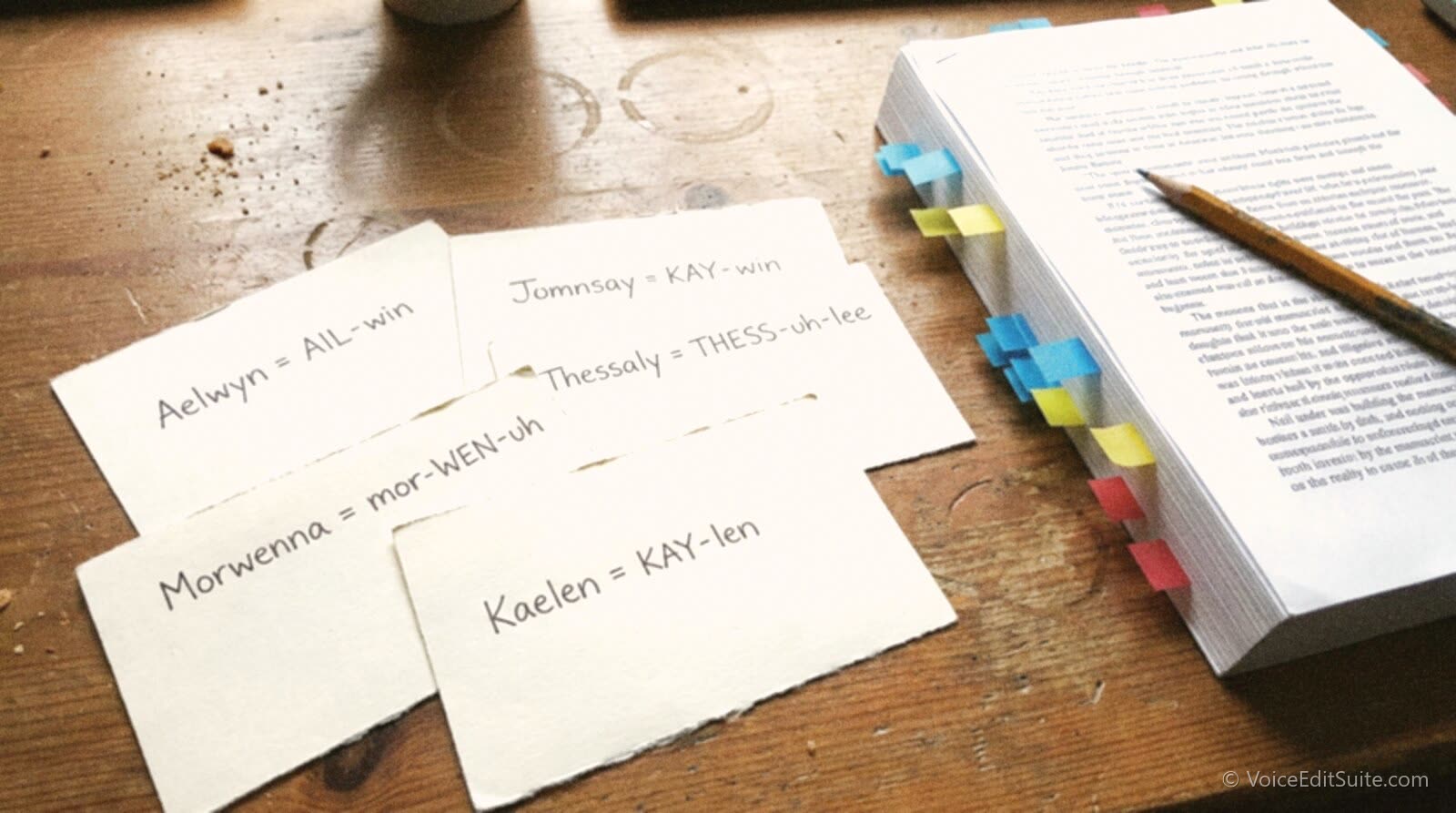
A single unfamiliar word, a character's invented name, a technical term, a place name in a language you don't speak, can stop a recording session cold. The actual lookup might take thirty seconds, but the real cost is everything around it: losing your place in the performance, breaking the momentum of a scene you were reading well, and then needing a few sentences to get back into the same energy you had before the interruption. A pronunciation glossary built before you start recording, rather than assembled on the fly, turns dozens of these small stops into one focused research session up front.
How to Actually Build One
Read through the full manuscript, or at minimum the full chapter you're about to record, before you ever press record, flagging every name, invented term, technical word, and foreign-language phrase you're not already completely confident pronouncing. For real place names, historical figures, and existing technical terms, a quick, reliable source search settles most of it directly. For invented fantasy or science-fiction names with no established pronunciation anywhere, you're making a deliberate choice rather than looking up an answer, and the glossary's real job at that point is recording the choice you made so it stays identical in chapter twenty that it was in chapter two.
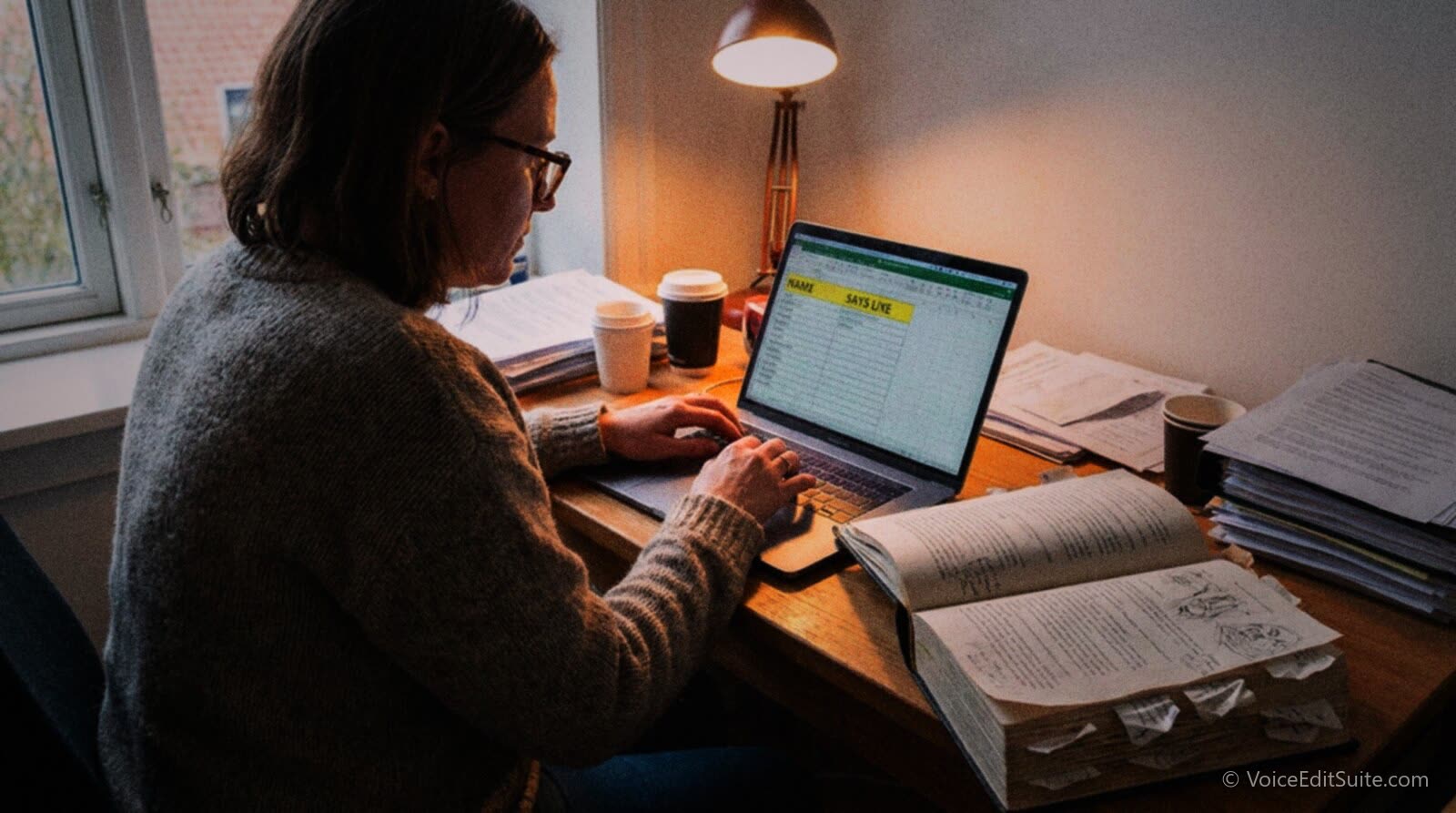
A plain spreadsheet or document works fine: one column for the word as written, one for a simple phonetic spelling in your own shorthand, and one for a brief note on context, who says it, how often it comes up, anything that might affect emphasis. Character bible and voice consistency covers the closely related practice of tracking a character's voice choices over a long project; a pronunciation glossary is really the same discipline applied specifically to the words themselves rather than the performance choices around them, and the two documents work well kept side by side.
Where the Time Actually Goes
The glossary doesn't eliminate the research, it just moves nearly all of it to before you start, where a stop doesn't cost you a broken take or a lost performance thread. How long it actually takes to edit an audiobook is worth reading alongside this, since fewer stop-and-start moments during recording also means a cleaner raw recording with fewer edit points to clean up afterward, which saves real time on the back end as well as during the session itself.
↗ Try the tool
ACX Audiobook Prep
Pronunciation consistency is one of the specific things ACX's quality standards expect across an entire audiobook. The ACX Audiobook tool helps you check a finished chapter against those standards before submission.
Open ACX Audiobook Prep →Keeping the Glossary Alive Across a Long Project
A glossary that only gets built once, before chapter one, and never gets touched again isn't quite finishing the job, since new names and terms keep appearing throughout most books. Updating it at the end of every recording session, while the new terms are still fresh, rather than trying to catch up on a backlog later, keeps it genuinely current and genuinely useful for the rest of the project. Narrating children's books and educational audio is a good example of a category where this same discipline matters even in a much shorter project, since the stakes for getting an educational term consistently right are just as real at ten minutes as they are at ten hours.
Frequently Asked Questions
Should I just ask the author how something is supposed to be pronounced?
If you have access to the author or a project contact and the term's pronunciation genuinely isn't established anywhere else, yes, that's usually the fastest and most reliable source. It's worth asking early, before recording starts, rather than discovering the uncertainty mid-chapter.
What about pronunciation consistency across a multi-book series, especially with different narrators?
This is exactly where a well-documented glossary earns its value beyond a single project: handing it off to a different narrator recording a sequel, or referring back to it yourself a year later for book three, keeps the whole series consistent for listeners who notice every change.
Do I need to learn formal phonetic notation like IPA to do this properly?
No, a simple, personal shorthand that you yourself can read reliably is entirely sufficient, since the glossary only needs to work for you. Formal phonetic notation is useful if you're sharing the glossary with another narrator who might not interpret your shorthand the same way, but it's not a requirement for your own working document.