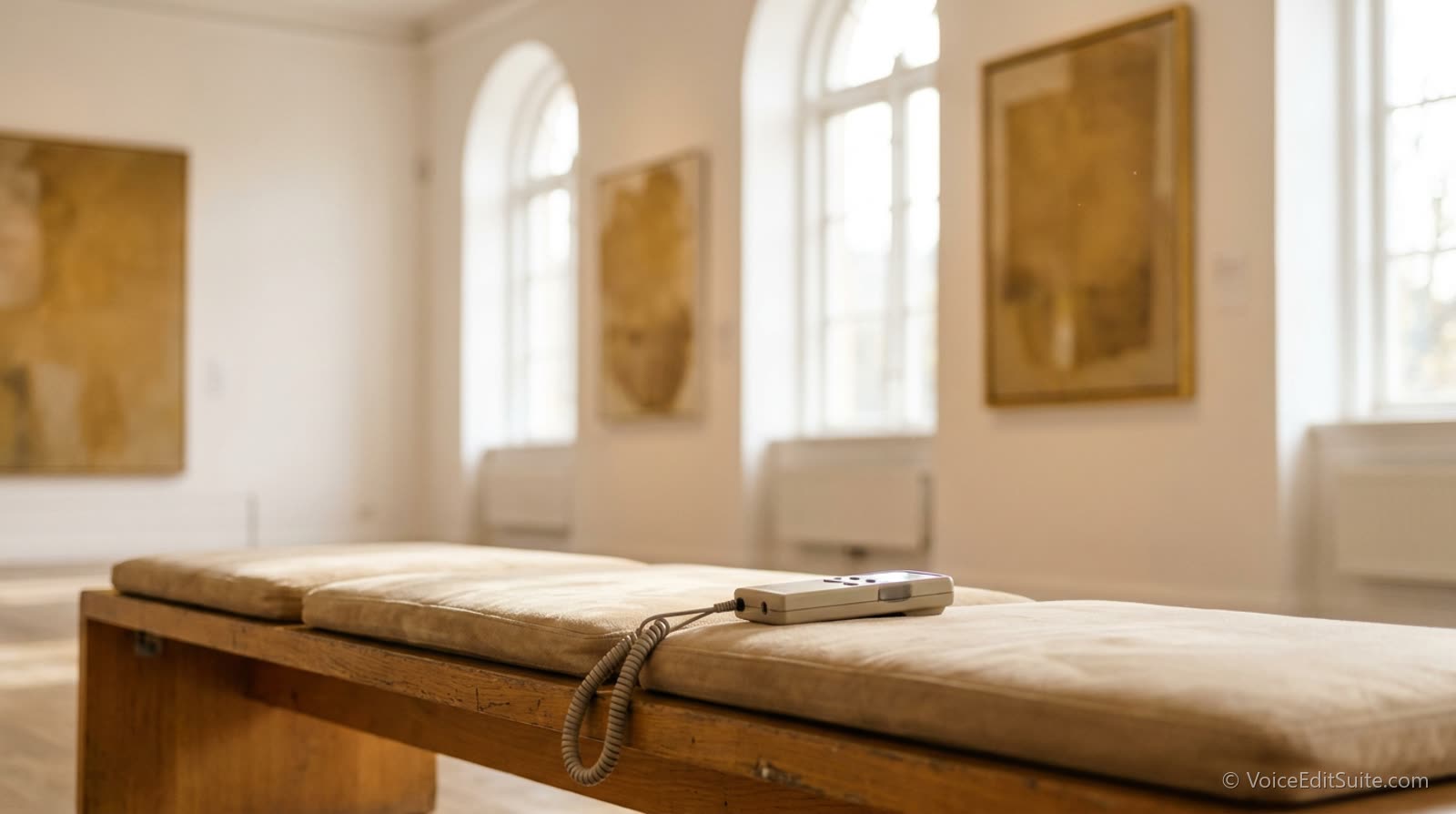
Museums, historic sites, botanical gardens, self-guided walking tours, and cultural institutions all commission audio narration on a recurring basis, for permanent collections, rotating exhibitions, and app-based city tours alike. It's a genuinely steady niche that gets far less attention in voice over discussion than commercial or e-learning work, which in practice means less competition for a working voice actor willing to build the specific skills it asks for.
What the Read Is Actually Like
Museum and audio guide narration sits closer to documentary narration than to commercial work: warm, unhurried, informative, and paced to let a listener actually look at what's in front of them while listening rather than rush toward a persuasive close. A visitor standing in front of a painting or an exhibit is a captive, patient audience in a way a commercial's audience rarely is, which changes what a good read sounds like. Overly energetic, salesy delivery reads as jarring and out of place in this context; a good museum narrator sounds more like a knowledgeable friend walking beside you than a broadcaster.
Family-oriented content calls for a simpler vocabulary and a slightly more playful energy than an adult exhibit tour, but the same underlying patience applies: a child moving through a museum still needs time to actually look at what's being described.
Where Museum Narration Work Actually Comes From
That first slice, dedicated audio tour production companies, is worth knowing about specifically because it's the least obvious entry point from outside the niche. These companies build and license guide content across many museums and historic sites rather than any single institution producing its own narration in-house, which means one relationship with a production company can lead to recurring work across multiple venues rather than a single one-off project.
How to Actually Get Into This Niche
A short demo built around an actual museum or historic-site style script, warm, informative, unhurried, paced with natural room for a listener to look around, demonstrates this register far more effectively than a general narration reel does. Starting without a full demo reel applies directly here, since two or three well-chosen sample reads built specifically for this register carry more weight with a museum or tour production company than a broader demo that never quite shows this specific, patient pacing. Direct outreach to dedicated audio tour production companies, along with local museums' education or visitor experience departments, is generally more productive than waiting for a public casting notice, since a lot of this work is relationship-driven and repeat-booked.
↗ Try the tool
Script Accuracy Checker
Museum scripts are often written by curators and educators rather than professional copywriters, which means pacing and pronunciation issues show up more often than in a polished ad script. Script Check catches them before you're in the booth.
Open Script Accuracy Checker →Frequently Asked Questions
How does museum narration pay compare to other niches?
It varies widely by institution size and whether the work is a buyout or a licensed, ongoing use, and it's worth applying the same rate-setting discipline here as anywhere else rather than assuming a cultural institution automatically pays less because the work feels more mission-driven than commercial.
Does this niche often require narration in multiple languages?
Frequently, yes, especially for institutions in major tourist destinations serving international visitors. A voice actor genuinely fluent in a second language has a real, distinct advantage in this specific niche compared to most other voice over categories, where multilingual work is less consistently in demand.
Does this overlap with audio description work?
They're related but distinct. Audio description specifically narrates visual content for blind and low-vision audiences within a fixed timing structure, while general museum narration is aimed at all visitors and has more flexibility in pacing and content, though some museums do commission a dedicated audio-description track for their exhibits as a separate, additional production.