
Working directly with a client, a small business owner, a startup founder, a local agency, without an agent, casting director, or studio setting the framework in advance, puts the entire pricing conversation in your hands. That is a real advantage in some ways: no commission split, direct relationship, faster decisions. It also means the client may genuinely not know standard industry pricing, and the negotiation itself becomes part of the job in a way it rarely is on a booking that arrives with a set rate already attached.
Quote From a Real Number, Not a Guess
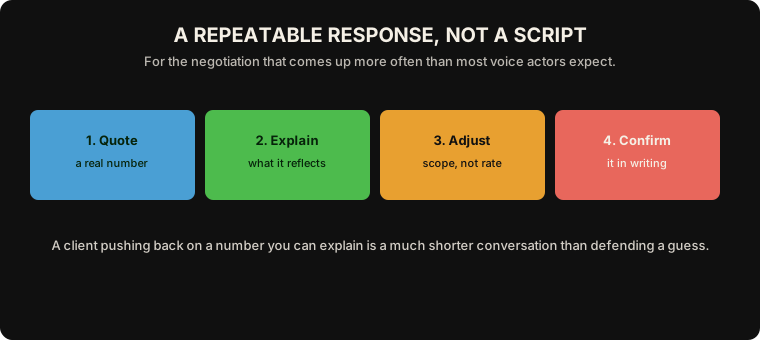
Walking into a negotiation with a specific, defensible number, built from an actual rate calculation that accounts for usage, length, and project type, is a genuinely different position than quoting a round number pulled from memory. A client pushing back on a number you can explain, this rate reflects broadcast usage across three markets for twelve months, this one reflects internal training use only, is a much shorter conversation than defending a number you cannot break down.
- Quote a range only when genuinely necessary, and anchor it around your real number rather than starting artificially high to leave room to come down; that habit trains clients to expect a discount on every future project too.
- Separate usage from performance in your own head before the call. A client asking for a lower rate is very often really asking about usage scope, not your creative value, and clarifying that distinction out loud often resolves the actual disagreement.
- Have your rate ready before the conversation starts, not calculated live on the call; scrambling for a number in the moment reads as unprepared and invites a lower anchor from the other side.

Responding to a Lowball Offer
A client offering well below your standard rate is not automatically acting in bad faith; direct clients frequently do not know market rates and are anchoring against whatever number they have seen elsewhere, sometimes from a source that has nothing to do with a professional recording. The useful response is rarely an immediate counter-number; it is a short explanation of what the quoted rate actually reflects, followed by a genuine question about their budget and what scope would fit it, rather than treating the first number on either side as final.
Adjust scope before you adjust rate
If a client's budget genuinely will not stretch to your standard rate, changing the usage terms, a shorter license period, a narrower distribution scope, is often a better lever than simply discounting the same full-usage rate. It preserves your rate's integrity for the next client while still making the specific project work.
When a Discount Actually Makes Business Sense
A lower rate can be a legitimately good business decision in specific, deliberate circumstances: a long-term retainer relationship with predictable recurring work, a genuinely reduced scope that matches the lower number honestly, or a strategic decision to build a portfolio in a new niche you are actively trying to break into. The difference between a smart discount and a rate that quietly erodes is whether you chose it deliberately for a clear reason, or gave it away because the conversation felt uncomfortable to hold.
↗ Try the tool
Rate Calculator
Free to try: the Rate Calculator gives you a defensible, industry-grounded number in under a minute, exactly the kind of specific figure that makes a rate conversation with a direct client shorter and far less uncomfortable.
Open Rate Calculator →Getting It in Writing, Every Time
Whatever number and usage scope a negotiation lands on, a written contract confirming it protects both sides and prevents the same conversation from having to happen again if the client comes back later wanting to expand usage without renegotiating. A direct client relationship without an agency's paperwork behind it makes this step more important, not less.
Hold the Number, Explain the Number
A direct client negotiation goes better when you can explain exactly what a rate reflects and adjust scope rather than simply cutting the number when pushed. Preparation before the call, a real figure to anchor on, and a written agreement afterward turn what feels like an uncomfortable conversation into a fairly routine, predictable part of running the business.