Musicians practice scales. Athletes run drills. Voice actors, mostly, just do jobs, and then wonder why the growth curve flattens between bookings. The difference between working actors who plateau and the ones who keep booking bigger work usually is not talent. It is that one group practices deliberately and the other practices accidentally.
The good news: deliberate practice for voice acting does not need an hour a day or a coach on retainer. It needs twenty minutes, a structure, and a feedback loop that does not lie to you. Here is a routine you can actually keep.
Why 'Just Reading Scripts Out Loud' Doesn't Work
Unstructured practice, reading random copy in random voices with no target and no review, feels productive and changes almost nothing. Deliberate practice has three ingredients that casual reading lacks: a specific skill under pressure, immediate feedback, and repetition at the edge of your ability. Every block in the routine below is built on those three.
It also targets the skill that is chronically undertrained and constantly bought: reading fresh copy well on the first pass, on a clock. Sessions cost money, and a director's favorite actor is the one who nails timed copy in two takes, not twelve.
The 20-Minute Routine
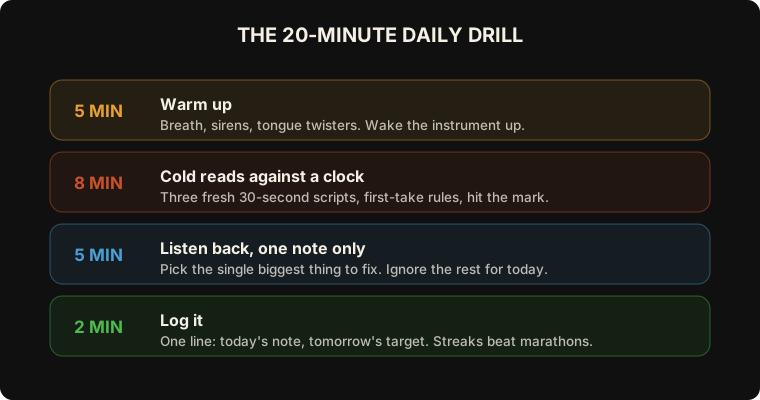
Minutes 1 to 5: Warm Up
Two minutes of low hums and gentle lip trills to wake the voice without strain, one minute of sirens (glide from your lowest comfortable note to your highest and back), and two minutes of articulation: tongue twisters spoken slowly and precisely, then faster. 'Red leather, yellow leather' and 'unique New York' earn their cliche status. The goal is not performance, it is switching the instrument on before you judge it.
Minutes 6 to 13: Cold Reads Against a Clock
Three fresh 30-second scripts you have never seen, read to a hard time target, first-take rules: one silent skim for the brief and the landmarks, then perform it. Commercial copy is written to fit its slot, and hitting 29 seconds on a 30-second spot without rushing the tag is a physical skill your internal clock learns only from reps. Rotate categories daily (commercial, narration, character) so the muscle generalizes.
↗ Try the tool
The Cold Read
The Cold Read hands you a fresh 30-second script with a casting brief every take, counts you in, and grades your timing against a 29-second target. The timer disappears at 20 seconds on purpose: the last nine seconds run on your internal clock, exactly like a real session. It tracks your accuracy over time so you can watch the skill build.
Open The Cold Read →Minutes 14 to 18: Listen Back, One Note Only
Play back your best take and give yourself exactly one note, the single biggest thing to fix, and write it down. One note is a discipline, not a limitation: pick the one that matters most and drill it tomorrow. Rotate your attention across the fundamentals through the week: pacing, energy consistency, emphasis choices, filler sounds, and whether the read matches the brief you were given.
Minutes 19 to 20: Log It
One line in a notebook or file: today's note, tomorrow's target. This is what turns twenty scattered minutes into a compounding curve, because tomorrow's session starts with a target instead of a blank page. Streaks beat marathons: five days of twenty minutes outbuilds one weekly two-hour binge, because the skill consolidates between sessions.
Make the Feedback Honest
The weak link in solo practice is that you are both the athlete and the referee. Ears adapt: you stop hearing your own pacing sag, your filler sounds become invisible to you, and the note you give yourself is the note you already believed. Every few sessions, get feedback that is measured rather than felt, numbers on pace, energy, and consistency, plus specific timestamps, so your one-note-a-day habit is aimed at what is actually weakest instead of what you happened to notice.
↗ Try the tool
Performance Coach
Performance Coach listens to a take and gives you a director's breakdown: scores across five dimensions and timestamped notes, built on real acoustic measurements of your read (pace in words per minute, energy variation in dB, stressed and swallowed words), not vibes. Upload your best cold read once or twice a week and let the numbers pick tomorrow's target.
Open Performance Coach →Once a Week, Add One of These
- A marked-script rehearsal. Take one script, mark the emphasis, breaths, and beats before you read, and perform the map. Preparation is a skill separate from cold reading, and auditions reward both.
- An audition rep at full ceremony. Slate, three takes, pick one, as if submitting. Decision-making under self-imposed pressure is its own muscle.
- A listen to one working actor in your lane. Not to imitate, but to steal one specific choice: where they breathe, what they throw away, how they land a tag.
The only rule that matters
Never end a session without writing tomorrow's target. The routine survives on momentum, and momentum is one sentence long.
Twenty minutes is small enough to survive a busy week and big enough to compound. Casting cannot see your practice log, but they can hear it: in the first take that lands on time, on brief, with nothing wasted. That is what gets remembered, and rebooked.