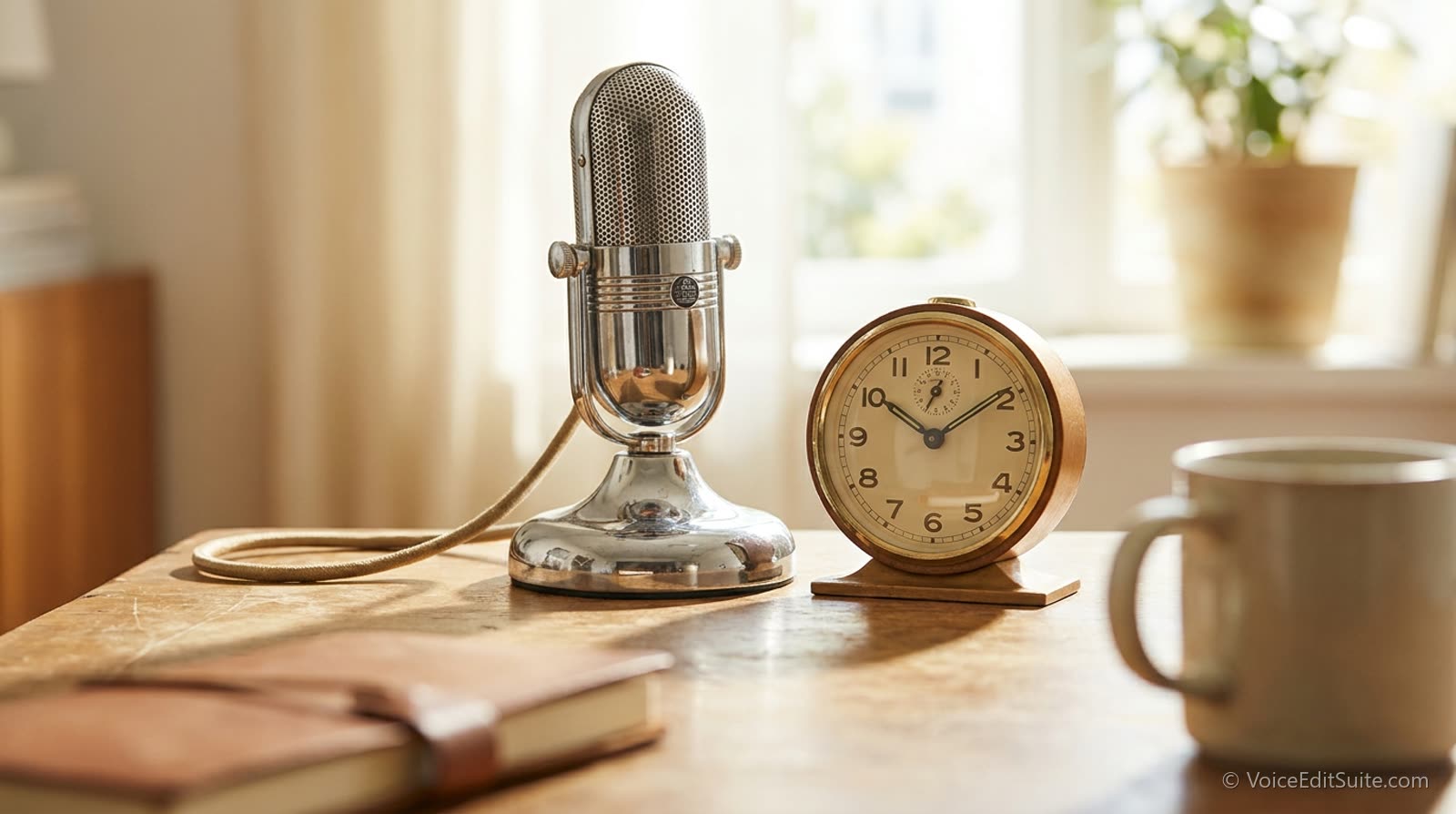
Radio imaging, the short, punchy sweepers between songs, the station identification reads, the promos for an upcoming show, is some of the least glamorous voice over work there is, and also some of the steadiest. A station doesn't need imaging once; it needs a constant, recurring supply of it, week after week, year after year, delivered by a voice that stays consistent long enough to become the sound of that station in a listener's head. That recurring need is what makes it worth a second look for a working voice actor, especially one who can deliver an energetic, confident read quickly and reliably.
What the Work Actually Involves
A typical imaging package might include a handful of station ID variations, several song-transition sweepers, a few promo reads for specific shows or segments, and the station's core 'brand' lines, the short phrases that get repeated so often they become part of a listener's sense of the station itself. Lines are short, almost always under ten seconds, and the read usually sits somewhere between a hyped-up commercial energy and a confident, friendly radio-host register. Slating an audition teaches a related skill worth transferring here: getting a clean, confident, well-paced read out in a very short span of time, with no room to build up to it.
How Imaging Work Tends to Be Structured
What makes this category interesting from a business standpoint is the renewal pattern underneath it. A station that likes its current imaging voice generally doesn't go looking for a new one every month; it keeps commissioning fresh batches of lines from the same person as its music rotation, promos, and schedule change, often for years at a stretch. That's a meaningfully different relationship than a one-off commercial booking, closer in spirit to a recurring retainer than a single project, and it rewards a voice actor who treats the relationship as worth nurturing rather than a single transaction.
Streaming Audio Has Widened the Category, Not Shrunk It
Traditional broadcast radio isn't the only buyer anymore. Podcast networks, streaming audio platforms, and digital-only audio brands have adopted the same imaging conventions, consistent sweepers, branded transition lines, a recognizable voice tying a catalog of shows together, because they work for the same reason they always did: they build a sense of a consistent destination rather than a disconnected pile of individual episodes. The independent podcast boom has, if anything, created more small-scale demand for this kind of work than traditional broadcast radio alone ever did, even if any single client's budget is smaller than a major-market station's.
↗ Try the tool
Script Accuracy Checker
Imaging scripts are short, but they're often delivered in large batches with specific pronunciation of show names, hosts, and brand phrases that need to stay exactly consistent across dozens of lines. Script Check verifies every take word for word before it ships.
Open Script Accuracy Checker →How to Actually Get In the Door
Direct outreach to a station's program director or production director tends to work better than waiting for a public posting, since a lot of this work never gets formally advertised at all; a station simply keeps using whoever it already likes. Finding direct clients without a marketplace applies directly here, and a short, purpose-built demo of imaging-style reads, energetic station IDs, a few sweeper styles, a promo read or two, carries far more weight with a program director than a general commercial demo that never quite shows this specific, quick-hit register.
Frequently Asked Questions
How does radio imaging pay compare to commercial voice over work?
Per-line rates are typically modest compared to a national commercial, but the recurring, batch nature of the work, and the fact that a good relationship with a station can last years, often makes the annualized value more attractive than the per-line number alone suggests.
Is this realistic for a voice actor without major-market connections?
Yes, and it's arguably an easier entry point than larger commercial categories precisely because smaller-market stations and independent streaming audio brands have smaller budgets and less competition for their attention than national advertisers do.
Does this niche favor a particular kind of voice?
A confident, energetic, friendly delivery suits most mainstream formats, but stations across different formats, talk, music genres, news, actually want noticeably different voice personalities, so it's worth studying the specific sound of a station you're pitching rather than assuming one generic 'radio voice' fits everywhere.