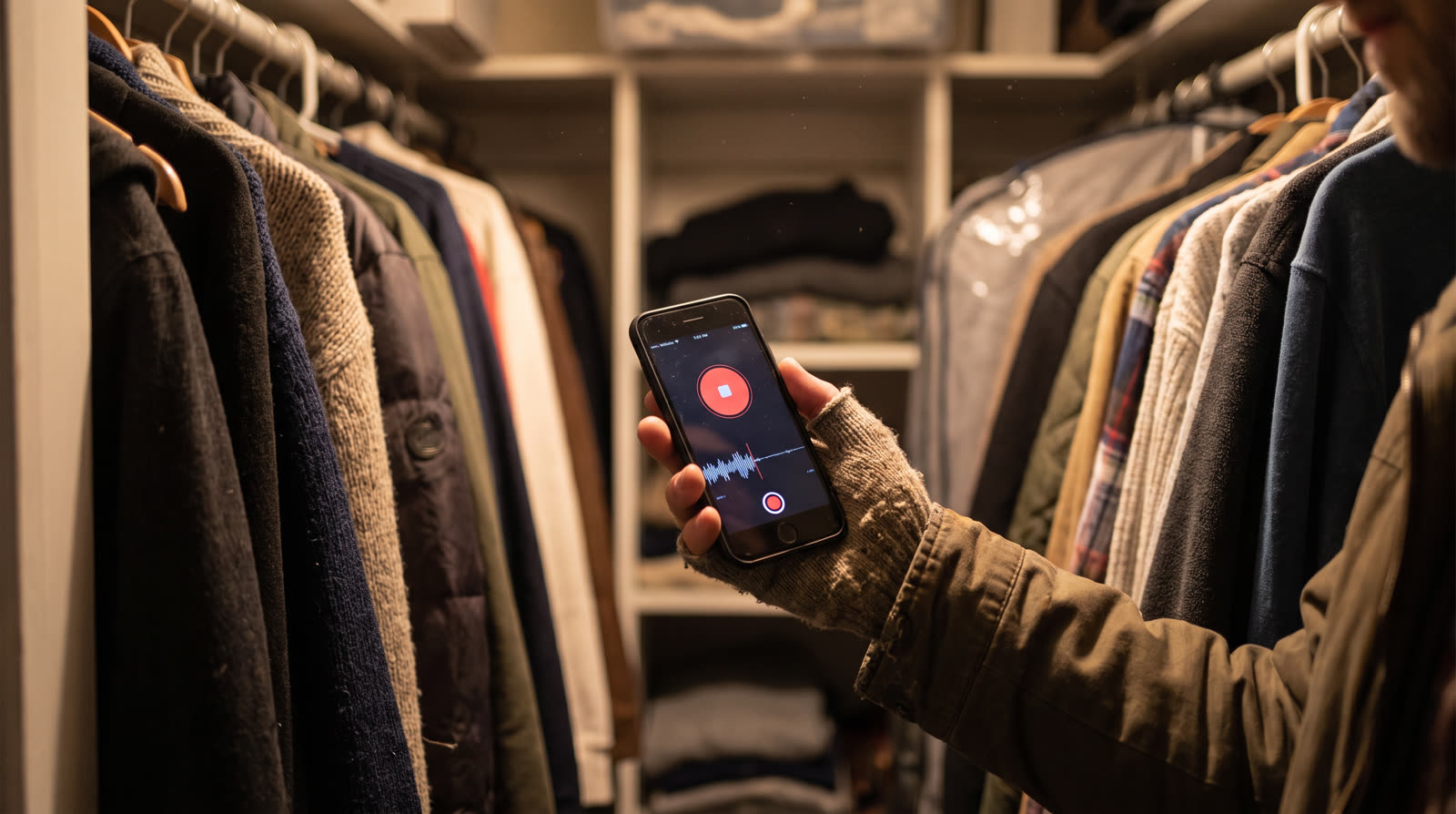
Every week, someone books real voice work from a recording made on a phone, and someone else quietly loses a job the same way without ever finding out. Both are the phone's fault, which is what makes the question interesting. Modern phone microphones are engineering marvels: multi-mic arrays with processing that would have embarrassed studio gear from two decades ago. The catch is that every part of that engineering was aimed at a different job than yours.
A phone's audio pipeline is built for calls and videos in chaotic places: it aggressively suppresses noise, compresses dynamics, and equalizes for intelligibility over beauty. Those are exactly the manipulations a voice over buyer does not want baked into a file. So the honest answer to "can I record VO on my phone" is not yes or no. It is a map of which jobs tolerate the phone's opinions, and which ones the phone silently fails.
The Map: Where a Phone Passes and Where It Fails
- Auditions: genuinely fine, if the room is quiet. Casting listens for the read and a plausible sound. Plenty of jobs are won on phone auditions recorded in closets; the deciding factor is your space, not your gear.
- Scratch tracks, timing reads, and demos of concepts: fine. Anything meant to be re-recorded properly later.
- Short paid spots for undemanding buyers: sometimes. A local ad destined for a phone speaker can pass. Know that you are at the mercy of the phone's processing on every take.
- Audiobooks, e-learning at scale, broadcast: no. Long-form work exposes everything: the processing artifacts between phrases, the compression pumping, the noise gate chopping quiet word-endings. Retail audiobook spec (noise floor, consistency across hours) is effectively out of reach.
If the Phone Is What You Have: Squeeze It Properly
- The room still rules. A phone in a packed closet beats a $400 mic in a bare bedroom. All the budget treatment advice applies double, because the phone's noise suppression mangles reverb in ugly ways.
- Use a real recording app, not the camera or voice memos. You want an app that records uncompressed WAV, lets you disable noise suppression and gain control, and shows you levels. The phone's default apps make the exact processing decisions you need to prevent.
- Mic end toward your mouth, 15 to 20 centimeters, slightly off-axis. The good microphone is usually at the BOTTOM of the phone. Pointing the screen at your face aims the wrong hardware at you.
- Airplane mode. A notification mid-take is an outtake; cellular radio interference in the preamp is subtler and worse.
- Record ten seconds of silence first. Play it back loud. If you hear the room, the fridge, or a hiss that swells when you stop talking (that is the suppressor breathing), fix the room before recording the read.
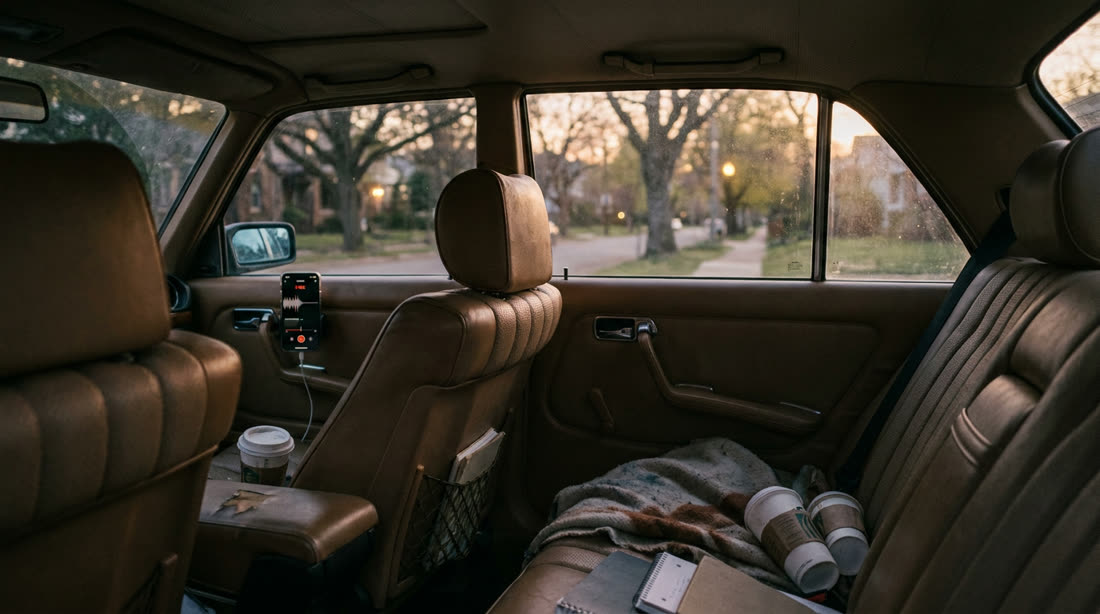
And yes, the parked car trick is real. A car interior is small, stuffed with absorbent surfaces, and sealed against the street; with the engine and fan off it is one of the quietest, deadest free spaces most people can access. Narrators have cut usable auditions in cars for years. Its limits are the same as the phone's: fine for short reads, sweaty and impractical for chapter three.
The Failures You Cannot Hear on the Phone Itself
The cruelest part of phone recording is that the phone hides its own crimes. Its speaker cannot reproduce the low-end thump it added or the noise floor it is masking, and its processing sounds normal to the ear that has only ever heard phone audio. The failures surface later, on a client's monitors, or in an audiobook QC pass, when the person who could have fixed it is no longer in the room.
The escape from that trap is measurement. Upload a phone recording to the free Home Studio Analysis and you will see, in numbers, what the phone did: the reverb tail of your space, the real noise floor under the suppression, the level consistency across your read. Run the same script from a phone and from any real interface and compare the two reports side by side. That comparison, more than any article, tells you whether YOUR phone in YOUR room is costing you work.
↗ Try the tool
Home Studio Analysis
Free and no account: upload a 30-second phone recording and get six measured scores for what the mic and room are really doing. If the phone is fine, you will know. If it is quietly failing you, you will know exactly where.
Open Home Studio Analysis →The $100 Reality Check
Here is the arithmetic that eventually converts every serious phone recordist. A used USB microphone or an entry interface with a dynamic mic costs roughly $80 to $150, records unprocessed 24-bit audio with a clean preamp, and permanently removes the phone's opinions from your signal chain. That is one small booking. If voice over is a hobby, the phone plus a good room is a fine place to be. The moment it is income, the upgrade pays for itself on the first job it stops you losing, and you will never know which job that was.
The order of operations, always
Room first, technique second, gear third. A phone in a treated space with good habits beats an expensive mic in a bad room every single time. Upgrade in that order and no dollar is wasted.
Wherever your chain lands, the same session habits and warm-up apply: the phone never made anyone click less, and it forgives a cold voice no better than a Neumann does.