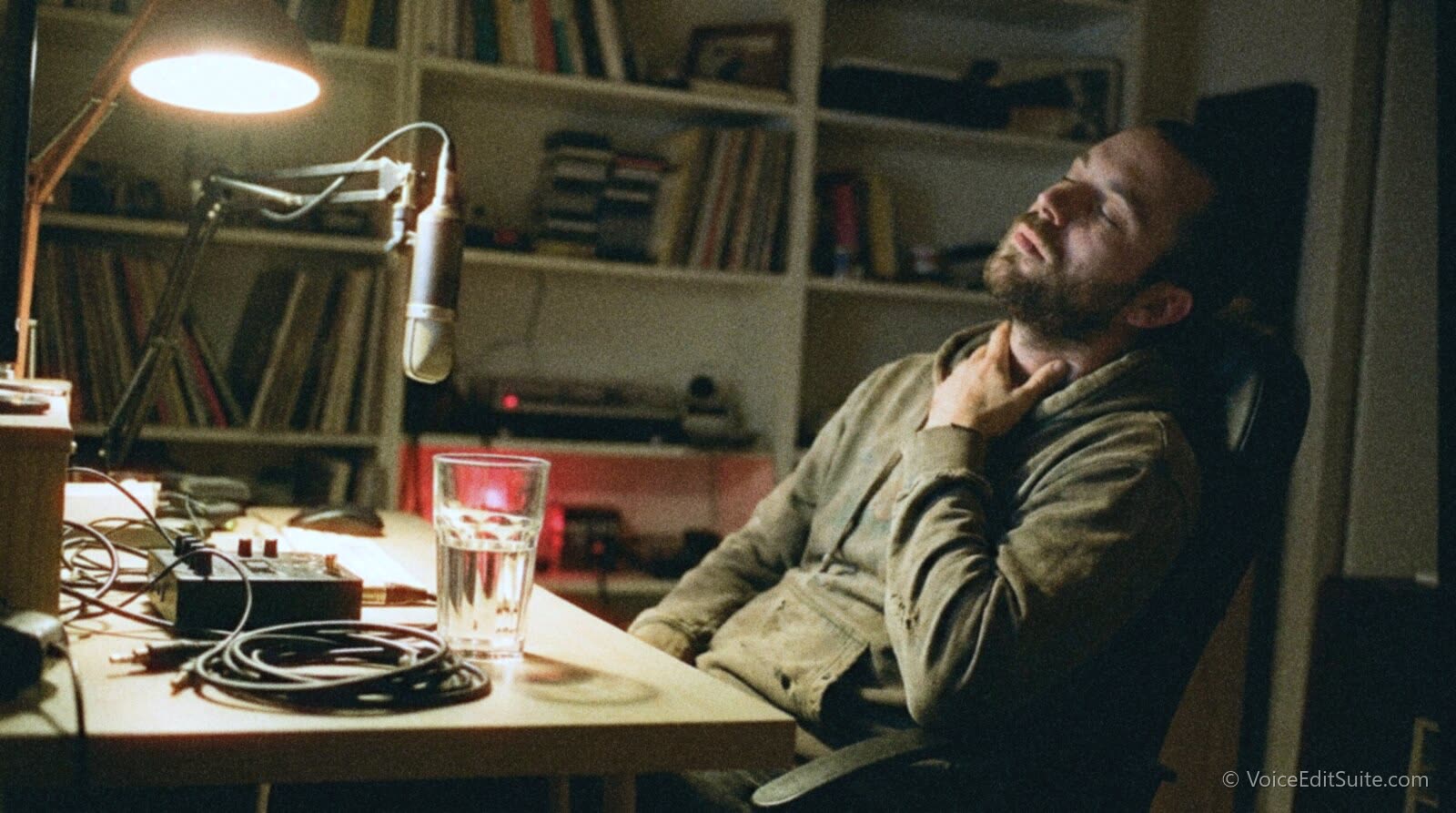
Vocal fatigue is the tired, heavy, harder-to-control feeling a voice gets after sustained use, and it is a real, measurable physiological state, not just a figure of speech. It involves genuine fatigue in the laryngeal muscles that shape every syllable and real changes in the mucosal tissue that vibrates to make sound, not simply an injury waiting to be diagnosed. It shows up differently depending on how you use your voice for work: a podcaster recording one long unscripted episode feels it as a steady climb that never resets, while a voice actor recording dozens of short takes feels it as a cost that resurfaces every time a new line starts. Speech-language pathologists and voice researchers have built real tools to measure it, most notably the Vocal Fatigue Index, and have real, evidence-based ways to prevent and recover from it, long before a voice actually hurts.
What Vocal Fatigue Actually Is, and Isn't
Vocal fatigue is not the same thing as vocal strain or an injury like a nodule or a polyp, and the distinction matters because the response is different for each. Vocal strain research describes the mechanical overuse pattern, pushing volume or pitch the wrong way over time, that raises a voice professional's long-term risk of a diagnosable disorder. Vocal nodules and polyps are structural injuries that can eventually result from repeated strain carried across weeks or months without recovery. Vocal fatigue is narrower and more immediate: the subjective sensation, backed by measurable physiological change, of a voice that has simply worked hard for a while and needs rest, in roughly the same way legs feel heavy after a long run without anything being torn. Most working voice professionals experience ordinary vocal fatigue regularly, and it is not in itself a warning sign. It becomes one only when it stops fully resolving between sessions, which is the early pattern that the research on strain and on structural injury both link to what follows.
The Physiology of a Tired Voice
The tired feeling has at least two real physiological sources, and researchers are still working out exactly how much each one contributes on a given day. The first is neuromuscular: the intrinsic laryngeal muscles that tense, relax, and precisely position the vocal folds for every syllable are muscles like any other in the body, and sustained, repetitive contraction over hours measurably fatigues them, reducing the fine control a speaker has over pitch and loudness by the end of a long day. The second source is mechanical, inside the vocal folds themselves rather than the muscles that move them. A tissue-level study using ex vivo sheep vocal fold tissue found that prolonged vibration increased the tissue's viscous response, essentially its resistance to being set back into motion cleanly, and the researchers linked that change to a higher phonation threshold pressure, meaning it simply takes more breath effort to get the folds vibrating cleanly after they have already been vibrating for hours. The authors called the findings preliminary, since they came from animal tissue rather than a living human voice, but described them as a plausible piece of the real mechanism behind vocal fatigue and its recovery.
Whether surface dehydration of the vocal folds adds meaningfully to that picture is still an open question. A computational modeling study noted that it remains unclear whether vibration alone, without any added environmental dryness, actually dehydrates the vocal fold surface enough on its own to change how the voice performs. What is better established clinically is what happens when fatigue is never allowed to resolve. A clinical study of 301 patients with what researchers term laryngeal tension-fatigue syndrome found that chronic vocal overuse carried out under excessive muscle tension produces phonotrauma, physical changes to the vocal fold's outer cover, which in turn disrupts the fold's normal vibration pattern and worsens vocal quality over time. In plain terms: a tired voice that gets a real recovery window resets. A tired voice that gets pushed through, session after session, starts to change the tissue itself, which is the mechanism connecting ordinary fatigue to the more serious warning signs covered in the companion guide to vocal nodules and polyps.
Measuring It: The Vocal Fatigue Index
Vocal fatigue research has one real advantage most occupational voice topics do not: a validated, published measurement tool built specifically to quantify it. The Vocal Fatigue Index, developed by Sulis Nanjundeswaran, Jeff Jacobson, Jackie Gartner-Schmidt, and Katherine Verdolini Abbott and published in the Journal of Voice in 2015, is a 19-item self-report questionnaire built by a team of four laryngologists and six speech-language pathologists specifically to identify people experiencing vocal fatigue and characterize what their complaints actually feel like. The developers tested it on 105 patients with voice complaints and 70 vocally healthy adults, and the instrument held up well: strong test-retest reliability, and good sensitivity and specificity for telling the two groups apart. Factor analysis split it into three underlying components that match how voice professionals actually describe the problem day to day: tiredness and avoidance of voice use, physical discomfort associated with voicing, and improvement of symptoms with rest. That third factor, whether rest actually helps, is itself a useful diagnostic clue. A voice problem that resolves with a day off is more likely ordinary fatigue, while one that does not is the kind of persistent change the vocal strain research guide covers in more depth.
The VFI has since been translated and re-validated in Turkish, German, Brazilian Portuguese, Malayalam, and Vietnamese populations, and researchers built a dedicated 21-item version, the VFI-TEACH, specifically for public school teachers, one of the professional groups whose vocal pattern sits closest to a podcaster's: long, continuous, largely unscripted speech with few natural breaks built into the job. A 2024 systematic review pooling results across several of these language versions reported strong diagnostic performance for the instrument's core symptom factor specifically, with a pooled sensitivity around 91 percent and specificity around 88 percent for correctly flagging probable vocal fatigue, a consistency across unrelated populations and languages that is rare for a self-report health questionnaire. A separate 2019 study restructured the VFI using a statistical technique called Mokken scaling, which orders questionnaire items by how severe a person's fatigue has to be before they endorse each one, and found that vocal fatigue is a more layered, cumulative experience than a single summed score suggests, with some symptoms only appearing once fatigue has already progressed well past its earliest, mildest stage.
Separately, researchers at Michigan State University led by Lady Catherine Cantor Cutiva and Eric Hunter studied radio broadcasters directly at the public radio station WKAR to measure whether the job caused vocal fatigue and hearing changes. Their early results found broadcasters showing vocal fatigue at specific points in a shift without corresponding hearing changes, and an earlier pilot study following two broadcasters across a full work week found that their fundamental frequency, the acoustic measure most closely tied to pitch, shifted by the end of the week in a pattern the researchers read as a sign of accumulating work-related vocal fatigue. None of this research was conducted on podcasters by name, since podcasting as a distinct occupation is younger than most of the research literature, but broadcasters doing sustained, largely unscripted on-air talk are the closest studied analog podcasters currently have.
Podcasters and Voice Actors: The Same Fatigue, a Different Shape
Both groups are professional voice users, and both experience real vocal fatigue, but the shape of how it builds across a work session is almost opposite, which is exactly why a one-size-fits-all vocal hygiene tip sheet underserves both of them.
Podcasters: One Long, Unscripted Climb
A podcaster recording a 60 to 120 minute unscripted conversation is closer to the teacher or the broadcaster studied in the research above than to a commercial voice actor. There is no natural stopping point built into the format the way a 30-second commercial script has one; the voice simply keeps going, often at a slightly raised volume and pitch because of the Lombard effect, the well-documented tendency to unconsciously push your voice louder when you are wearing closed-back headphones or hearing yourself through a monitoring feed rather than the open room around you. That raised baseline effort, sustained without a scripted pause for ninety minutes at a time, is exactly the pattern the physiology above describes: continuous, low-grade neuromuscular load with no built-in recovery window until the recording actually stops. Add the cognitive load of live, unscripted conversation, tracking a co-host's point, formulating a response, managing pacing and energy, all while also managing breath and projection, and a podcaster's fatigue is rarely only vocal. It compounds with the mental fatigue of long-form live thinking, which is also why sustainable scheduling across a whole week of episodes matters as much as anything done inside a single session. A podcaster also usually lacks the one thing almost every professional voice-over session has: a director or producer in the room whose job includes noticing when a voice is starting to flatten or strain. Self-monitoring, actually noticing your own fatigue rather than assuming the microphone and editing will smooth it out later, carries more of the protective weight for a podcaster than for almost any other voice professional.
Voice Actors: A Hundred Small Resets
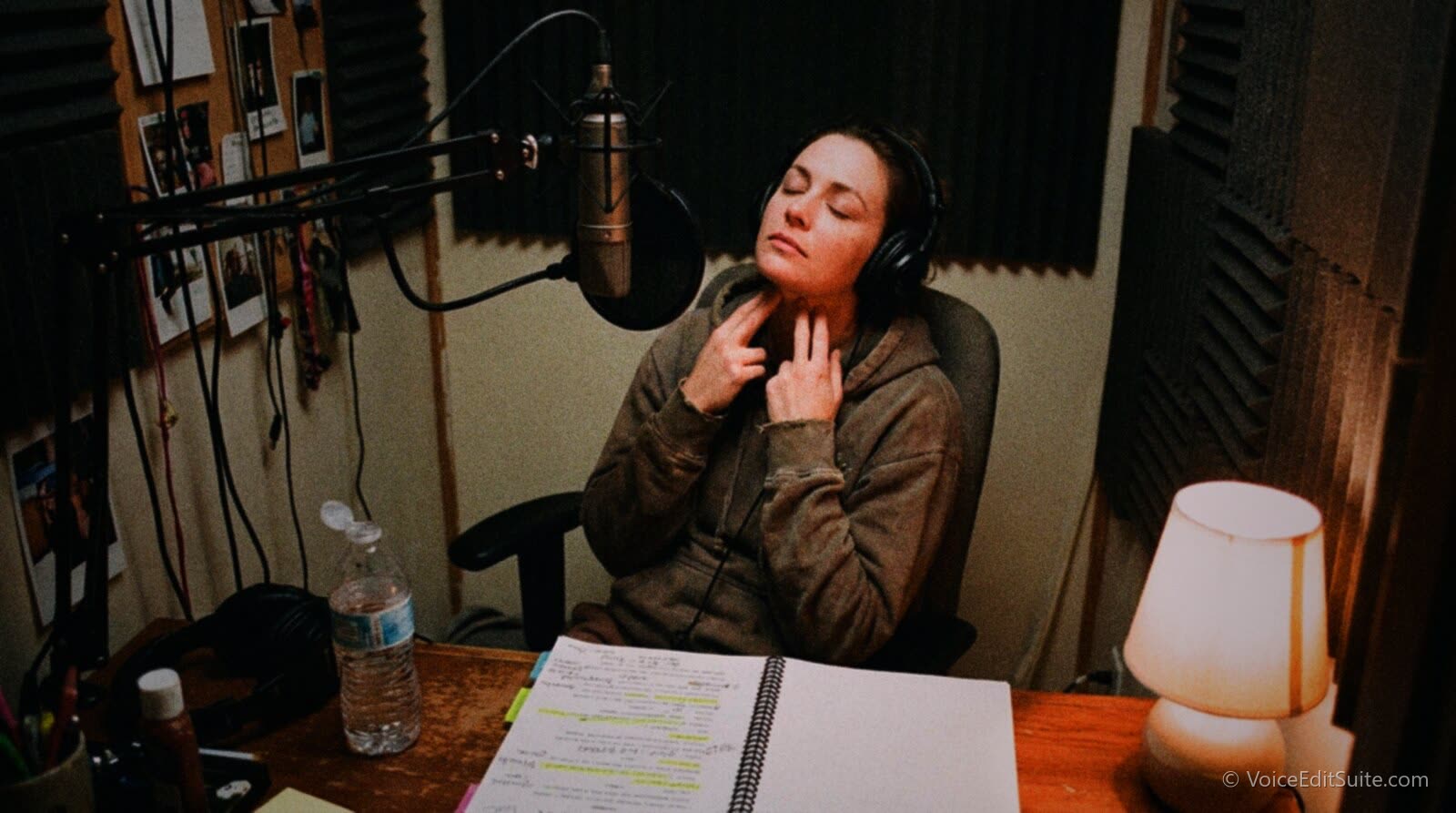
A voice actor's session looks structurally different: dozens or hundreds of short takes, each one a fresh start rather than part of a continuous climb. That sounds like it should be easier on the voice, and in one sense it is; there are more natural pauses to breathe, reset posture, and sip water between takes than a podcaster ever gets mid-episode. But short-take work carries its own fatigue cost that long-form unscripted talk does not. The repeated vocal attack, the moment of onset at the start of every single line, places a disproportionate load on exactly the fast-twitch laryngeal muscle coordination that governs a clean onset, and doing that attack cleanly for the two-hundredth time in a session, while still sounding like the first time, is a documented challenge that directors specifically watch for. Proper breath support, rather than re-initiating each new line from throat tension, is the single biggest lever a voice actor has for keeping that onset clean late in a long session, and a real vocal warm-up before the first take matters more for this particular pattern than it does for a podcaster who eases gradually into a conversation.
Vocal Hygiene and Pacing That Actually Help
The prevention side of the vocal fatigue research is refreshingly unglamorous, and it holds for both podcasters and voice actors even though their sessions look so different from each other. The American Speech-Language-Hearing Association's own public guidance, issued around World Voice Day, centers on a short list of habits: stay hydrated throughout the day rather than only during a session, limit caffeine, use a humidifier in dry rooms, avoid shouting or talking over background noise, and rest your voice when it actually feels tired instead of pushing through on willpower alone. None of that is specific to voice work, which is exactly the point. The vocal folds are living tissue, and diet, hydration, and sleep affect how that tissue performs and recovers the same way they affect any other soft tissue in the body.
- Podcasters: build in real pause points. Since unscripted recording has no natural break, schedule one deliberately every twenty-five to thirty minutes, even a sixty-second pause to drink water and let the jaw and throat unclench, rather than waiting for a natural lull a free-flowing conversation may never actually offer.
- Podcasters: watch your monitoring volume. Lowering headphone volume reduces the Lombard effect's pull toward a louder, more effortful speaking voice, one of the simplest and least-discussed fixes for fatigue across a long episode.
- Voice actors: pace energy, don't front-load it. Directors see the same pattern repeatedly: strong energy on the first ten takes, a flattening cadence by take 150. Deliberately holding some energy in reserve for the back half of a session produces a more usable, more consistent set of files than spending it all early.
- Voice actors: build recovery into the booking, not just the session. A single day of several callback sessions stacked back to back carries a different fatigue cost than the same total minutes spread across a week, and spacing recovery between heavy recording days is a direct response to the cumulative mechanism behind real injury, not just an optional nicety.
↗ Try the tool
Performance Coach
Pacing yourself across a long session is hard to judge from the inside, especially late in the day when fatigue itself dulls your sense of how your energy and steadiness are actually holding up. Performance Coach tracks pitch steadiness and vocal energy take by take or across a full episode, so you can see your own fatigue curve in the data instead of guessing at it, and build pacing and break habits around what your voice is actually doing rather than how it feels in the moment.
Open Performance Coach →Vocal Rest and Recovery Protocols
Speech-language pathologists distinguish between absolute vocal rest, no voicing at all, generally reserved for acute injury or post-surgical recovery, and relative vocal rest, simply using less voice, at lower effort, for a defined stretch of time, which is what almost every working voice professional actually needs after a demanding day. A single evening of relative rest, quiet conversation instead of a second recording session, letting a phone call wait until tomorrow, is frequently enough to let both the neuromuscular and mucosal components of ordinary fatigue resolve overnight, which is exactly the recovery window the physiology above describes. The useful self-check is less about how a session felt in the middle of it and more about whether the tiredness is gone by the next morning. The Vocal Fatigue Index's own structure points at this directly: its third factor measures whether symptoms improve with rest, and a pattern of fatigue that keeps failing that test, that is still present the next day, or the day after that, is the threshold at which professional guidance says to stop self-managing and see a specialist rather than add another home remedy. Sleep is worth calling out specifically inside that recovery window, not just rest in general. The fine motor control that lets the laryngeal muscles position the vocal folds precisely, syllable by syllable, draws on the same neuromuscular systems that general sleep loss degrades everywhere else in the body, so a voice professional who is already behind on sleep starts a session with less genuine recovery banked than the previous day's workload alone would suggest, no amount of mid-session water fully makes that up.
Hearing fatigue deserves a mention here too, because podcasters and voice actors alike spend hours in closed headphones, and a tired ear changes how a person judges their own vocal effort in real time, often pushing them to talk louder without realizing it because their own voice sounds quieter to them than it actually is. Hearing health and vocal fatigue are more connected than most voice professionals assume, and protecting one is part of protecting the other.
None of these habits require giving up the work. They require treating a voice the way any athlete treats a hard-working joint or muscle group: with scheduled recovery, honest self-monitoring, and a low threshold for asking a specialist before a manageable daily tiredness turns into something that actually needs a scope and a treatment plan. Voice professionals, perhaps more than most, are prone to downplaying exactly the symptom that most needs a second opinion.
"People often ignore hoarseness or vocal fatigue, but these can be signs of a more serious issue. If symptoms last more than a few weeks, it's important to seek professional care."
That two-week threshold is the same one the warning-signs guide to vocal nodules and polyps lays out in more clinical detail, and it is worth repeating here because ordinary vocal fatigue is supposed to resolve faster than that, usually within a day or two of real rest. Research is also still actively evolving on how to catch fatigue earlier and more precisely: a project at the University of Central Florida, led by assistant professor Hamzeh Ghasemzadeh and backed by National Institutes of Health funding, is fitting study participants with wearable sensors to track exactly how and when their voices get used across a real day, aiming to build individualized recommendations rather than one-size-fits-all ones. Until tools like that reach a working voice professional's daily routine, a validated questionnaire, an honest accounting of how a voice actually feels the morning after, and the plain habits above remain the best evidence-based combination available.
A note on this guide
This article is general information drawn from published research and professional guidance, not a substitute for evaluation by an ENT or a speech-language pathologist who can examine your vocal folds directly. Figures, study details, and the quote above reflect the most current, verifiable sources available as of this guide's publish date in November 2026. Where the underlying research studied a related occupational group, such as teachers or radio broadcasters, rather than podcasters or voice actors specifically, that is stated plainly in the text rather than implied as a direct match.
Frequently Asked Questions
How long should ordinary vocal fatigue last before it's a concern?
Ordinary vocal fatigue, the heavy, tired feeling after a long session, should meaningfully improve within a few hours and fully resolve with a normal night's sleep or a day of lighter voice use. The Vocal Fatigue Index's own developers built improvement with rest into the instrument as one of its three core factors for exactly this reason. Fatigue that is still present the next morning, or that keeps recurring on a predictable schedule tied to your work, is the kind of persistent pattern worth a real evaluation rather than another day of pushing through, the same two-week rule for lingering hoarseness that speech-language pathologists apply more broadly.
Is vocal fatigue worse for podcasters or for voice actors?
Neither group has it categorically worse; the research suggests they experience different fatigue profiles rather than different severities. Podcasters tend toward a steady, continuous accumulation across one long unscripted session with few natural breaks, closer to the pattern researchers have documented in teachers and radio broadcasters. Voice actors tend toward a cumulative cost from many repeated vocal onsets and the discipline of staying energetically consistent across dozens or hundreds of short takes. Either pattern, sustained without real recovery, can lead to the same downstream risks.
Can I use the Vocal Fatigue Index to check myself?
The Vocal Fatigue Index is a clinical research and screening instrument, not a packaged consumer app, so there is no official self-scoring version meant for casual home use. That said, its three underlying questions are useful to ask yourself informally: do I feel tired or want to avoid talking after a work session, do I feel physical discomfort while voicing, and does rest actually fix it. A consistent yes to the first two and no to the third is the pattern that would warrant an actual evaluation with the real instrument, administered by a speech-language pathologist.
Does drinking more water during a session actually help?
Systemic hydration, water consumed throughout the day, not just during the session, is one of the most consistently recommended protective habits in both the clinical literature and professional guidance, because well-hydrated tissue is more pliable and requires less effort to vibrate cleanly. Sipping water mid-session helps the throat feel less dry, but the bigger effect comes from hydration habits across the full day and the days before a heavy recording schedule, not from a single glass gulped between takes.
Do voice actors and podcasters need to warm up and cool down differently?
The warm-up matters more for voice actors, since their sessions demand clean vocal onset from the very first take, with no gradual lead-in the way a conversation naturally eases a podcaster into full vocal engagement. A proper vocal warm-up before the first line pays off disproportionately for short-take work. Cool-down matters more evenly for both: a few minutes of gentle humming or relative vocal rest at the end of any long session helps the laryngeal muscles and surrounding tissue begin the recovery process rather than going straight from full vocal effort to silence.
Does having a co-host change the fatigue picture for podcasters?
Yes, meaningfully. A solo podcaster carries the full vocal and cognitive load alone for an entire episode, while a co-hosted format naturally builds in micro-recovery windows every time the other person is talking, even if no one planned it that way. That is one practical reason solo, long-form podcasting carries a somewhat higher fatigue burden per episode than a well-paced multi-host conversation of the same length, independent of either host's underlying vocal health.
Sources and Further Reading
- Vocal Fatigue Index (VFI): Development and Validation, Nanjundeswaran, Jacobson, Gartner-Schmidt, and Verdolini Abbott, Journal of Voice, 2015: the 19-item questionnaire, the 105-patient and 70-control sample, and the three-factor structure used throughout this guide.
- Losing Your Voice? Millions Experience Persistent Problems Each Year, American Speech-Language-Hearing Association: the World Voice Day guidance and the quote from ASHA President Linda I. Rosa-Lugo above.
- MSU Researchers Explore Incidence of Vocal Fatigue and Hearing Loss in Broadcasters, Michigan State University College of Communication Arts and Sciences: the WKAR radio broadcaster research led by Lady Catherine Cantor Cutiva and Eric Hunter.
- Taking Apart the Mystery of Vocal Fatigue, University of Central Florida News: Hamzeh Ghasemzadeh's NIH-backed, sensor-based research into individualized vocal fatigue detection.
- ETSU Voice Physiology Lab, East Tennessee State University: the Vocal Fatigue Index's translations, the VFI-TEACH teacher-specific version, and related validation studies.
- VoiceEditSuite, What the Research Actually Says About Vocal Strain in Voice Work and Vocal Nodules and Polyps: Warning Signs Voice Actors Shouldn't Ignore: companion guides referenced above.