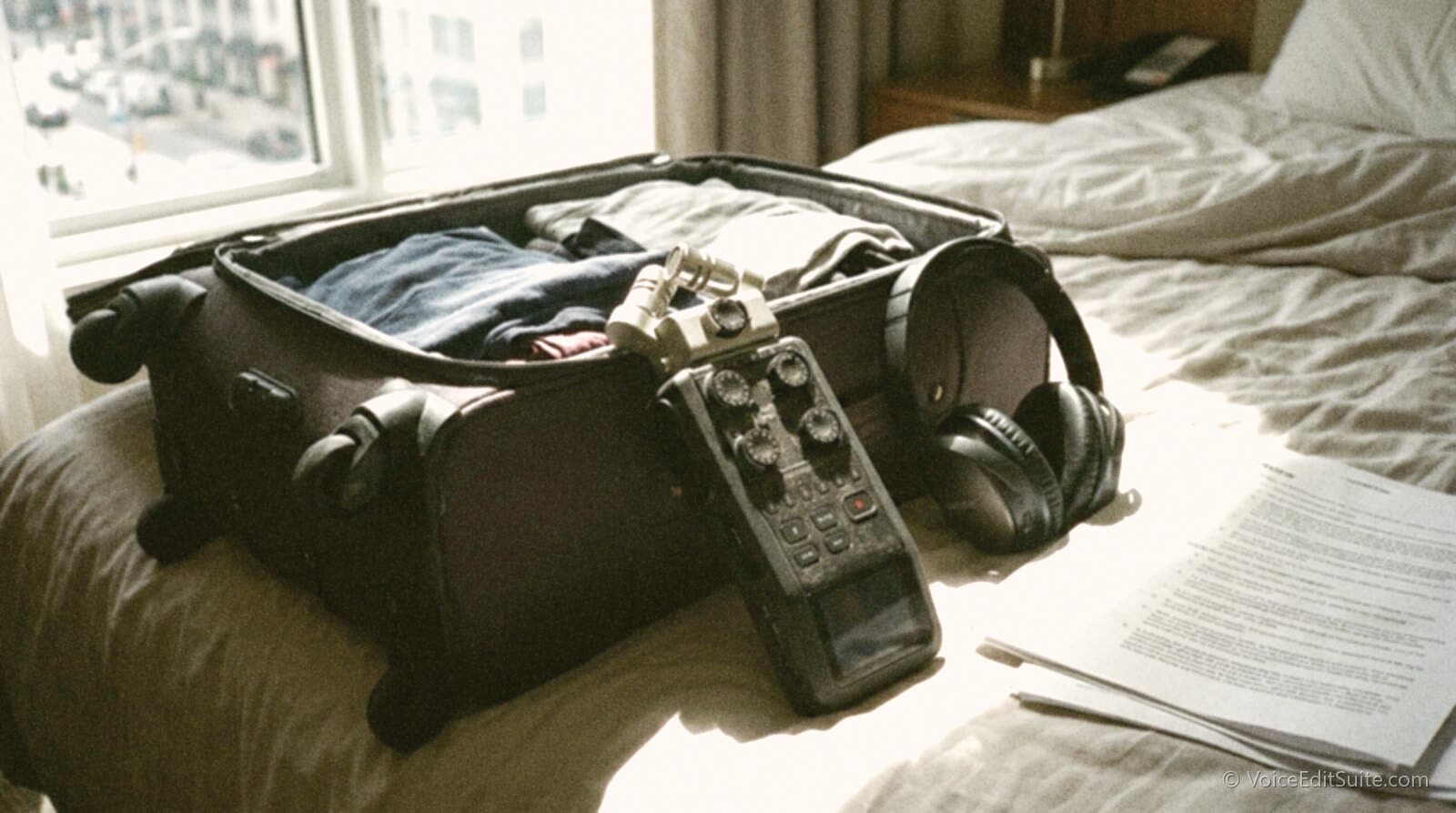
A laptop running a DAW through a USB audio interface is the default voice over recording setup for good reason: it's flexible, it's familiar, and it's what most training and tutorials assume you're using. It's also fragile the moment you take it somewhere that isn't your desk. A dedicated handheld recorder, the kind built around a single purpose rather than running a full operating system, solves a specific, narrower problem well: recording usable audio somewhere without a stable power source, a quiet corner to set up a laptop, or time to fuss with software before the moment you need to capture passes.
What Actually Matters When Choosing One
Battery life and the ability to run on standard AA batteries rather than a proprietary rechargeable pack matters more for location work than most spec sheets emphasize, because a dead proprietary battery in the field with no charger available is a lost session, while standard batteries can usually be found almost anywhere. A built-in limiter that catches an unexpectedly loud moment without clipping is worth prioritizing over marginal improvements in preamp noise floor, since a single clipped take on location, with no ability to simply re-record in a controlled environment, is a bigger practical problem than slightly elevated self-noise. Physical, tactile controls you can operate by feel, without looking at a screen, matter more in the field than they do at a desk where you can always glance down.
Why an XLR Input Still Matters, Even Here
A recorder with a built-in microphone is convenient, but a model that also accepts an external XLR microphone gives you a meaningfully better signal than almost any built-in capsule, especially one you already know and trust from your main setup. The USB versus XLR distinction that matters for a home studio is just as relevant here: a small, well-chosen shotgun or cardioid condenser mic plugged into a portable recorder's XLR input, with basic handling technique and a decent windscreen, usually sounds noticeably better than relying on the recorder's own internal mic for anything beyond a quick voice memo.
Matching the Tool to the Situation
A phone is genuinely fine for a quick self-tape audition, a rough reference read for a client, or a voice memo of an idea you want to remember, and recording voice over on a phone covers how to get the most out of that option when it's truly the right tool for the job. A dedicated portable recorder earns its place a step up from that: paid client work recorded away from a controlled studio, where the final audio actually needs to hold up, but where a full laptop rig genuinely isn't practical to bring or set up in time.
↗ Try the tool
Studio Rescue
Location audio almost always needs more cleanup than a booth recording does, however careful you were on site. Studio Rescue strips the noise a portable recorder picks up and shows you the measured result before you deliver.
Open Studio Rescue →Protecting the Session Once You've Captured It
A dedicated recorder's biggest practical advantage over a phone is usually its ability to write a safety backup file at a lower level alongside the main recording, so an unexpectedly loud moment that would otherwise clip and ruin the only copy of a take instead has a clean, slightly quieter version to fall back on. Backing up your business files applies to field recordings specifically too: copy files off the recorder's memory card onto at least one other device the same day you record them, before you reuse that card or risk losing the only copy to a card failure or an accidental overwrite.
Frequently Asked Questions
Is a dedicated portable recorder worth buying if I rarely travel for work?
If location recording is a genuinely rare event for you, a phone with a good external microphone attachment may cover your actual needs without the added cost. The dedicated recorder earns its price mainly for voice actors who record away from their main setup often enough to feel the limits of a phone-based workflow repeatedly.
Does a portable recorder help with recording in a hotel room while traveling?
It helps with the recording itself, but it doesn't fix room acoustics. A hotel room is often more reflective and noisier than a treated home space, so pairing the recorder with basic, packable acoustic treatment, heavy curtains, soft furnishings, closet space, still matters as much as the recorder you're using.
Will a portable recorder ever sound as good as my home interface setup?
A high-quality portable recorder with a good external microphone can get close, but the room you're recording in usually matters more than the small difference in preamp quality between a good portable recorder and a good desktop interface. A pristine room with a basic recorder generally beats a noisy or reflective room with premium gear.