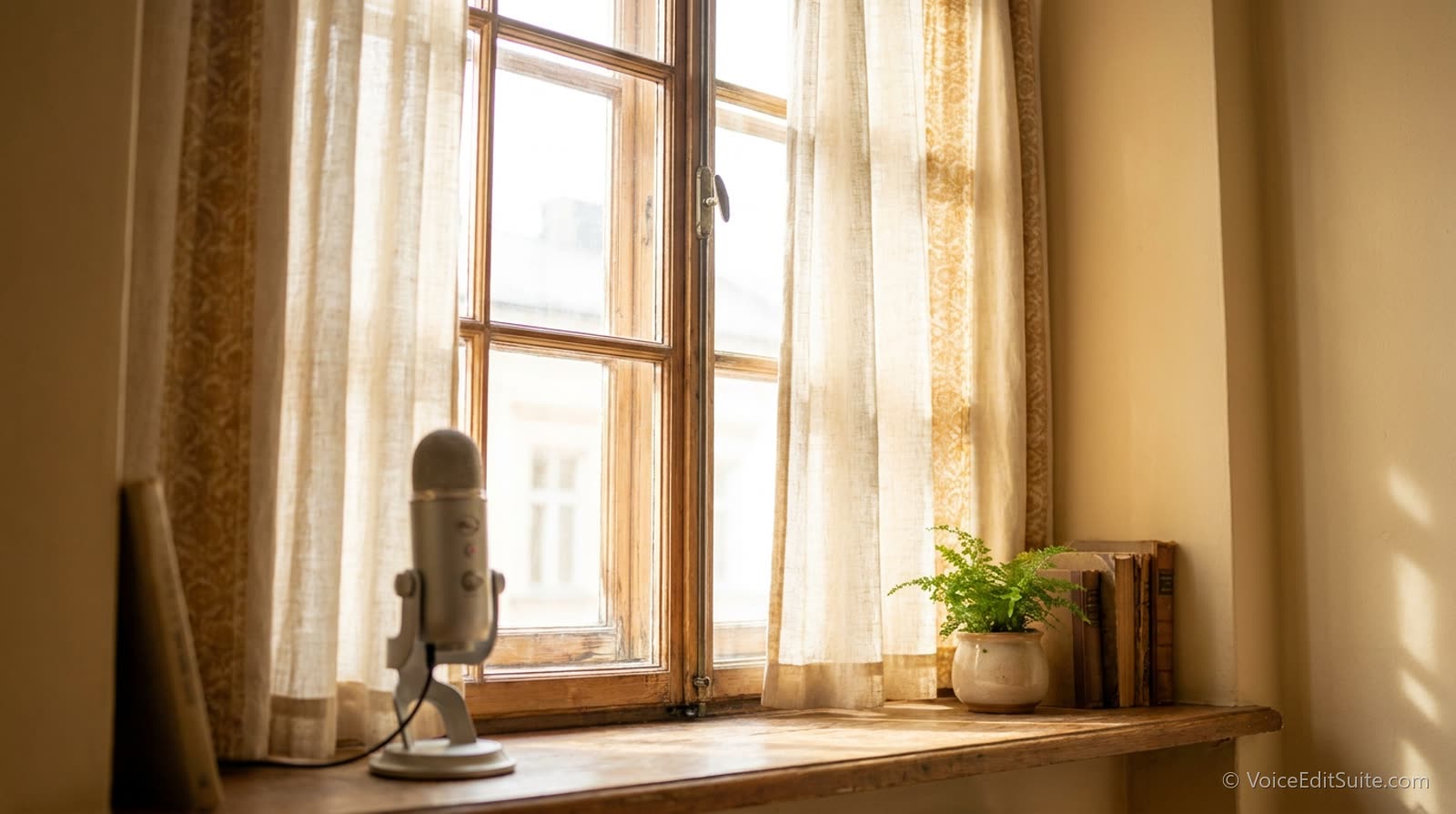
A detached house with a spare room to soundproof is the assumption behind most home studio advice, and it describes almost nobody's actual apartment. Thin shared walls, a neighbor's footsteps overhead, street noise through a single-pane window, and a lease that says nothing about acoustic panels. None of that disqualifies you from recording usable, professional voice over. It changes which levers you actually have, and this is the guide to the ones that matter when construction is not an option.
The core shift in mindset: stop trying to soundproof, which is expensive and often against your lease, and start managing timing and shape, which cost nothing and work immediately.
Timing Beats Treatment You Cannot Build
Every apartment building has a noise rhythm, and it is rarely what you assume until you actually log it. Spend a week noting when your space is genuinely quiet: many buildings settle in the very early morning before the workday starts and again late at night once neighbors wind down, with a noisy middle stretch of deliveries, traffic, and daytime activity, and a second noisy window in the early evening when everyone gets home at once.
Once you know your building's real windows, schedule your heaviest recording (auditions with tight deadlines, anything you cannot afford to redo) inside them, and save flexible practice reads for the noisy middle of the day when a little imperfection does not cost you a booking.
Shape Without Construction: The Closet Still Wins
A closet full of hanging clothes remains the single best free acoustic space in most apartments, for the same reason it works in a house: soft, irregular surfaces on every side absorb reflections instead of bouncing them back at the microphone. If your closet is too small to sit inside comfortably, recording with your head and mic just inside the opening, surrounded by clothes on three sides, still helps enormously versus the open room.
- Layer soft goods around your desk if a closet is not workable. A heavy blanket over a rolling rack behind your mic, thick curtains pulled closed, a duvet draped over a door, all of it is temporary, reversible, and lease-safe.
- Face away from hard, parallel surfaces, especially bare walls and windows, which is often as simple as turning your desk ninety degrees from how it currently sits.
- A rug under your recording spot cuts floor reflection even in a room with nothing else treated, and it is furniture, not construction.
- Portable isolation shields help less than people expect in a genuinely small, hard-surfaced room; they tame close reflections but do little for the upstairs-footsteps problem, so do not over-invest budget there before trying the closet.
The Noise You Genuinely Cannot Avoid
Some apartment noise has no timing fix and no shape fix: an HVAC system on a shared thermostat, a neighbor's inconsistent schedule, a busy street with no quiet hours. For that category, recording in short, clean takes and cutting around the noise in the edit is a legitimate professional workflow, not a compromise you need to apologize for. Removing background noise in post is exactly the tool built for the noise floor an apartment cannot fully eliminate at the source, and knowing when to fight the room versus when to fix it afterward is itself a skill worth developing.
The parked-car option still applies
If a session genuinely cannot wait for a quiet window and your apartment is mid-renovation-noise or otherwise unusable, a parked car remains a real, small, padded, sealed space that many apartment-based actors keep in their back pocket for exactly this situation.
Measure What Your Apartment Is Actually Doing
Guessing whether your closet setup or your blanket fort is good enough wastes more time than measuring it directly. Record thirty seconds of your actual read in your actual recording spot and see the real numbers instead of relying on how good it sounds on your own ears, which adapt to a space faster than any listener's fresh ears will.
↗ Try the tool
Studio Rescue
Free to try: if a session got recorded in a noisy or reflective apartment space and you need it usable, Studio Rescue is built specifically to pull clean, deliverable audio out of exactly this kind of imperfect room.
Open Studio Rescue →What Actually Matters
None of this requires a landlord's permission, a construction budget, or a house with a spare room. It requires knowing your building's schedule, using the softest, most irregular space you already own, and being honest with yourself about which noise problems are worth fighting versus editing around. Combine that with the same budget acoustic principles that apply everywhere and an apartment is a fully workable place to build a real voice over career from.