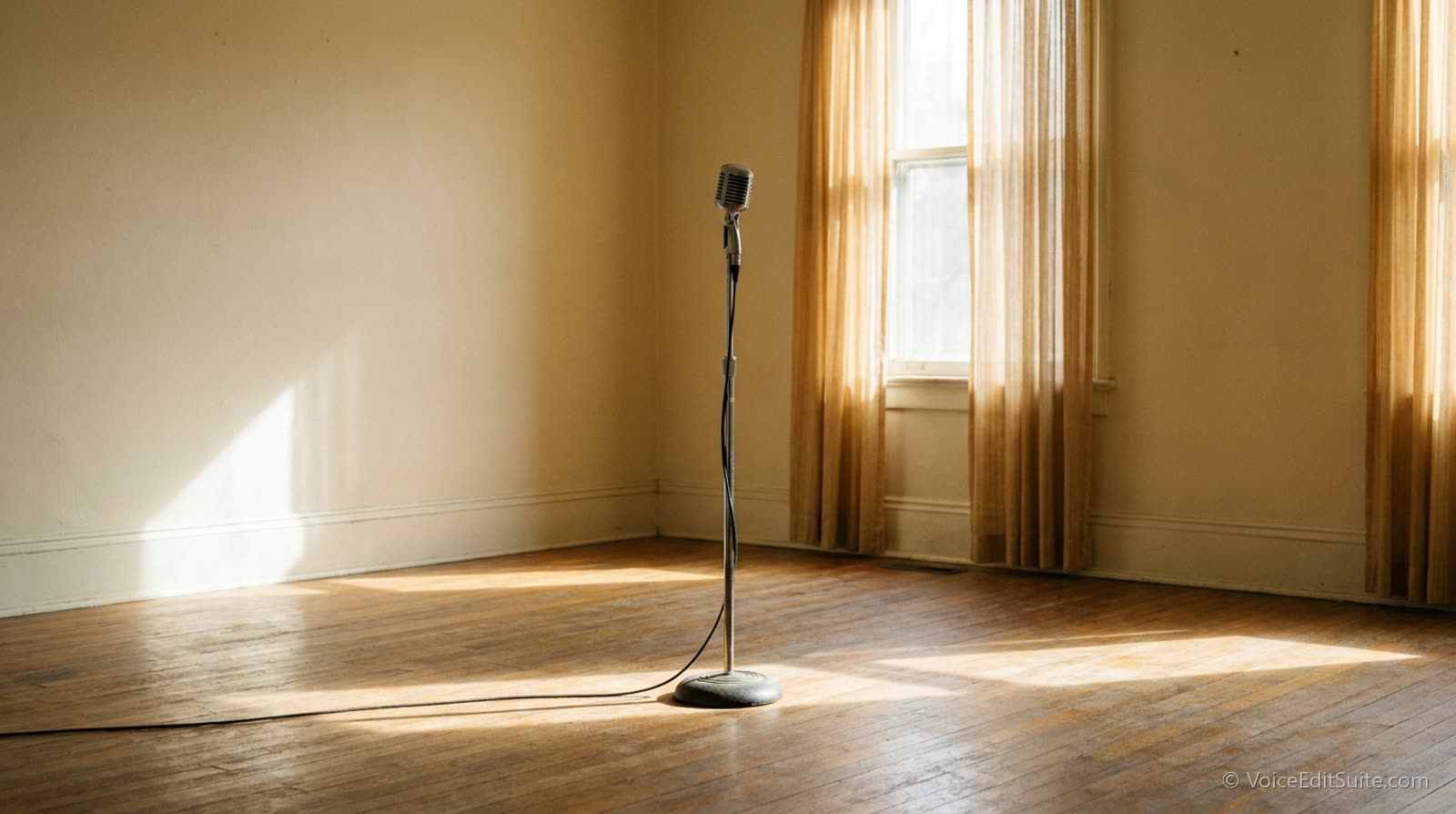
Room tone is the sound of your recording space with nobody talking: not silence in the absolute sense, but the actual noise floor of your room, HVAC hum, distant traffic, the electrical whine of your own gear, captured on its own with nothing else on top of it. Recording ten seconds of it at the start of every session is one of the smallest habits in voice over and one of the most consistently skipped by beginners, mostly because its payoff is invisible until the exact moment you need it and do not have it.
Why Room Tone Matters More Than It Sounds Like It Should
Room tone does two specific jobs, both of which are much harder to do well without it. First, it gives noise reduction tools a clean sample of exactly what to remove, your room's specific hum and hiss, rather than forcing the tool to guess at the noise profile from moments where you were also talking. Cleanup tools work meaningfully better with a true noise sample than they do estimating one from your speech.
Second, and less obvious, room tone gives an editor material to fill gaps left by cuts. Trim a pause too tightly and you get a jarring drop to true digital silence, which the ear registers as an edit even when it cannot say why. Fill that same gap with a sliver of your own room tone and the cut becomes inaudible, because the ambient bed of the recording never actually breaks.
What Your Noise Floor Actually Tells You
Your noise floor is simply the ambient level in that room tone sample, measured in decibels, and it is the single number that most directly determines whether a recording passes platform specs like ACX's audiobook requirements or sits noticeably behind a clean commercial read. A noise floor is not fixed; it moves with the season (a window AC unit), the time of day (traffic), and small unnoticed habits (a laptop fan kicking on mid-session). Recording room tone at the actual start of every session, not once as a baseline months ago, catches the drift a single old measurement would miss entirely.
- Record it in your actual recording position, mic live, gain set exactly as it will be for the read, not as a separate quick test with different settings.
- Ten seconds is enough. Longer does not meaningfully improve a noise profile; the goal is a clean, representative sample, not a long recording.
- Stay still and silent, including your chair and any nearby devices. A room tone sample with an accidental creak or notification in it defeats its own purpose.
- Re-record it if anything in the room changes mid-session, the HVAC cycling on, a window opened, a neighbor starting yard work. Treat room tone as a snapshot of right now, not a fixed asset from earlier.
Keep it, don't just glance at it
Save the room tone clip with your session files rather than recording it and discarding it. An editor working on your files later, including a future version of you, can use it for fills and touch-ups without needing you back in the booth to record more.
Building the Habit Until It Is Automatic
The honest reason most people skip room tone is that it feels like wasted time at the start of a session you are eager to actually begin. The fix is treating it as part of your setup checklist, alongside checking gain and confirming your file is recording, rather than as an optional extra step you will remember when you feel like it. Ten seconds, every session, no exceptions, until it stops being a decision at all.
↗ Try the tool
Home Studio Analysis
Free and no account: upload your room tone sample and get your actual measured noise floor, not a guess. Track it over a few weeks and you will see your room's real noise pattern, including the drift a single old measurement would miss.
Open Home Studio Analysis →The Smallest Habit With the Longest Reach
Room tone costs nothing, takes ten seconds, and quietly makes every downstream step easier: cleaner noise removal, seamless edits, and a documented, current noise floor you can actually point to instead of guessing at. Pair it with proper acoustic treatment and the habit compounds: a treated room with a captured room tone sample gives every tool downstream, human or software, the best possible material to work with.