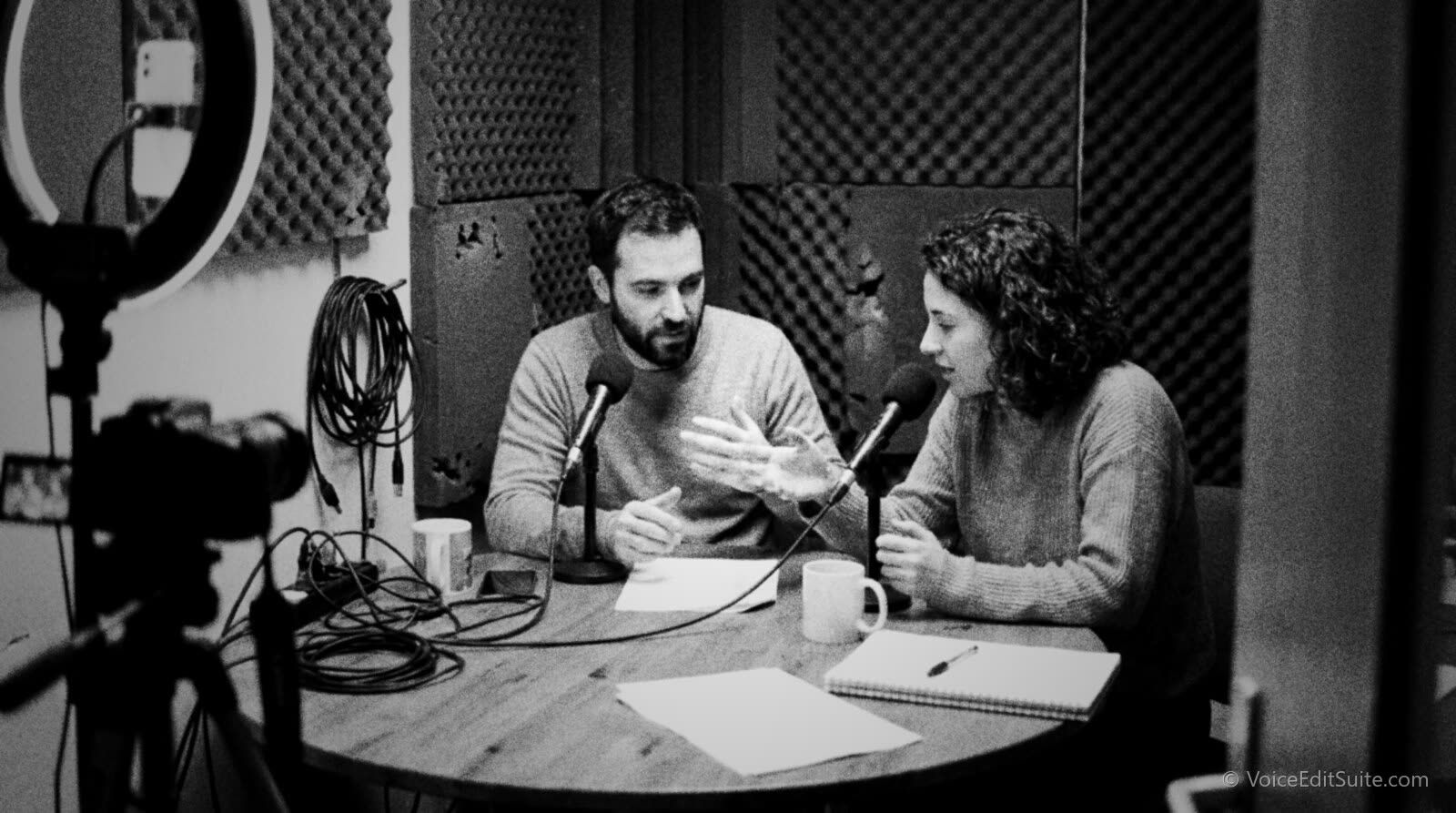
The short answer: video is no longer an optional add-on to a podcast, it is the default way most new listeners find one and increasingly the default way existing listeners consume one. Edison Research's own tracking shows weekly podcast consumers actively watching video passed those listening to audio only for the first time in the third quarter of 2025, and YouTube has become the single most-used podcast platform in the United States by several independent measures. That changes four practical things for anyone making a podcast: how people discover the show in the first place, what gear and lighting the recording actually needs, how the editing workflow has to handle synced multi-camera footage instead of a single audio file, and, for a voice actor who hosts or co-hosts a show, how comfortable they look on camera instead of just how they sound.
Video Overtook Audio-Only Listening in 2025, Not Gradually
For most of podcasting's history, video was a secondary artifact: a YouTube upload made from the same audio file, watched by a small fraction of the audience while most listening happened through Apple Podcasts, Spotify, or a dedicated podcast app via RSS. Edison Research's Podcast Consumer 2026 report tracks a different reality now. According to Edison's own tracking, weekly podcast consumers actively watching video passed those listening to audio only for the first time in its Q3 2025 measurement, with 82% of weekly podcast consumers actively watching video compared with 78% listening to audio only in the same window. Those numbers run close enough that audio has not collapsed, but the crossover itself, video ahead of audio-only for the first time Edison has measured it, is the headline.
The preference shift behind that crossover has been building for years, not months. Edison's tracking shows the share of weekly podcast consumers who say they prefer to actively watch podcast video while listening grew from 30% in April 2022 to 49% in April 2026, essentially doubling across four years of surveys. That is a slow, compounding move in taste, not a single platform's marketing push, which is part of why it shows up consistently across Edison's Infinite Dial study and its separate Podcast Consumer tracking.
Megan Lazovick, a Vice President at Edison Research, framed the shift at Infinite Dial 2026 in terms of growth rather than replacement, telling Radio Ink that video's rise is expanding the tent, bringing in new audiences and new behaviors rather than cannibalizing audio listening. She has made a similar point in separate Edison coverage of the format shift: video isn't growing because people have suddenly stopped listening and discovered video, audio is growing alongside it. That distinction matters for anyone planning a show around this data. The format is not audio losing to video, it is the total addressable audience for podcasts getting bigger because video gives people a second way in.
"It's expanding the tent, bringing in new audiences and new behaviors."
YouTube's own reporting backs up the scale of that expanded tent. The company said in a February 2025 blog post that it had passed 1 billion monthly active podcast viewers worldwide, with viewers watching more than 400 million hours of podcasts monthly on living room devices such as smart TVs alone. Spotify, a company with every incentive to downplay a rival platform's gains, has instead leaned into the same trend from its own side: Spotify's newsroom reports that more than 500 million users have streamed a video podcast on the platform, up nearly 50% year over year, and the company says it has invested more than $10 billion in podcasting over the past five years, a sum increasingly weighted toward video production and distribution. The podcast industry overview for independent creators covers the broader growth numbers behind this shift in more depth, but the throughline for a working podcaster is simple: the audience you are trying to reach is now assuming video exists, not treating it as a bonus.
What Actually Changed: Discovery, Not Just Viewing Habits
The consumption numbers above describe what existing podcast fans do once they already know a show exists. The bigger structural change is in how a new listener finds a show at all, and that is where YouTube's search and recommendation engine behaves fundamentally differently from how a podcast app or RSS feed ever did. A traditional podcast app surfaces shows mostly through charts, editorial picks, or a listener who already knows roughly what they want and searches a title or topic. YouTube and TikTok-style platforms instead surface individual clips and episodes to people who were not looking for a podcast at all, based on a recommendation engine trained on watch behavior across the entire platform, not a closed catalog of shows.
Edison's own data on new listener behavior shows how far that discovery shift has already gone. Among people who have been listening to podcasts for less than a year, what Edison's research calls First-Years, 72% of new podcast listeners and 68% of longtime listeners report they first encountered a specific podcast through its video version before ever switching to the audio-only format for regular listening. Video is not just a parallel consumption option anymore, for a large share of the audience it is the front door, and audio-only becomes the format people graduate to once they already like the show.
Independent research backs up YouTube's specific role as that front door. Sounds Profitable's Podcast Discovery Playbook 2026 found YouTube accounted for roughly 40% of favorite-show discovery among U.S. podcast listeners, roughly double the share attributed to any single competing platform, and the same research named YouTube the most-used podcast platform overall at 40% of weighted listeners, ahead of Spotify at 18% and Apple Podcasts at 11%. That research was sponsored by a company with a commercial interest in podcast metadata and discoverability tools, which is worth weighing, but its direction matches Edison's independently gathered figures closely enough to treat the general finding as solid even if the exact percentage should be read as one data point rather than a universal constant.
The practical consequence is that a show's YouTube presence now functions less like a video mirror of the audio feed and more like the show's actual search engine optimization. A podcast app's RSS-based discovery depends heavily on the episode title and show notes a listener already has to seek out. YouTube's discovery depends on watch time, click-through rate on a thumbnail, and how well a video's title and description match what people are actually searching, which behaves far closer to search engine optimization on a web page than to the metadata hygiene that used to be podcasting's main discoverability lever. A show's cover art and thumbnail design now has to work doubly hard: as a recognizable feed icon inside a podcast app, and as a scroll-stopping thumbnail competing against unrelated video content inside someone's YouTube homepage, which is a very different design problem than cover art was built to solve a decade ago.
None of this means podcast apps and RSS feeds stop mattering. A sizable, loyal share of the audience, particularly longtime listeners who prefer audio specifically because it works during a commute, a workout, or a task where a screen is impractical, still lives entirely inside Apple Podcasts, Spotify, or another dedicated app, and a show with no RSS feed at all is cutting off a real, paying, highly engaged segment of its potential audience. The honest framing is that a podcast now effectively needs two discovery strategies running at once, one built around a video platform's search and recommendation behavior and one built around the traditional podcast ecosystem's chart placement and app-specific promotion, and treating either one as optional is the mistake, not favoring one over the other.
Shooting It Well Without a Studio Budget: Gear, Lighting, and Framing
The good news for a podcaster weighing whether to add a camera is that video podcast production rewards competence over expense far more than scripted video production does. A two-person conversation shot well on a modest budget reads as professional; an expensive camera shot with flat, mismatched lighting reads as amateur regardless of the hardware cost. The gear decisions below are the ones that actually move the needle, in roughly the order they matter.
Continuous Light, Never Flash or Strobe
This sounds obvious once stated, but it trips up people coming from photography: a flash or strobe fires a brief burst of light timed to a single shutter click, which is exactly wrong for video, where every one of 24 to 60 frames per second needs to be lit the same way. Video podcast lighting has to be continuous, meaning an LED panel or softbox that stays on at a steady output for the entire recording. Continuous LED panels are also the practical choice for a home studio because they run cool, stay quiet enough not to bleed into a microphone, and let a host see exactly how the light looks on their face before hitting record, rather than guessing at an exposure the way still photographers sometimes do with flash. One soft key light per host, angled slightly off-axis rather than straight on to avoid a flat, flash-photo look, covers most two-person setups; a third light aimed at the background separates the hosts from the wall behind them and is the single cheapest upgrade from looking like a webcam call to looking like a produced show.
Webcam, Smartphone, or Mirrorless Camera
A well-lit webcam in the fifty-to-three-hundred-dollar range produces genuinely usable results for a show just starting out, and a modern smartphone's camera, propped on a small tripod, often outperforms an aging dedicated webcam entirely. The meaningful upgrade past that tier is a mirrorless camera with an interchangeable lens, which earns its cost mainly through a shallower depth of field, the soft, blurred background that separates a host visually from the room behind them, something a small webcam sensor physically cannot reproduce regardless of lighting. Several mirrorless bodies in the eight-hundred-to-two-thousand-dollar range double as a USB webcam directly, which means a single camera purchase can replace both the laptop's built-in camera and a dedicated webcam rather than adding a third device to the desk. The decision is not really about resolution, nearly everything shoots usable 4K now, it is about workflow fit: a locked-down desk setup with one or two fixed positions suits a mirrorless camera well, while a show that records from different locations or travels benefits more from a lighter webcam or smartphone rig that is faster to set back up each time. The framing fundamentals that matter for a self-taped voice over audition's lighting and camera setup carry over directly here: even lighting, a clean uncluttered background, and the lens positioned at eye level rather than looking down from above or up from below.
Framing a Two-Host Conversation
A two-person show has to solve a problem a solo host does not: giving each person enough room in frame without either one feeling cramped or distant, and keeping both faces lit and legible at the same time. A single wide shot covering both hosts across a table works when the room and lighting are controlled enough that neither host ends up in the other's shadow, and it is the simplest setup to run alone without a producer switching cameras live. The alternative, a dedicated camera on each host plus a wide safety shot, gives an editor the ability to cut between individual reactions later, which reads as more dynamic on YouTube but roughly doubles the gear, lighting coordination, and editing complexity. For headroom, a standard worth following for either approach is leaving about 20 to 30 percent of empty space above the crown of the head rather than cropping tight to the hairline, which keeps the shot from feeling like a mugshot once it is cropped for a vertical clip later.
How a Video-First Session Changes the Recording and Editing Workflow
Adding a camera does not just add a visual track, it changes the entire pipeline a show runs on. A single-microphone audio recording used to be the one file an editor needed to manage. A video-first session now typically produces separate audio tracks per host, one or more camera files per host, and sometimes a screen-share or b-roll track, all of which have to land in sync before any real editing can start. Recording tools built for this, such as Riverside and Descript's Rooms feature, capture each remote participant's audio and video locally in high resolution and upload the separate files automatically once the session ends, which avoids the quality loss and sync drift that come from compressing everything through a live video call instead. For an in-person two-camera setup, the standard approach borrows directly from multi-camera film and television workflow: record every camera and every microphone as its own file, then sync them in the edit using either shared audio waveforms, a visible clap at the start of the session, or embedded timecode if the cameras support it, and manually verify lip sync afterward regardless of which method was used, since even timecode-synced footage can drift over a long recording.
This is also where the editing tooling genuinely diverges by workflow stage. The audio edit, tightening pacing, pulling filler words, leveling dialogue, benefits from an editor built around removing dead air and mistakes automatically rather than scrubbing a waveform by hand for an hour-long conversation. Once that pass is locked, the same edit decisions have to be reflected across every camera angle, not just the audio timeline, which is the step that trips up podcasters moving to video for the first time: a cut made in an audio-only editor does not automatically ripple through a separate video timeline unless the tool is built to keep both in sync.
↗ Try the tool
Auto Clean Up
Pulling dead air, filler words, and mistakes out of a long recorded conversation by hand is the slowest part of a video-first editing workflow, and it is the step most likely to desync a multi-camera cut if it is done separately from the video edit. Auto-Editor analyzes the session's audio and generates the cut list automatically, so the silence and stumbles come out cleanly before a single frame of video gets trimmed, keeping every camera angle aligned to the same final timeline instead of four slightly different ones.
Open Auto Clean Up →The output side of the pipeline has grown too. A video-first session is rarely edited into just one long-form upload anymore. The same hour of footage typically gets cut into a full-length YouTube episode, an audio-only RSS feed version for podcast apps, and a batch of short vertical clips sized for YouTube Shorts, TikTok, and Instagram Reels, each requiring its own crop, caption styling, and hook-driven opening few seconds. Turning a long episode into short-form video clips deserves its own workflow and its own editorial judgment about which three minutes of an hour-long conversation will actually stop a scroll, but the planning for it starts at the recording stage: a host who knows a specific exchange is likely to get clipped can frame their point as a self-contained thought on camera, rather than relying on context from twenty minutes earlier that a short clip will never include. Where that finished video and audio actually gets published and distributed from also matters more than it used to, since not every podcast hosting platform handles video distribution, YouTube syndication, and RSS delivery equally well, and picking one built for a video-first workflow avoids rebuilding the publishing pipeline later.
Being On Camera: What Changes for a Voice Actor Who Hosts
A voice actor moving into podcast hosting or co-hosting brings a real advantage most first-time podcasters do not have: trained vocal delivery, pacing, and comfort performing into a microphone under direction. What that training does not automatically cover is comfort being looked at while doing it, and the gap between a host who sounds confident and one who also looks confident on camera is often the single biggest giveaway that a show is new. The fixes are mostly about posture and attention rather than anything technical.
The most common tell of a nervous or under-rehearsed host is visible notes, specifically the small, repeated eye-drop toward a script, a phone, or a second monitor just off camera. A little reference material is normal and even professional sports broadcasters and news anchors use a teleprompter constantly, but the visible signature of reading rather than speaking is rapid, repeated eye movement away from the lens and back, not the act of glancing at a note once. Keeping any notes as single words or short prompts rather than full sentences reduces how long the eyes need to leave the lens each time, and placing notes as close to the camera lens itself as physically possible, taped just beside or below it rather than on a separate monitor across the desk, shrinks that eye movement enough that it reads as a natural pause in thought rather than a read.
Eye contact with the lens itself, rather than with a co-host or a monitor showing the recording, is the detail that most determines whether a viewer feels spoken to directly. In a two-host conversation this gets genuinely complicated, because the natural, correct instinct in conversation is to look at the person talking, not at a camera, and forcing constant lens contact during back-and-forth banter looks stranger than looking at your co-host does. The practical compromise most video podcasts land on is looking at the co-host during natural conversational back-and-forth, then deliberately turning to the lens for a direct address moment, a punchline, a call to action, or a direct answer to a question the audience is assumed to be asking along with the other host. That shift in eye line is itself a performance choice a trained actor already understands instinctively from camera work, even if they have never applied it to their own podcast before.
Confidence on camera is also, more than anything else, a product of repetition rather than a fixed trait someone either has or does not. The visible stiffness in an early episode of almost any now-comfortable video podcast host is the same stiffness any actor recognizes from an early self-tape: awareness of being watched competing with the actual thought being spoken. That awareness fades with volume of reps, not with better equipment, which is also why reviewing early episodes specifically for where the eyes drifted, where a hand started fidgeting, or where a sentence trailed off while thinking about the camera rather than the point being made, is more useful than any lighting or lens upgrade for actually looking more at ease on screen.
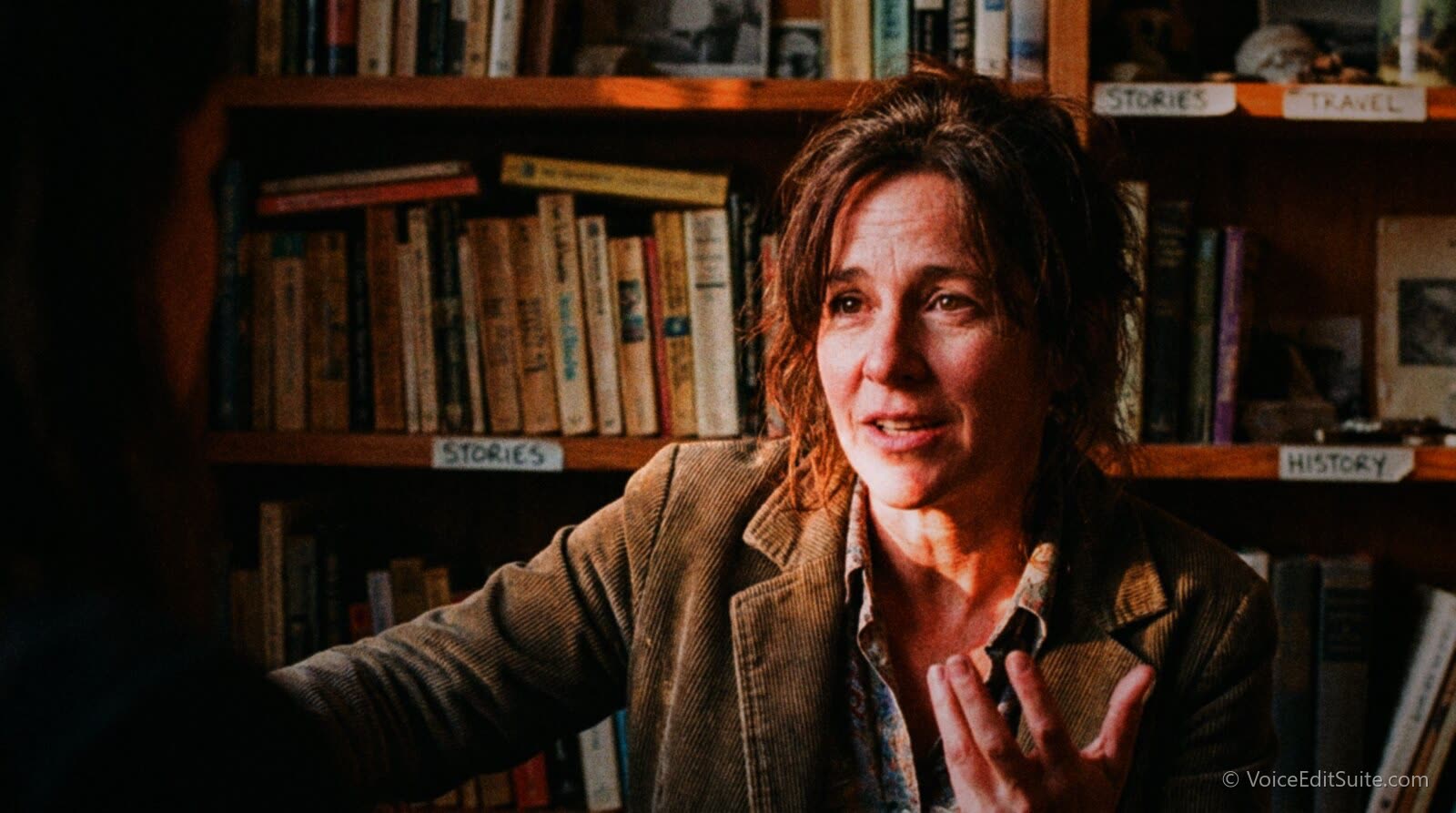
This matters beyond vanity, because the same discovery mechanics covered earlier in this guide reward exactly this kind of comfort. A recommendation engine optimizing for watch time is, in effect, optimizing for whether a viewer stays with a host rather than clicking away, and a stiff, visibly uncomfortable host loses that attention faster than an audio-only listener would ever have noticed the same nervousness in a voice alone. The performance skills a voice actor already has, controlled pacing, a clear point of view, the ability to recover smoothly from a flubbed line without breaking the moment, translate directly to video. The only new skill layered on top is where to put the eyes, and that is a trainable habit, not a different craft.
What This Means for a Show Planning Its Next Year
None of the data above is a reason to abandon an audio-only show that is working, and nothing in Edison's or YouTube's own figures suggests audio-only consumption is actually shrinking in absolute terms, both formats are growing, video is simply growing faster and now leads in weekly reach. The realistic planning takeaway is that a new podcast launched today without any video component is choosing to compete for discovery through the slower-growing half of the format, chart placement and app-specific promotion, while leaving the faster-growing half, YouTube's search and recommendation surface and the roughly 40% of new listeners who first find shows through video, entirely to competitors who did add a camera. An existing audio-only show does not need to rebuild itself overnight, but even a simple static-camera recording of the existing session, uploaded to YouTube alongside the normal RSS feed, captures a meaningful share of that video-first discovery with a fraction of the production investment a fully produced multi-camera show requires, and it is a far lower-risk way to test whether the audience responds before committing to the lighting, camera, and editing workflow upgrades covered above.
That is the trend worth planning around regardless of which exact percentage ends up being the most durable one: the entry point for a new listener is now more likely to be a video than an RSS feed, and a show's production and distribution choices should reflect that even where its long-term audience still ends up listening mostly as audio.
Frequently Asked Questions
Does every podcast actually need video now, or is this overstated?
Not every show needs it to succeed, but every show gives up something real by skipping it. Edison's data shows audio-only listening is still large and growing in absolute terms, so a show built around a format where video is genuinely impractical, a long-form interview recorded entirely over phone audio, for instance, can still thrive without a camera. What a video-less show gives up is the roughly 40% of new listener discovery that Sounds Profitable's research attributes to YouTube specifically, and the First-Years data showing a strong majority of brand-new podcast listeners first encounter a show through its video version. That is a real, measurable cost, not a hypothetical one, even if it is not an existential one for every show.
What is the cheapest realistic way to start recording video alongside audio?
A smartphone on a small tripod, a single continuous LED light panel in the fifty-to-hundred-dollar range aimed at each host, and a plain, decluttered wall or bookshelf behind the recording area covers the fundamentals for well under two hundred dollars total. The lighting and background decisions matter more than the camera at this budget tier. A phone camera in good, even light looks considerably better than an expensive camera in flat or mismatched light, so spend the limited budget on light first.
How do you shoot video well when co-hosts record remotely instead of in person?
Tools built specifically for this, such as Riverside and Descript's Rooms feature, record each remote participant's audio and video locally on their own device in high resolution, then upload the separate files automatically once the session ends, rather than compressing everything through a live video call the way a standard meeting app does. That avoids both the visual compression artifacts and the audio-video sync drift that come from treating a podcast recording like an ordinary video call. Each host still needs to independently handle their own lighting and camera framing on their end, since a remote recording tool cannot fix a poorly lit room on someone else's side of the call.
If YouTube is the biggest platform now, do dedicated podcast apps still matter?
Yes, and dropping an RSS feed entirely would be a mistake for most shows. A meaningful, loyal segment of the audience, particularly people who listen during commutes, workouts, or other screen-off situations, consumes almost exclusively through Apple Podcasts, Spotify, or another dedicated app, and that audience tends to be highly engaged once it finds a show. The realistic strategy most working podcasts have landed on is maintaining both: a video-first presence for discovery and YouTube's recommendation engine, and a standard RSS feed and podcast-app presence for the audio-only audience that is not shrinking even as video grows faster.
Does adding a camera make the audio quality worse?
It does not have to, but it can if the setup is not planned around audio first. The audio track should still be captured through a dedicated microphone positioned correctly for voice, not pulled from a camera's built-in mic, and lighting fixtures and camera fans should be checked for any audible hum or buzz that a camera-focused setup can introduce into a recording that used to be audio-only. Treating the microphone chain as the first decision and the camera as an addition on top of it, rather than letting video setup decisions compromise mic placement, keeps the audio-only RSS version just as strong as it was before video was added.
Does any of this change for a solo host rather than a two-person show?
The lighting and gear guidance applies identically, but the eye-contact dynamic simplifies considerably. A solo host has no co-host to naturally look at during conversation, so sustained lens contact is both expected and far less awkward to maintain than it is in a two-person back-and-forth. The main framing difference is that a solo host typically sits closer to center frame with more even headroom on both sides, since there is no second person's position in the shot to balance against.
Corrections
This guide reflects research available as of its publication date, and platform statistics in particular change quickly. If you spot a figure that is outdated, a study that has been updated or retracted, or a claim that needs a better source, let us know through the contact page so it can be corrected.
Sources and Further Reading
- Edison Research, The Podcast Consumer 2026: the Q3 2025 data point showing video overtaking audio-only consumption for the first time, and the 2022-to-2026 preference growth figures used throughout this guide.
- Radio Ink, Infinite Dial 2026: Radio's Biggest Audience Is Going Digital: source for the verbatim quote from Edison Research Vice President Megan Lazovick used in this guide.
- Radio Ink, Podcast Engagement Shifts as Video Becomes Key Entry Point: the First-Years data on new versus longtime listeners first encountering shows through video.
- YouTube Blog, 1 Billion Monthly Podcast Users: YouTube's own February 2025 figures on monthly podcast viewers and living-room viewing hours.
- Spotify Newsroom, Video Podcasts: Spotify's own reporting on video podcast streamer growth and its multi-billion-dollar podcasting investment.
- Sounds Profitable, The Podcast Discovery Playbook 2026: the YouTube discovery-share and most-used-platform figures cited in this guide's discovery section.
- B&H Explora, Selecting Lights for Your Video Podcast: general guidance on continuous LED lighting for video podcast recording cited in the gear section.
- Riverside, iPhone Continuity Camera vs. Webcam vs. Sony Mirrorless: camera comparison guidance used for the webcam-versus-mirrorless recommendations in this guide.