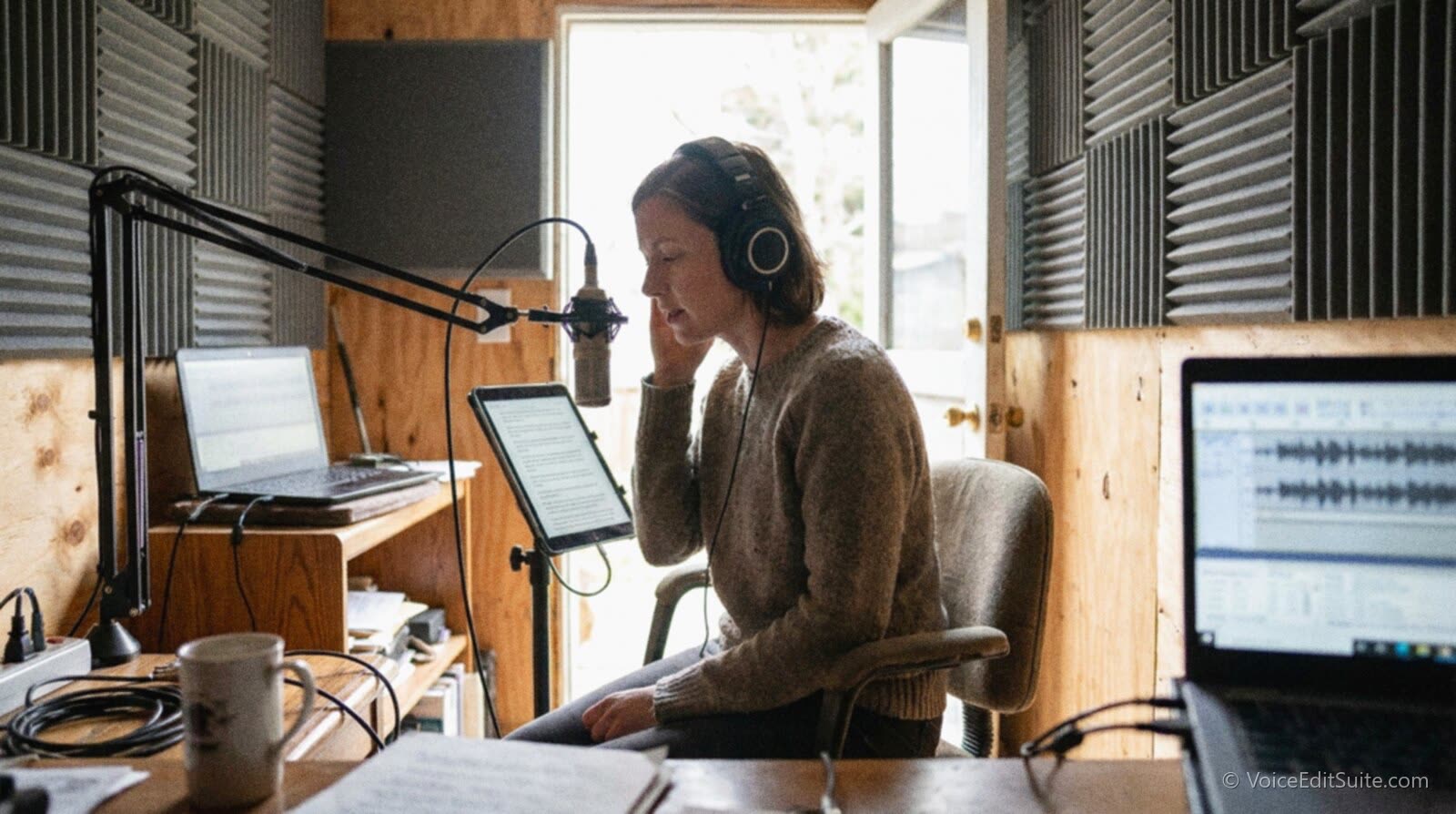
The short answer: a text-to-speech voice licensing deal, where a company turns your recorded voice into an ongoing synthetic voice font sold inside its product, should specify four things clearly before you sign anything: whether you are paid a flat one-time buyout or an ongoing royalty tied to actual usage, how exclusive the license is and for how long, a hard cap or review point on how the voice can be used, and a real path to revoke or retire the voice if you change your mind, the company changes ownership, or the product is used in ways you did not anticipate. If any of those four terms is vague, undefined, or entirely one-sided in the company's favor, that is the point to push back or walk, not the point to assume good faith will sort it out later.
What a Voice Font Licensing Deal Actually Is
It helps to be precise about what kind of deal this guide covers, because two very different arrangements get described loosely as selling your voice to AI. The first, which is the subject of this guide, is a voice font or voice licensing deal: a company builds a text-to-speech model trained specifically on your recorded voice and sells access to that specific, named or branded synthetic voice as an ongoing product feature, the way a screen reader, an audiobook narration tool, or a corporate voice assistant might let a customer choose your voice from a menu of options. You are licensing an ongoing synthetic version of your voice for repeated commercial use, not handing over a one-time batch of files.
The second, related but distinct, arrangement is a flat sale of voice recordings into a general-purpose AI training dataset, where your voice becomes one of many inputs blended into a broader model's training data without necessarily producing an identifiable, named voice product tied back to you specifically. That is a real and increasingly common transaction, but it raises a different set of questions, mainly around attribution, data deletion rights, and whether your specific voice is even separable from the resulting model, and it deserves its own detailed guide rather than a few paragraphs here. The rest of this guide assumes the clearer, more common voice actor scenario: a company has approached you specifically, by name, to license your voice as its own standalone, identifiable synthetic voice product, which is covered in more general terms in AI voice cloning and voice acting.
How a TTS Licensing Deal Is Typically Structured
Reported deals in this space split into three broad structures, and the differences between them matter enormously for how much you actually earn over the life of the product and how much control you retain.
Flat Buyout
A flat buyout pays a single, fixed fee for the right to use your recorded voice to build and sell a synthetic voice product indefinitely, with no further payment tied to how widely or how long the resulting voice is actually used. This is the structure most favorable to the company and least favorable to you, because a successful voice font that ends up embedded in a product used by millions of people pays you exactly the same amount as one that never ships at all. Flat buyouts are not inherently predatory, a company offering a large enough upfront number for a clearly bounded, limited use can be a fair trade, but a flat buyout for an open-ended, indefinite commercial license is where the terms of the deal and the size of the number matter most, since you are pricing in all of the voice's future value at the moment of signing with no ability to renegotiate later.
Ongoing Royalty or Revenue Share
A royalty or revenue-share structure ties your payment to actual usage: a per-generation fee, a percentage of subscription revenue tied to your specific voice, or a periodic payout based on how often your voice is actually selected and used inside the product. Deepdub, a company building AI dubbing and voice tools, launched a royalty program for voice actors in December 2023 structured specifically this way, paying participating actors every time their AI-cloned voice is used in a new project, with pay varying by project size, language, region, and the specific actor involved. This structure aligns your payment with the product's actual success, which is the main argument in its favor, but it depends entirely on the company's reporting being honest and auditable, since you generally have no independent way to verify how many times your voice was actually generated unless the contract gives you an audit right.
Hybrid: Upfront Fee Plus Revenue Share
The hybrid structure, an upfront payment plus an ongoing share of revenue tied to the voice's use, is becoming the more common union-negotiated template. SAG-AFTRA's October 2024 agreement with Ethovox, an AI voice company co-founded by voice actor Cissy Jones and voice director Julian Kwasneski, requires upfront fees, ongoing revenue sharing, and explicit consent for voice data usage, giving performers both a guaranteed payment for the initial recording session and a continuing stake in how much the resulting voice actually earns. This is generally the structure worth pushing for if you have any negotiating leverage at all, since it protects you on the downside with a guaranteed minimum while still letting you benefit if the product succeeds beyond what anyone expected at signing.
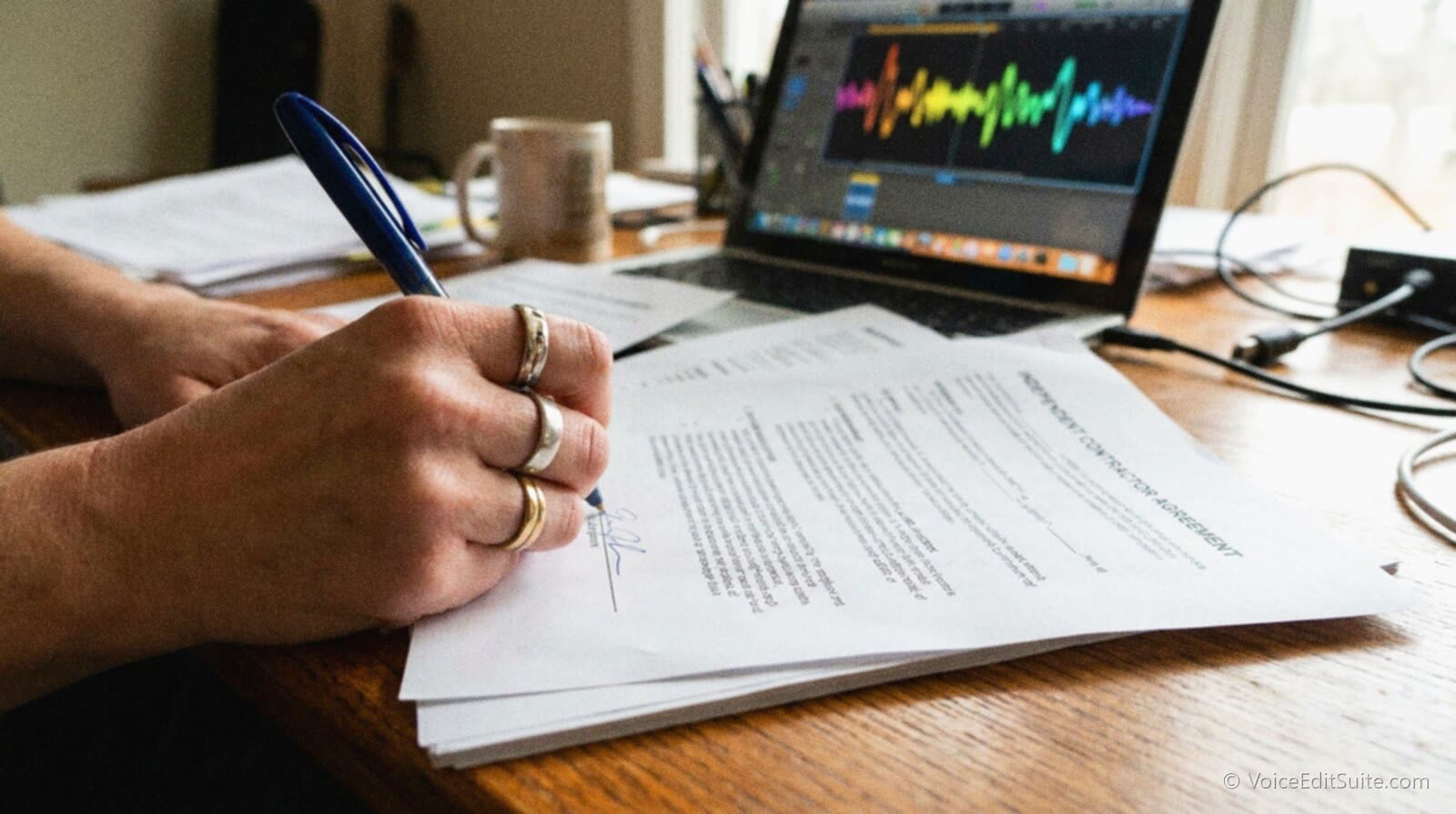
Beyond the payment structure itself, three other terms determine how much control you actually retain over your own voice once the ink is dry: the scope of exclusivity, any cap on how the voice can be used, and whether you have a real right to pull the voice back out of circulation.
Exclusivity Scope
An exclusivity clause can range from narrow, restricting you only from licensing a competing synthetic voice to a direct competitor in the same product category, to extremely broad, barring you from any synthetic voice licensing deal at all, or even from normal voice over booking work, for the life of the contract. The narrower and more specifically defined the restricted category, the easier it is to keep working elsewhere while the licensing deal runs. A broad, vaguely worded exclusivity clause is worth pricing accordingly, treating it the same way a traditional voice over usage fee or buyout negotiation treats an unusually wide usage grant: as a real cost to you that the payment needs to reflect, not a routine boilerplate term to skim past.
Usage Caps and Review Rights
A usage cap limits what the synthetic voice can actually be made to say or which contexts it can be deployed in, for instance restricting it to a specific product category, barring political or medical content, or requiring your approval before the voice is licensed into a new product beyond the one you originally agreed to. SAG-AFTRA's own consent framework, discussed in more detail below, builds a version of this directly into the union's digital replica rules: consent for a specific use does not automatically extend to a different, additional use, and a producer is required to obtain separate consent before expanding into a new application the original agreement did not cover. A contract without any equivalent language effectively lets the company redeploy your voice into any future product it builds, under any brand, saying anything the model can be made to generate, which is a meaningfully different and larger grant than most actors realize they are agreeing to at first read.
The Right to Revoke or Retire the Voice
This is the term most licensing contracts say the least about, and it is the one that matters most if the relationship sours, the company is acquired, or the voice ends up used in a context you never anticipated and now object to. A real revocation right specifies a process and a timeline: how you request that the voice be withdrawn from active use, how long the company has to actually comply, and what happens to voice generations already made before the request, since a text-to-speech product in active use by paying customers cannot always be unwound instantly. A contract that is silent on this question should be read as granting you no practical ability to withdraw the voice at all once it ships, regardless of how the relationship later changes, which is exactly the gap that has driven some of the real disputes covered later in this guide.
How SAG-AFTRA's AI Provisions Apply If You Are a Union Member
If you are a SAG-AFTRA member, the union's own digital replica and AI consent rules sit on top of whatever a specific licensing company offers, and they are worth understanding in their own right rather than assuming a non-union company's contract will mirror them. The SAG-AFTRA AI agreement explainer covers the full history of how the union's rules developed since the 2023 strike; the specifics most relevant to a voice font licensing conversation are narrower and more concrete.
SAG-AFTRA's published materials on digital replicas describe consent as needing to be informed and explicit, with a reasonably specific description of the intended use rather than a blanket, open-ended grant. The union's Commercials Contract, effective April 1, 2025, goes further, requiring clear and conspicuous consent from performers before a producer creates or uses their digital replica at all, and the union jointly developed a standardized Digital Replica Rider with the Joint Policy Committee specifically so performers have consistent, predictable consent language to review rather than a different bespoke clause from every company. Earlier contract bulletins describe a notice requirement of 48 hours in advance of actually creating a digital replica, giving a performer a real window to ask questions or object before the recording session that will become the training basis for the synthetic voice even happens.
The union's video game voice work agreement with Replica Studios, struck in 2024 and described by SAG-AFTRA itself as an experimental, one-year agreement, illustrates both the protections and the controversy that can come with even a union-negotiated AI deal. The deal required informed consent for the use of AI to create digital voice replicas and specific requirements for the safe storage of digital assets, but it drew real pushback from working voice actors in the game industry who argued the terms still left too much room for their recorded performances to be used in ways they had not anticipated when a one-year agreement is renegotiated or expanded. That controversy is a useful reminder on its own: union membership and a union-negotiated contract raise the floor on consent and notice requirements, but they do not eliminate the need to read the specific deal in front of you and ask what happens after the initial term ends.
Those four steps are worth comparing directly against whatever process a specific TTS company describes to you, even if that company has no SAG-AFTRA agreement at all, because they function as a reasonable baseline for what informed consent should look like in this kind of deal. A company that skips straight from a general pitch to a recording session, with no written, specific description of the intended use and no advance notice period at all, is already falling short of the standard the union negotiated for its own members, which is useful context even if that specific company is under no legal obligation to meet it.
A practical note for members evaluating an outside, non-signatory TTS company's offer: SAG-AFTRA's consent standards are not automatically binding on a company that has not signed a SAG-AFTRA agreement at all. A voice actor approached directly by an independent TTS startup with no union agreement in place is negotiating entirely on the strength of their own contract, with none of the union's standardized consent language, notice periods, or dispute process backing them up unless they specifically negotiate equivalent terms into that individual deal. Separately, several states, including California, Illinois, and New York, have their own statutory consent requirements for digital voice replicas that apply regardless of union status, which is worth knowing even if your specific deal involves no union agreement at all.
Red Flags in a TTS Licensing Contract
A handful of specific contract features show up repeatedly in deals that later became disputes, and each is worth treating as a reason to negotiate the term directly rather than accept it as standard.
- No stated purpose, or a purpose that later expands. A session described as internal research, a demo, or an unspecified future product, with no contractual limit on what the recordings can actually be used for once collected, is the single most common pattern behind the real disputes covered below.
- No cap on derivative or expanded use. A license that lets the company use your voice in any future product it builds, not just the one you were told about at signing, transfers far more value than most actors realize they are granting.
- No audit or reporting right on a royalty deal. If you are being paid per use or as a revenue share, a contract that gives you no way to verify how often the voice was actually generated is asking you to trust the company's own self-reported numbers with no recourse if they are wrong.
- No revocation or retirement process. As covered above, silence here should be read as meaning you cannot meaningfully withdraw the voice once it ships, however the relationship or your own feelings about the use later change.
- A payment far below the going rate for comparable usage. A handful of hundred dollars for an open-ended, indefinite commercial license is a mismatch in scale that should prompt real scrutiny of every other term in the contract, not just the number itself.
- Pressure to sign quickly, or language discouraging you from having an attorney review it. Any legitimate, well-capitalized company offering a genuine ongoing licensing relationship should expect and welcome a performer having the contract reviewed before signing.
How to Price a TTS Voice Licensing Deal
Pricing an ongoing synthetic voice license is a fundamentally different exercise than quoting a single voice over session, because you are not pricing a finite deliverable, you are pricing an indefinite, repeatable right to generate new material in your voice without you in the room again. A useful starting discipline is to price the exclusivity and the usage scope as their own separate line items rather than folding them silently into a day rate, the same way an unusually broad usage grant gets priced into a traditional commercial buyout. The recording session has a bounded, knowable cost in your time. The ongoing license does not, which is exactly why a flat one-time number for an open-ended grant tends to undervalue what is actually being purchased.
Where the deal offers a royalty or revenue share, push for a guaranteed minimum payment regardless of actual usage, structured similarly to the hybrid upfront-plus-revenue-share template SAG-AFTRA negotiated with Ethovox, so a product that underperforms commercially still pays you something for the recording session itself rather than leaving you with nothing if the company's usage projections do not pan out. Where the deal is a flat buyout with no royalty component at all, treat the size of the one-time number as needing to reflect the full, indefinite scope of the license being granted, not a multiple of your normal hourly or per-word rate, since you are selling a right with no natural end date rather than a bounded deliverable.
↗ Try the tool
Rate Calculator
Pricing an open-ended synthetic voice license is nothing like pricing a single commercial buyout, but the same underlying discipline applies: usage scope, exclusivity, and duration each add real cost on top of the base recording fee, and none of them should be absorbed into one vague flat number. The Voice Over Rate Calculator helps you work out a defensible starting number for the recording session itself, which gives you a clear baseline to negotiate the licensing terms up from rather than guessing at a number that already tries to account for everything at once.
Open Rate Calculator →How Real TTS Licensing Situations Have Actually Played Out
The clearest lesson from mainstream and trade press coverage of actual TTS voice-licensing situations is that the disputes almost always trace back to exactly the gaps covered above: an unclear stated purpose at the time of recording, no cap on how the resulting voice could be used later, and no real path to revoke consent once the recordings existed.
Voice actors Paul Skye Lehrman and Linnea Sage sued the AI company Lovo in federal court in May 2024, alleging the company cloned their voices from recordings they had provided years earlier, in 2019 and 2020, under the understanding the sessions were for internal academic research rather than for building a commercial text-to-speech product. According to the complaint and subsequent reporting, Lehrman was paid $1,200 for his recordings, and the lawsuit claims Lovo went on to use the resulting synthetic voices commercially, including reportedly in advertising and an investor presentation, without the further consent or compensation a commercial license would have required. The actors are seeking more than $5 million in damages along with a court order blocking continued use of their voices, and a federal judge allowed the case to proceed past Lovo's motion to dismiss. Lovo's own response to the claims has disputed that its product uses an actual recording of Sage's voice at all, framing the voice in question as an AI-generated synthetic voice rather than a direct clone, a factual dispute that is itself central to how the case will likely be resolved.
A separate case against ElevenLabs, filed in Delaware federal court in August 2024 by audiobook narrators Karissa Vacker and Mark Boyett, alleges the company built two of its commercial text-to-speech voices, marketed as Bella and Adam, from the narrators' recordings without the consent a commercial product would require. The lawsuit seeks to stop ElevenLabs from continuing to create and distribute the disputed voices and asks the company to pay over the profits it earned from them. A second, separate suit filed against ElevenLabs in Illinois in 2026 by a group of journalists and voice actors adds a biometric privacy claim under that state's Biometric Information Privacy Act, alleging the company used voice recordings to build its models without the specific consent that law requires for biometric identifiers, which a recorded human voice can qualify as under Illinois's statute.
Both disputes share the same structural root cause: a recording made for one described purpose became the basis for a different, broader commercial use than the performer understood they were agreeing to at the time. That is precisely the gap that a clearly stated purpose, a usage cap, and a real revocation right, the terms discussed earlier in this guide, are designed to close before a recording session ever happens, rather than litigating after the fact what the original understanding actually was.
It is worth noting what these disputes are not evidence of: they are not evidence that licensing your voice to a TTS product is inherently a bad trade, and companies such as Deepdub and Ethovox demonstrate that structured, consensual, ongoing-payment deals exist and are being actively built as the normal way this market is supposed to work. What the lawsuits are evidence of is how much the specific contract language, purpose, scope, and revocation rights, determines whether a given deal functions as a fair ongoing licensing relationship or as a one-time payment for a right the performer did not realize was permanent. The difference between a Deepdub-style royalty relationship and a Lovo-style lawsuit is not the underlying technology, it is the paperwork signed before the first recording session.
Frequently Asked Questions
Is a flat buyout or an ongoing royalty the better deal?
It depends on how confident you are in the product's likely success and how much you value certainty now versus a share of a less certain future outcome. A flat buyout gives you a known number immediately and no further risk or upside once it is paid. An ongoing royalty only pays well if the product is actually widely used, but it has no ceiling if it succeeds. A hybrid structure, a guaranteed upfront fee plus an ongoing revenue share, of the kind SAG-AFTRA negotiated with Ethovox, gives you a floor and some upside at the same time, which is generally the strongest structure to push for if you have any leverage in the negotiation.
What protections do I have if the company is not a SAG-AFTRA signatory?
Whatever your own individual contract specifies, and nothing more, unless a separate state law applies. SAG-AFTRA's consent standards, notice periods, and dispute processes only bind companies that have signed a SAG-AFTRA agreement. Several states, including California, Illinois, and New York, have their own statutory consent requirements for digital voice replicas that apply regardless of union status, so a non-union deal is not entirely unregulated, but it is a narrower and less predictable set of protections than a union agreement provides. This is exactly the situation where having an entertainment attorney review the specific contract matters most, since there is no standardized template backing you up.
What if I already signed a vague agreement and the use has expanded beyond what I expected?
Start by reading the actual contract language closely rather than relying on memory of the conversation at signing, since the written terms, not the verbal pitch, are what will actually govern any dispute. If the contract has no clear cap on use and no revocation mechanism, your realistic options are negotiating directly with the company for an amendment, or, if the expanded use genuinely exceeds what was reasonably within the original agreement's scope, consulting an attorney about whether the expanded use breaches the contract as written or runs afoul of a state right-of-publicity or biometric privacy law, the same legal theories behind the Lovo and ElevenLabs lawsuits described in this guide.
Can I ask for the voice to be updated or retired if my actual speaking voice changes over time?
Only if the contract specifically provides for it. A synthetic voice font is a fixed snapshot of how you sounded at the time of recording, and most licensing agreements say nothing about what happens if your voice changes with age, illness, or simply personal preference years into a long-running license. This is worth raising specifically during negotiation rather than assuming it is covered by a general revocation clause, since the two situations, wanting the voice withdrawn entirely versus wanting it updated to match your current voice, call for different contract language.
How would I even know if my voice was cloned and used without a licensing agreement at all?
This is a harder, separate problem from evaluating a legitimate offer, and it is covered in more depth in AI voice detection and watermarking and in the legal landscape around AI voice likeness. In short, detection tools exist but are imperfect, and most real-world discoveries so far have come from a performer or a colleague recognizing a synthetic voice in the wild, such as in an advertisement or investor material, rather than from proactive technical monitoring, which is part of why a clear contract at the outset matters more than trying to police misuse after the fact.
Sources and Further Reading
- SAG-AFTRA, Digital Replicas 101: the union's own summary of informed consent requirements and reasonably specific use descriptions for digital replicas under the 2023 contracts.
- SAG-AFTRA, Contract Bulletin: A.I. Digital Replicas: the Commercials Contract's clear-and-conspicuous consent requirement, effective April 1, 2025, and the jointly developed Digital Replica Rider.
- VoiceBot.ai, Deepdub Debuts Voice Artist Royalty Program for Generative AI Voice Clones: details on Deepdub's December 2023 per-use royalty structure for licensed voices.
- Game Developer, SAG-AFTRA Signs Agreement with AI-Powered Voice Company Ethovox: the October 2024 upfront-fee-plus-revenue-share deal structure and its founders.
- SpeechTechMag, Replica Studios Inks a Deal with Actors Union: SAG-AFTRA's 2024 video game voice agreement with Replica Studios and its informed-consent terms.
- CBS News, Two voice actors sue AI company over claims it breached contracts, cloned their voices: coverage of the Lehrman and Sage lawsuit against Lovo, including the $1,200 payment and the $5 million damages claim.
- Bloomberg Law, Actors Say AI Voice Over Generator ElevenLabs Cloned Likenesses: coverage of the Vacker and Boyett lawsuit against ElevenLabs over the Bella and Adam voices.
- The Hollywood Reporter, Actors Hit AI Startup With Class Action Lawsuit Over Voice Theft: additional coverage of the Lovo litigation and its broader implications for voice licensing.