What a Prefab Booth Actually Buys You
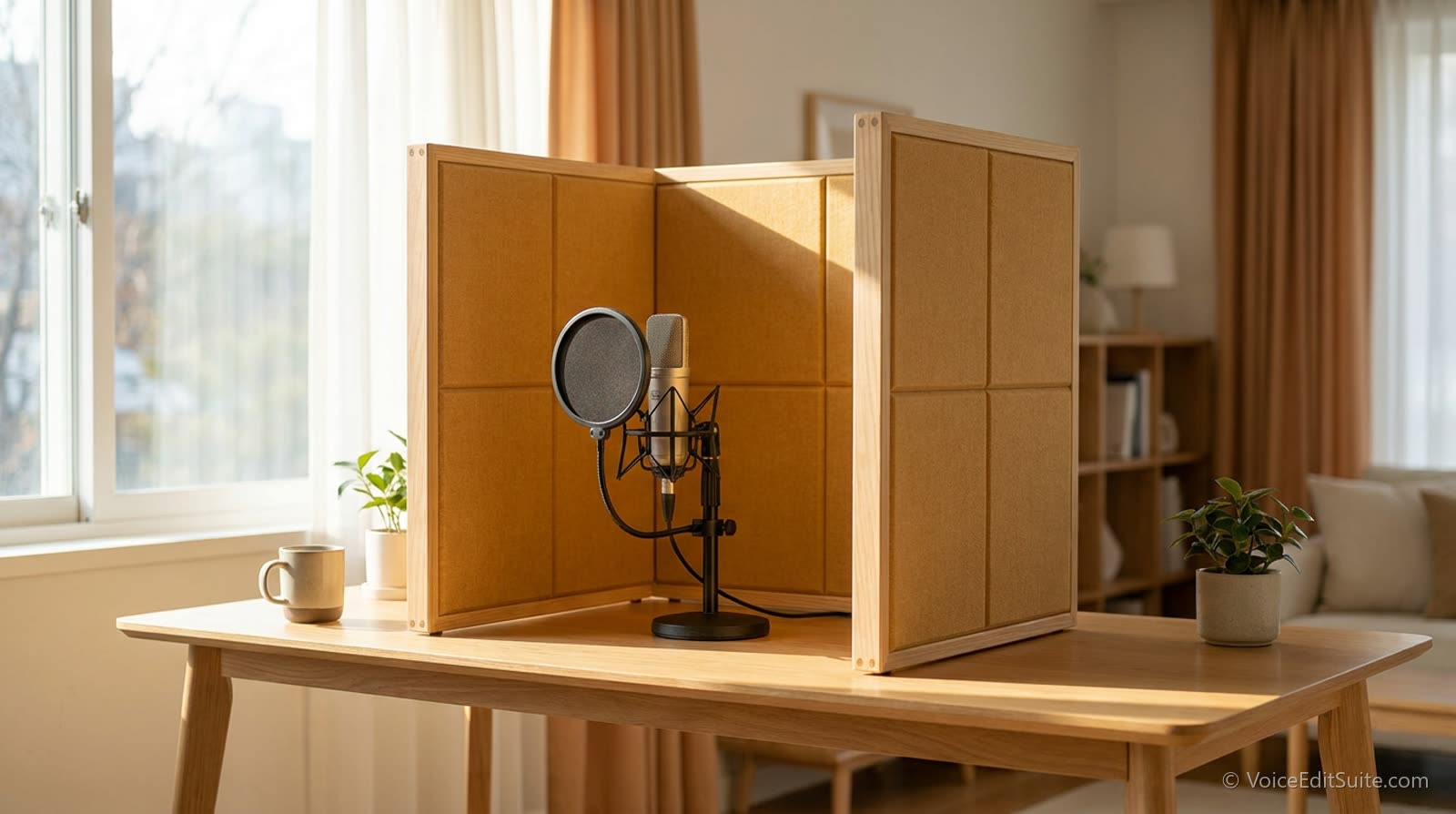
A commercial isolation booth, a fully enclosed box with layered walls, a sealed door, and internal absorption, is built to solve two separate problems at once: keeping outside noise from getting in, and controlling reflections inside a small space so the room does not color the recording. Manufacturers spend real engineering effort on both, and the result genuinely works, consistently, without you having to figure out the physics yourself.
What you are actually paying for is that certainty and the labor you do not have to do: a sealed, tested enclosure that performs the same way on day one as it does two years later, delivered assembled or close to it. That certainty is worth real money to someone whose income depends on the room, and it is also priced like it, often several thousand dollars before shipping for a single-person booth.
What a DIY Build Can Actually Match
A walk-in closet, or a small room, treated deliberately with mass-loaded barriers on the door gaps and absorption on the reflective surfaces, closes most of the gap with a prefab booth for a fraction of the cost. Acoustic treatment on a real budget covers the specific materials and placement that do the actual work; the short version is that soft, irregular surfaces, blankets, foam, clothing in a closet, kill reflections effectively, while true sound isolation (blocking outside noise) is the harder problem a DIY build usually cannot fully solve without real mass and sealed gaps.
- A closet with clothes already does real acoustic work for free. Recording in an apartment closet is a genuinely common, genuinely functional setup, not a compromise to apologize for.
- Isolation from outside noise is the harder half to DIY. Reflections are solved with soft surfaces; a neighbor's bass line or street noise requires mass and sealed gaps, which is where a prefab booth's engineered walls earn their price most clearly.
- A DIY build is never really finished, and that is fine. A prefab booth is a fixed product; a DIY space keeps improving as you notice new problems, which is a feature for a limited budget spent gradually rather than all at once.
The honest comparison is not "booth versus no booth," it is "engineered isolation versus a well-treated small space with whatever isolation the room's own construction happens to provide." For most home setups, the second option gets close enough that the price difference is hard to justify until a specific, measured problem proves otherwise.
Where the Money Actually Goes
The steepest improvement in a home setup usually comes from the first real treatment pass: closing door gaps, adding absorption, moving the mic away from hard reflective surfaces. Every dollar spent after that point buys progressively smaller gains, which is exactly the shape a prefab booth's price tag has to justify against, and exactly why it only makes sense once the cheaper fixes are already exhausted.
A Practical Way to Decide
Before spending on either a prefab booth or a serious DIY rebuild, measure what your current space is actually doing wrong. A room's real noise floor and reverb tail are specific, fixable numbers, not a vague sense that the room "sounds bad," and knowing which one is the actual problem tells you which kind of spending will fix it. A high noise floor from outside sound points toward isolation, which favors a prefab booth or serious sealing work. A long reverb tail from a live room points toward absorption, which a DIY treatment pass handles well on its own.
↗ Try the tool
Home Studio Analysis
Free and no account: measure your current space's actual noise floor and reverb tail before spending on a booth of any kind. Knowing which specific problem you have turns a several-thousand-dollar guess into a targeted fix that might cost far less.
Open Home Studio Analysis →Buy the Booth Only Once the Cheap Fixes Are Spent
A prefab isolation booth is a legitimate product that solves a real problem well, and it is rarely the right first purchase for a home setup that has not yet exhausted the cheaper, more targeted fixes available in a properly treated small room. Measure first, treat what the measurement actually points to, and let a booth purchase be the last step, not the first one.