
The short answer: advertising is still the largest line on most podcast income statements in 2026, but it is no longer the only one worth building deliberately. Patreon's own figures put podcaster earnings on its platform at $629 million in 2025, up 33 percent from the year before. Apple pays podcasters 70 percent of subscription revenue in a creator's first year and 85 percent after that. Spotify, as of October 2026, pays creators 90 percent of what its new Memberships feature brings in. None of those numbers replace a national sponsor buying a 60-second mid-roll across a whole season, but together they describe a second, real revenue line, built on listeners who pay a show directly rather than advertisers who pay per thousand downloads, and in percentage terms that second line is growing faster than the ad market sitting next to it.
This piece is about that second line specifically: what memberships, paid subscriptions and ad-free premium feeds actually pay out, what each platform takes off the top before a creator sees a cent, and what a tier structure looks like once a show gets past a token thank-you tier that nobody buys. The ad side of the business, including how the podcast ad market has grown and how a dynamically inserted ad actually gets served, is covered elsewhere on this site. The audience here is mainly independent podcasters weighing whether to build a membership program at all, with a specific note for voice actors who host or co-host a show of their own, since everything below applies to that show exactly the way it applies to any other.
Why Podcasters Are Looking Past the Ad Read
Scale is the reason ads and memberships behave so differently as a business. A host-read or programmatic ad sells against downloads, so the payout is mechanically tied to audience size: more listeners, more inventory, more revenue, with very little room to earn more from the same audience without growing it further. A membership sells against depth of relationship instead. A show with a modest but genuinely engaged audience, the kind most independent shows actually have, can build a real membership revenue line among listeners who will never generate enough downloads to interest a national sponsor, because the question a membership asks is not how many people hear an episode but how many of the people who already hear it are willing to pay a few dollars a month to hear more of it, hear it sooner, or hear it without ads in the way.
That is also why the two models fail in opposite directions. A show chasing only ad revenue is exposed to the advertising market's own cycles and to whatever a sponsor decides it will pay per thousand downloads this quarter, a number that has nothing to do with how much a listener actually values the show. A show chasing only membership revenue is exposed to the much smaller share of any audience that will ever convert to a paying supporter, typically a low single-digit percentage even for a well-run program, which means membership revenue scales with loyalty rather than with reach. Treating the two as complements rather than alternatives, selling ad inventory to the whole audience while selling a membership to the fraction of it that wants more, is the model nearly every platform below is now built around, and it is why none of this guide treats memberships as something that replaces a sponsor relationship.
Why this matters more for independent shows than networked ones
A networked show with a sales team can usually fill its ad inventory regardless of format trends, because a rep is negotiating direct relationships with brands rather than waiting on a self-serve marketplace. An independent show, especially one still building audience, often cannot get a sales call returned at all, and depends instead on programmatic and self-serve inventory that pays far less per listener. For that show, a membership program is not a nice-to-add revenue stream so much as the only lever it fully controls: it does not require a media buyer to notice the show exists, it does not depend on download volume crossing some unstated threshold, and it pays out on a schedule the creator sets rather than one a sponsor's billing cycle sets.
- Membership revenue is recurring by default. A subscriber who signs up stays billed monthly until they cancel, which smooths income in a way a one-off sponsorship campaign never does.
- It does not require a minimum download count. Several platforms below have audience thresholds to join their ad programs; none of the membership platforms require a show to hit a download number before it can accept a paying member.
- It is sold directly to the listener, not pitched to a brand. No media kit, no rate negotiation, no waiting on a sponsor's quarterly budget cycle.
- It rewards the shows ads reward least. A niche, highly specific show with modest reach but devoted listeners is exactly the profile that converts well to paid membership and poorly to broad-reach advertising.
Patreon: Still the Biggest Membership Platform for Podcasts, by a Wide Margin
Patreon is not a podcast-specific product; it is a general membership platform that happens to host more podcast revenue than any dedicated podcast monetization tool. Patreon has reported that podcasts generated more than $629 million in revenue on its platform in 2025, a 33 percent increase over 2024's roughly $472 million, making podcasting the platform's largest content category by revenue for the second year running, ahead of video, music and every other format Patreon supports. Patreon also says more than 47,000 podcasters earn income through the platform, across more than 7.6 million paid memberships in its podcasting category specifically. Those are company-reported figures rather than an independently audited total, worth keeping in mind the same way any platform's own press release deserves a grain of caution, but they are the most complete numbers available for how much money podcast memberships actually move.
Patreon's fee structure changed meaningfully in 2025. New creators are now charged a flat 10 percent platform fee on everything they earn through the platform, membership pledges and any shop sales alike, replacing the older tiered system of Lite, Pro and Premium plans that charged 5, 8 and 12 percent respectively with different feature sets gated behind each tier. That 10 percent is on top of ordinary payment processing, which runs at roughly 2.9 percent plus 30 cents per transaction in the US through Patreon's card processor, plus a currency conversion fee on non-USD pledges. Run the numbers on a single $5 monthly pledge and the all-in cost is close to 19 percent of that pledge: 50 cents to Patreon's platform fee, a little under 45 cents to payment processing, leaving the creator around $4.05 of the original $5. The percentage cost falls as the pledge size rises, since the 30-cent flat portion of the processing fee matters less on a larger amount, which is one reason Patreon tier pricing guides generally push creators toward fewer, higher-value tiers rather than many small ones.
"Our business model aligns with creators. We only make money when creators make money."
That framing is worth taking at face value rather than as a slogan, because it describes a genuinely different incentive from an ad-supported platform's. An ad network profits whether or not a given show's sponsor campaign actually performs for the brand; a membership platform only collects its cut when an individual listener decides a show is worth paying for every single month, and keeps deciding that every time the renewal runs. Fitzgerald separately described podcasts as a format that works well for what she called multi-hyphenate creators, people building a business across several formats at once rather than one single show, which tracks with how podcast memberships on Patreon actually get sold in practice: not as a standalone product but as one tier of a creator's broader membership offering that might also include video, a newsletter or merchandise, with the podcast itself as the anchor.
Apple Podcasts Subscriptions: The Highest Published Revenue Share, With the Most Restrictions
Apple's own program terms, published when Apple Podcasts Subscriptions launched and unchanged in every current secondary source we could find, pay creators 70 percent of subscription revenue per billing cycle, net of applicable taxes, rising to 85 percent once an individual subscriber has been paying for a full year. In plain terms, Apple keeps 30 percent of a new subscriber's payments in year one and 15 percent after that, the identical split Apple applies to ordinary in-app subscriptions sold through the App Store. Joining the program costs a separate $19.99 per year through the Apple Podcasters Program, on top of the revenue share, and creators set their own price starting as low as 49 cents a month, with the option to offer free trials, sample episodes, and annual billing. Subscriptions sold this way are available in more than 170 countries and regions and across roughly 40 languages, which is a meaningfully wider footprint than either Patreon or Spotify's membership program currently reaches.
The trade-off is control. An Apple Podcasts subscription lives entirely inside Apple's ecosystem: a listener who wants the ad-free or bonus feed has to be an Apple Podcasts user specifically, the creator has no direct payment relationship or email address for that subscriber, and bundling several shows together into one subscription, something Patreon and Supercast both do easily, requires using Apple's own channel structure rather than a simple cross-platform link. For a show whose audience listens almost entirely inside Apple Podcasts already, the higher revenue share and Apple's existing billing relationship with that listener can outweigh the lack of a direct audience relationship. For a show whose audience is split across apps, which is most independent shows, Apple Podcasts Subscriptions tends to work better as one of several parallel options rather than the only paid tier offered.
Spotify Has Two Separate Programs, and Conflating Them Is a Common Mistake
Spotify runs two genuinely different monetization programs for podcasters, and trade coverage routinely blurs them together because both are reached through the same Spotify for Creators dashboard. The Spotify Partner Program is the older of the two and pays out on advertising and Premium listening, not on a paid membership: eligible creators get a 50 percent share of the revenue recognized when a Spotify-sold ad plays in their episode, plus a separate share of revenue tied to Premium subscribers who engage with their show. Spotify reported paying out more than $100 million to podcast creators and publishers through this program in the first quarter of 2025 alone. Eligibility was loosened in 2026: a show now needs to be hosted on Spotify for Creators, carry at least three published episodes, and have logged at least 2,000 consumption hours and 1,000 unique listeners in the trailing 30 days, down from 10,000 hours and 2,000 listeners under the program's original rules. The program is also expanding geographically, with Spotify announcing a rollout to more than 35 additional markets through 2026 beyond its original US, UK, Canada and Australia footprint.
Memberships is the newer, separate product, and it is the one that actually matches what this guide means by listener-supported revenue. Spotify began rolling Memberships out on October 20, 2026, across 34 markets, letting eligible creators sell exclusive audio or video content, bonus episodes, early access to new episodes, access to a back catalog, or a reduced-ad listening experience, structured across as many tiers as a creator wants to build, while keeping 90 percent of whatever revenue those memberships generate. Eligibility for Memberships is deliberately lower than for the ad-revenue Partner Program: a show needs to be hosted on Spotify for Creators or Megaphone, have published at least three episodes, and show at least 100 listeners or viewers and 100 consumption hours in the previous 30 days, a bar well within reach of a brand-new show a few weeks old. The 90 percent figure makes Memberships the highest disclosed creator revenue share of any major platform covered here, ahead of even Apple's 85 percent long-term rate, though it is worth remembering Memberships only reached general availability in late 2026, so there is far less track record behind that number than behind Patreon's or Apple's older programs.
Four programs, four different trade-offs, and none of them free. The highest headline percentage, Spotify's 90, comes with the least operating history and a smaller current footprint than Apple's 170-plus countries. The platform with by far the most total dollars moving through it, Patreon, takes the largest visible cut once its flat fee and card processing are added together, though that cut has actually gotten simpler and, for most creators, cheaper since Patreon dropped its old tiered plans in 2025. Supercast's flat per-subscriber fee rewards a show that prices its tier confidently rather than underselling it. None of that complexity disappears by picking one platform and ignoring the rest; it just determines which number a given show should actually be watching.
Supercast and the Flat-Fee Premium Feed Model
Supercast takes a different approach to pricing itself than any platform above: rather than a percentage of subscription revenue, it charges a flat fee per paying subscriber per month, currently 59 cents under its standard All-in plan, regardless of what that subscriber actually pays. Card processing through Stripe is billed separately and at the usual rate, roughly 2.9 percent plus 30 cents per US transaction, somewhat lower for euro and pound billing. Supercast's own worked example uses a $7 monthly tier: Stripe takes about 50 cents, Supercast's flat fee takes 59 cents, leaving the creator $5.91, or close to 84 percent of the subscription price. The flat-fee structure means Supercast gets relatively cheaper, as a percentage, the higher a creator prices their tier, which is the opposite of Patreon's percentage-based model, and it means a creator pays nothing at all until they have a paying subscriber, since there is no monthly software fee sitting underneath the per-subscriber charge.
Supercast and Patreon both power a related but distinct category worth naming separately: the ad-free premium feed, where the entire product being sold is simply the same show without the ads in it, rather than bonus content. Acast, a hosting platform that partners with Supercast for its own subscription tooling, publishes its own guidance to creators building these tiers, and its data is a useful reality check on which benefits actually convert. Acast's own survey of several hundred early subscribers across its platform found that 74 percent cited supporting the podcaster directly as their primary reason for subscribing, ahead of any specific benefit like bonus content or an ad-free feed. Acast's guidance also suggests that an ad-free-only tier tends to convert at a lower rate than a tier that adds a tangible extra like a bonus episode, even when the ad-free tier is priced lower, which argues against treating ad removal as a membership program's whole pitch. A newsletter-first platform such as Substack supports the same basic economics for podcasters who want a premium feed attached to written content: Substack charges a flat 10 percent platform fee on paid subscription revenue, plus standard Stripe processing, functionally identical to Patreon's current structure, making it a reasonable option mainly for a podcaster who already runs a Substack newsletter and wants the audio feed bundled into the same subscription rather than sold separately.
What a Tier Structure That Actually Converts Looks Like
The platforms above all support building several price tiers, but a long menu of tiers is not the same thing as a tier structure that converts. The consistent pattern across the official guidance from Acast, Spotify and Patreon, and the one borne out by Acast's own subscriber survey above, is a short ladder of two or three tiers, each adding something a listener can point to rather than a vague promise of gratitude. A workable starting structure looks roughly like this, adapted from the ranges Acast publishes to its own creators: a modest entry tier, often in the two to four dollar range, that removes ads and nothing else; a middle tier, a few dollars higher, that adds one recurring bonus episode a month or early access to new episodes ahead of the public feed; and, for shows with an engaged enough audience to support it, a top tier with something genuinely scarce, a monthly live call, a group chat, or access to the full back catalog of bonus material built up over time.
- Entry tier (ad-free listening). Cheapest to build, since it requires no new production, but converts weakest on its own according to Acast's published guidance; pair it with at least one tangible extra rather than selling it alone.
- Middle tier (bonus content or early access). Where most membership revenue actually concentrates. A single, reliably delivered bonus episode a month beats an ambitious weekly second show that quietly burns out the person producing it.
- Top tier (access and interaction). Smallest subscriber count by far, but the highest price point and the tier most responsible for turning a handful of listeners into something closer to patrons than customers.
- Keep the ladder short. Two or three tiers, not five or six. Every extra tier is another promise to keep producing against, every episode, for as long as a single subscriber remains on it.
The production math behind that bonus tier is where a lot of membership programs quietly fail, not because listeners will not pay, but because the creator cannot sustain the extra workload a weekly bonus episode adds on top of the main show. A monthly cadence, delivered reliably, consistently outperforms a weekly promise that slips after the second month, both for subscriber retention and for the creator's own sanity. Keeping the main show's audio clean and fast to turn around matters even more once a bonus feed is added on top of it, since every hour spent on manual editing for the free show is an hour not available for the content people are actually paying for.
That survey finding is worth sitting with before building any tier around a single flashy perk. If supporting the show is already most subscribers' real motivation, the job of a tier structure is mainly to give that motivation a concrete shape to attach to, a specific bonus episode, a specific early-access window, rather than to invent a benefit elaborate enough to justify the price on its own.
↗ Try the tool
Auto Clean Up
A bonus-tier episode recorded in twenty minutes between regular episodes still needs breaths and dead air cleaned out before it goes to paying members. Auto Clean Up transcribes the recording, trims filler and silence automatically, and hands back a clean file fast enough to publish a monthly bonus episode on top of your normal schedule without it eating your whole evening.
Open Auto Clean Up →Where This Intersects With Voice Acting Work
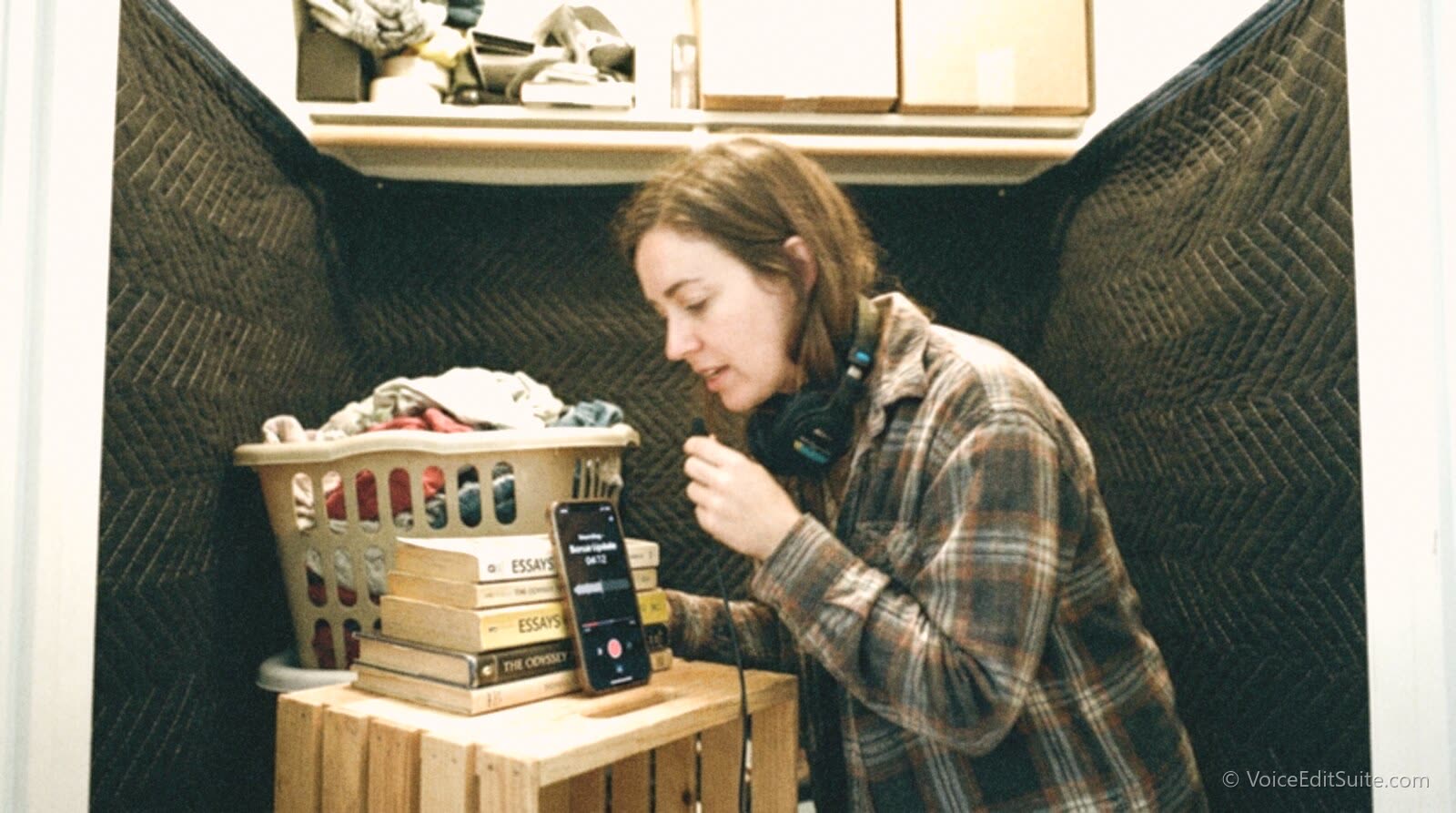
A working voice actor who also hosts or co-hosts a podcast is running two separate income streams that happen to share one recording setup, and the economics above apply to the show exactly as described, with one added wrinkle worth flagging. A membership tier built around a host's personal voice and presence, bonus commentary, a behind-the-scenes audition story, an unscripted Q&A, trades directly on the same instrument a voice actor sells professionally, which is worth pricing with the same care given to any other use of that voice: a $5 bonus-content tier is not a usage-rights question the way a commercial buyout is, but it is still the host's own voice being sold directly to an audience, and that direct relationship is itself an asset worth protecting and building deliberately rather than treating as a free add-on to whatever the show is already doing.
The reverse intersection matters too. A podcast host building a membership program needs their core free episodes to actually hold an audience long enough to notice the paid tier exists in the first place, and that depends more on completion rate than on raw download count. The data on podcast listener retention and completion rates is worth reading before investing heavily in bonus content, since a show that loses most of its audience in the first ten minutes of every episode has a completion problem a membership tier cannot fix, and fixing that generally does more for membership conversion than any tier redesign would.
Choosing a Mix: What Actually Fits a Given Show
None of the four platforms above is universally correct, and most shows that run a membership program successfully end up picking based on where their audience already is rather than chasing the single highest headline revenue share. A show whose listeners are heavily concentrated in Apple Podcasts, which is still common for scripted and narrative shows, often gets more net revenue from Apple's 70 to 85 percent split and existing billing relationship than from driving that same audience to an external page they have never visited. A show with a cross-platform audience, built on YouTube clips and social promotion as much as any single podcast app, usually does better routing everyone to one external page on Patreon or Supercast, since neither platform cares which app the listener uses to actually hear the episode once they are subscribed.
Spotify Memberships is the newest entrant and, on paper, the best deal for a creator at 90 percent, but its newness cuts both ways. The eligibility bar is genuinely low, three episodes and 100 listeners, which makes it worth checking for almost any show regardless of size, but the feature only reached general availability in October 2026, so there is limited public data yet on actual conversion rates, churn, or how reliably Spotify pays out at scale compared with programs that have run for years. For a brand-new show just getting started, the basics of launching a podcast properly are worth getting right well before any membership tier matters at all; a membership program amplifies an audience that already exists rather than creating one, and building the second before the first is a common and avoidable mistake.
Frequently Asked Questions
Should an independent podcast replace ads with a membership program?
For almost every show, no. Ads and memberships monetize different parts of the same audience: ads sell against total reach, while memberships sell against the small, loyal fraction of listeners willing to pay directly. The two work best run in parallel, with membership revenue layered on top of whatever ad inventory a show can already sell, rather than as a substitute for it.
How many paying members does it take to equal one sponsor deal?
It depends entirely on pricing and the sponsor's rate, but a rough way to think about it: a modest $50 to $100 monthly sponsorship slot, common for a smaller independent show, is roughly equivalent to somewhere between 10 and 20 members paying $5 a month after platform and processing fees are taken out. A show with a few hundred engaged listeners can realistically reach that range with a well-structured tier ladder, which is why membership revenue tends to matter most to shows too small for a sponsor to notice at all.
Which platform should a new podcast try first?
Spotify Memberships has the lowest eligibility bar of the four covered here, three episodes and 100 listeners in the trailing 30 days, which makes it worth checking first simply because almost any active show already clears it. Whether it is the right platform to build around long-term depends on where that show's actual audience listens, since a membership tool only works if the audience is already using the app or page it lives on.
What should a show's very first paid tier actually include?
Not just ad removal on its own. Acast's own data on early subscribers found that most people who subscribe say they are doing it to support the creator directly, and that tiers combining ad-free listening with one tangible extra, a monthly bonus episode or early access, convert meaningfully better than an ad-free tier sold by itself. Start with one entry tier that bundles ad-free listening with a single, sustainable bonus benefit, rather than unbundling ad removal into its own cheapest tier.
How often should a bonus episode actually go out?
Less often than most creators initially plan. A monthly bonus episode delivered reliably for a year does far more for subscriber retention than a weekly bonus show that starts strong and quietly stops appearing after two months once the production workload catches up with the host. Pick a cadence that survives a busy month before announcing it as a membership benefit.
Does putting content behind a paywall hurt a show's discoverability?
Not if the main, free feed stays the primary show. Every platform covered here is built around a free public feed with a paid tier layered on top of it, not a fully paywalled show, and that structure is deliberate: the free feed is what drives new listener discovery and app-store or search visibility, while the paid tier monetizes the audience that free feed has already built. Moving the entire show behind a paywall trades away the discovery engine that got the show an audience in the first place.
Sources and Further Reading
- Patreon, reported in Digital Music News and Tubefilter, April 2026: the $629 million 2025 podcast category revenue figure, 33 percent year-over-year growth, the roughly $472 million 2024 figure, the 47,000-plus podcaster and 7.6 million-plus paid membership counts, and the Paige Fitzgerald quotes above.
- Patreon's own pricing documentation, as summarized by third-party pricing guides accessed October 2026: the current flat 10 percent platform fee for new creators, the legacy 5/8/12 percent Lite, Pro and Premium tiers, and standard Stripe card processing rates.
- Apple, Apple Podcasters Program terms as announced at launch and reported by Axios and AppleInsider, corroborated by current third-party platform comparisons accessed October 2026: the 70 percent year-one and 85 percent after-year-one creator revenue share, the $19.99 annual program fee, the 49-cent minimum monthly price, and availability across 170-plus countries and roughly 40 languages.
- Spotify, Memberships launch announcement, October 20, 2026, as reported by ppc.land and TechCrunch: the 34-market rollout, the 90 percent creator revenue share, and the three-episode, 100-listener, 100-consumption-hour eligibility threshold.
- Spotify, Partner Program terms and eligibility, as reported by Tubefilter and InsideRadio (April 2025 payout coverage) and iMusician (program mechanics): the 50 percent ad revenue share, the Premium-engagement revenue share, the more than $100 million paid to creators in Q1 2025, and the loosened 2026 eligibility criteria and market expansion.
- Supercast, Plans and Fees help documentation, accessed October 2026: the $0.59 per subscriber per month flat fee, Stripe's standard processing rates, and the worked $7 monthly tier example.
- Acast, What exclusive benefits should you offer your Acast+ subscribers: Acast's own guidance on tier pricing and benefit selection, and its subscriber survey finding that 74 percent of early subscribers cited supporting the creator as their primary reason for paying.
- Substack fee structure, as summarized by third-party pricing comparisons accessed October 2026: the flat 10 percent platform fee on paid subscription revenue plus standard Stripe processing, cited here as a point of comparison rather than confirmed podcast-specific terms.
- IAB and PwC, Internet Advertising Revenue Report, Full-Year 2025, April 2026: the $2.862 billion US podcast ad revenue figure, 17.6 percent year-over-year growth, and the over $3 billion 2026 forecast, used here only as the advertising-side comparison point.
- VoiceEditSuite, The Podcast Ad Boom and What It Actually Means for Voice Talent, Dynamic Ad Insertion: How Programmatic Podcast Ads Actually Work, and Podcast Listener Retention and Completion Rates in 2026: companion reports on the advertising and retention sides of this subject.
Corrections
Patreon's podcast revenue figures ($629 million for 2025, roughly $472 million for 2024, the 47,000-plus podcaster and 7.6 million-plus membership counts, and the Fitzgerald quotes) are Patreon's own company-reported numbers as carried by Digital Music News and Tubefilter in April 2026, not an independently audited total. Apple's 70/85 percent revenue-share figures were published at the program's 2021 launch and corroborated by current third-party platform comparisons; we found no official Apple support page confirming the split is unchanged in 2026, so treat it as the most recently documented figure rather than a live-verified one. Spotify's Memberships terms (90 percent, 34 markets, the eligibility thresholds) reflect the program's October 2026 launch and may shift as the feature matures; Spotify's separate Partner Program figures (the 50 percent ad-revenue share and the Q1 2025 payout total) describe a different product and should not be added to the Memberships numbers. Supercast's and Substack's fee figures come from each platform's own published pricing rather than a revenue census, and Patreon's take-home math above is our own calculation from each platform's disclosed fee structure, not a platform-published worked example. The IAB and PwC advertising figures are included only as a comparison point and use a different measurement method (a market-wide revenue census) than any of the platform-specific numbers above. Spot an error or a newer figure? Tell us through the contact page and we will correct it with a note.