
Breath support is a posture problem before it is a technique problem. A slouched spine compresses the diaphragm's range of motion, a script stand angled too low pulls the chin down and closes the throat, a chair with no support forces small stabilizing muscles to work overtime through an entire session. None of that shows up as an obvious mistake the way a plosive or a flubbed line does; it shows up as a read that gets thinner, more effortful, and more fatigued as the session goes on, for reasons that feel mysterious if nobody has ever pointed at the chair.
What Actually Matters in a Recording Setup
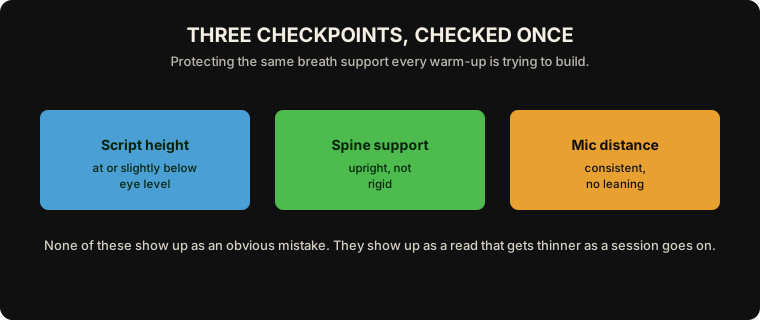
- Script or monitor height at or slightly below eye level. Looking down closes the throat and shortens the neck; looking up strains it in the other direction. A stand or monitor arm that keeps your eyeline level protects the same open airway your warm-up already worked to build.
- A chair that supports an upright spine without forcing rigidity. Standing to record solves this entirely for some performers; for anyone recording seated for long sessions, lumbar support that keeps the lower back's natural curve intact preserves diaphragm range far better than a soft, collapsing cushion.
- Consistent mic distance that does not require leaning. Constantly leaning in and back to manage plosives or level defeats the point of good gain staging and adds a physical strain pattern that compounds across a long session.
Standing Versus Sitting

Many voice actors record standing specifically because it gives the diaphragm its fullest, least restricted range of motion, and a standing posture with even weight on both feet is close to the most breath-efficient position available. It is not mandatory: a well-supported seated posture, spine upright, feet flat, script at eye level, gets most performers most of the way there, and standing for a genuinely long audiobook session brings its own fatigue if you are not used to it. The point is not which position is correct, it is that the position is a deliberate choice made for breath support, not an accident of whatever chair happened to be in the room.
Change position between long sections, not mid-take
If a seated posture is fatiguing on a long project, alternate between sitting and standing at natural break points, chapter ends, script sections, rather than mid-performance, so the physical reset does not interrupt the read itself.
Posture Fatigue Compounds Over a Long Session
The effect of a bad ergonomic setup rarely shows up in the first ten minutes of a session; it shows up an hour or two in, as a read that has quietly lost some of its earlier openness and ease. That is a genuinely different problem from vocal fatigue caused by insufficient warm-up or overuse, and treating it as a technique or stamina problem when the actual cause is a chair or stand height wastes real effort on the wrong fix. A five-minute check of your own setup against the list above, done once, tends to solve issues that months of vocal exercises alone would not touch.
↗ Try the tool
Home Studio Analysis
Free to try: Home Studio Analysis measures your actual room and setup, a useful excuse to also take a hard look at your chair, stand height, and mic distance while you are already auditing the space.
Open Home Studio Analysis →Why This Matters More for Long-Form Work
A thirty-second commercial read tolerates a genuinely bad chair; a full audiobook chapter or a multi-hour e-learning batch does not. Anyone doing long-form narration work regularly has more to gain from fixing posture and setup once than from almost any other single change to their process, because the cost of a bad ergonomic habit scales directly with how long you sit in it.
Check the Chair Before You Blame the Technique
A read that gets harder as a session goes on is worth investigating physically before assuming it is purely vocal. Script height, chair support, and consistent mic distance are a five-minute audit with a real, lasting payoff, and they protect the breath support that every other technique in this work depends on.